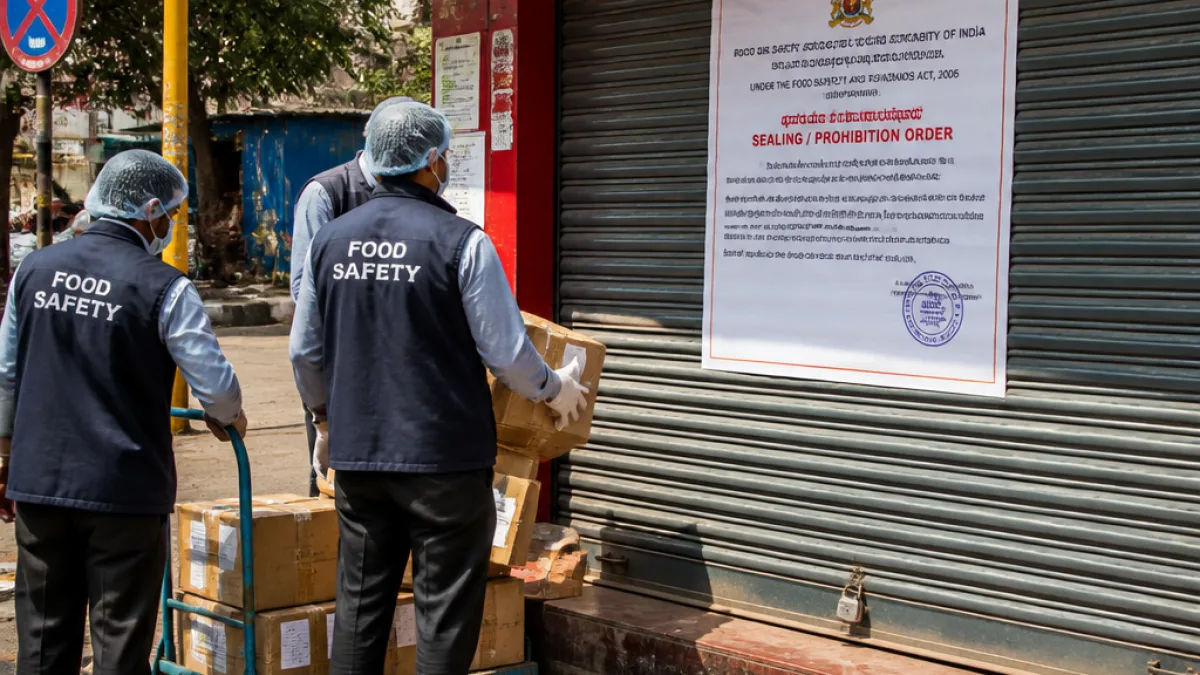
The Karnataka government has issued a one-year ban on the manufacture, storage, distribution, transportation and sale of gutkha, pan masala and any other products containing tobacco or nicotine across the State, a notification by the Commissioner of Food Safety said on June 15, 2026.
Legal basis and scope
The order was issued under Section 30(2)(a) of the Food Safety and Standards Act, 2006, read with Regulation 2.3.4 of the Food Safety and Standards (Prohibition and Restrictions on Sales) Regulations, 2011. It applies irrespective of the trade name under which such products are sold and covers both packaged and unpackaged items.
The notification explicitly includes gutkha and pan masala containing tobacco and/or nicotine packed in sachets, pouches, packages or containers, and any separately marketed products that contain tobacco or nicotine in the final product. It also covers products that are packaged separately but sold in a manner that facilitates easy mixing by consumers.
"The prohibition has been imposed in the interest of public health," the Food Safety Commissioner said in the notification.
What the ban covers
- Manufacture, storage, distribution, transportation and sale of products containing tobacco or nicotine.
- Gutkha and pan masala that include tobacco and/or nicotine as an ingredient.
- Products sold separately but designed or packaged to be mixed by consumers to form a tobacco- or nicotine-containing final product.
- Both packaged and unpackaged products, regardless of the product name or branding.
The notification does not provide exemptions or carve-outs for specific brands or retail channels; the restriction is framed broadly to capture any product where tobacco or nicotine is present in the final sold product.
Effective period and enforcement
The ban will remain in force across Karnataka for one year from the date of the notification, June 15, 2026. The notification was issued by the Commissioner of Food Safety, Karnataka—an office based in Bengaluru that functions within the State's food safety and drug administration framework.
| Item | Details |
|---|---|
| Issuing authority | Commissioner of Food Safety, Karnataka |
| Legal provision | Section 30(2)(a), FSS Act, 2006; Regulation 2.3.4, FSS (Prohibition and Restrictions on Sales) Regs, 2011 |
| Effective date | June 15, 2026 |
| Duration | One year from notification date |
| Products covered | Gutkha, pan masala and other products containing tobacco or nicotine (packaged/unpackaged) |
Public-health rationale and likely impact
The Commissioner cited public-health concerns as the reason for the prohibition. Gutkha and pan masala products that contain tobacco or nicotine have long been associated with oral cancers, dental problems and other health risks; State authorities have regularly cited such concerns in previous regulatory actions. By invoking the FSS Act and related regulations, the Commissioner has taken an administrative route to restrict availability for a fixed period.
The broad definition — covering separately packaged components that can be mixed by consumers — aims to close a common market workaround where tobacco and flavouring mixes are sold separately to evade bans. Retailers, wholesalers and manufacturers dealing in these categories will have to comply with the notification during the one-year period or face action under food-safety and enforcement provisions.
What consumers and traders should note
- Sales and distribution of any product that contains tobacco or nicotine in the final sold form are prohibited within Karnataka for the duration of the ban.
- Packaged or unpackaged products, and combinations of separately marketed items that effectively form a tobacco-containing product, are included.
- Enforcement will be the responsibility of the State food-safety administration; penalties for contravention will depend on applicable provisions of the FSS Act and State rules.
The notification does not specify the enforcement modalities or the penalties to be imposed for breaches; those will be governed by the Act and subsequent departmental orders. Traders and manufacturers seeking clarification are likely to approach the food-safety commissionerate in Bengaluru or their district food-safety offices for guidance during the ban period.
The one-year prohibition is a temporary administrative measure; any longer-term regulatory changes or permanent bans would require further action by the State government or legislative measures under existing law.