Practical guide for Jabalpur residents on buying gold
Jabalpur consumers planning to buy gold for jewellery or investment are being advised to pay close attention to purity labels, BIS hallmarking, making charges and the mandatory 3% GST that applies to all physical gold purchases, according to a consumer advisory summarised from recent market reporting.
Gold remains a preferred store of value and a central element in social customs across Madhya Pradesh, including Jabalpur's urban and rural communities. The advisory explains the difference between karat ratings and the typical uses for each purity grade, and highlights alternatives for those who want exposure to gold without the costs of physical ownership.
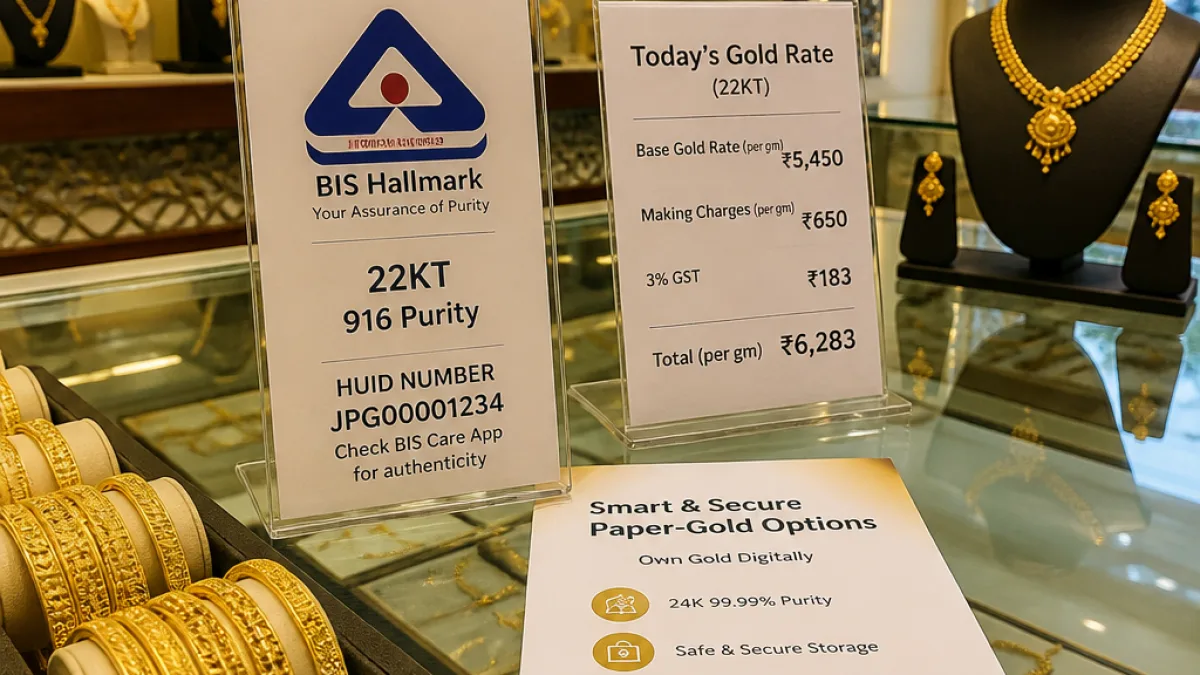
- Purity: 24-karat (24K, 99.9%) is the purest form and is generally used for coins and bars; 22-karat (22K, 91.6%) is the traditional choice for Indian jewellery because it balances purity with durability.
- Pricing components: The showroom price is the benchmark gold rate plus making charges and 3% GST; making charges vary by design and are often negotiable.
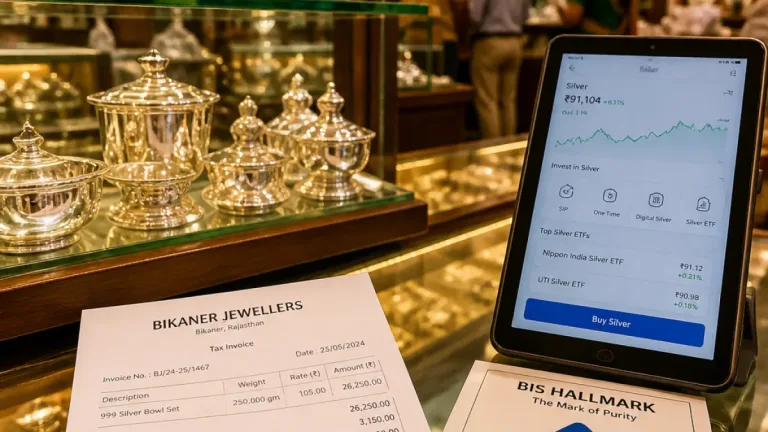
- Authentication: Buyers should insist on BIS hallmarking — the BIS logo, purity grade (for example, 916 for 22K) and the 6-digit alphanumeric HUID code.
- Alternatives: Digital gold, gold ETFs, mutual funds and Sovereign Gold Bonds (SGBs) provide ways to invest without physical storage and avoiding making charges.
"Verify the BIS hallmark and the HUID code before purchase, and factor in making charges and 3% GST when comparing prices," a market advisory reported.
What Jabalpur shoppers should check at the shop
When purchasing jewellery in Jabalpur, consumers should demand an invoice that clearly lists the net weight, gross weight, making charges and the final payable amount including GST. In studded jewellery, the weight of embedded stones is routinely excluded from the gold-weight calculation; shoppers should ensure the invoice reflects net gold weight.
Smaller towns and rural areas around Jabalpur often rely on traditional jewellers for wedding purchases and festivals. In these settings, awareness of hallmarking and negotiable making charges can materially affect the final cost borne by households.
| Item | What to verify |
|---|---|
| 22K jewellery | BIS mark (e.g., 916), HUID code, net gold weight, making charges |
| 24K coins/bars | Purity certificate, seller invoice, GST applicability |
Paper gold and government schemes — options for cautious investors
For Jabalpur residents who prefer to avoid storage and making charges, the advisory outlines several alternatives:
- Digital gold: Allows buying small quantities online, sometimes from Re 1, and is backed by allocated physical gold held by the provider.
- Gold ETFs and mutual funds: Paper assets that track physical gold prices and offer liquidity without the hassles of jewellery ownership.
- Sovereign Gold Bonds (SGBs): Government securities that pay a fixed interest on top of any appreciation in gold price — a potential choice for longer-term, tax-aware investors.
Each alternative has its own regulatory and tax implications. For example, KYC norms apply for higher-value transactions: a PAN is mandatory for purchases above ₹2 lakh, and cash transactions above ₹10 lakh are subject to strict KYC controls. All physical gold purchases attract 3% GST, while capital gains rules apply on sale depending on holding period.
Implications for tribal and rural households in MP
In many tribal and rural communities around Jabalpur, gold has social and cultural roles — as a store of value, a form of savings and part of matrimonial rites. Greater awareness about hallmarking and taxation can protect families from paying unexpectedly high making charges or accepting non-hallmarked items that reduce resale value.
Local consumer groups and financial literacy programmes in MP may use these advisory points to help smaller towns and villages understand the trade-offs between physical and paper-gold, encouraging transparent billing and verification of hallmark codes before purchase.
Buyers in Jabalpur should therefore compare quoted rates after including making charges and 3% GST, verify the BIS hallmark and HUID code, and consider paper-gold instruments if they prefer liquidity and lower transaction frictions, the market advisory suggested.