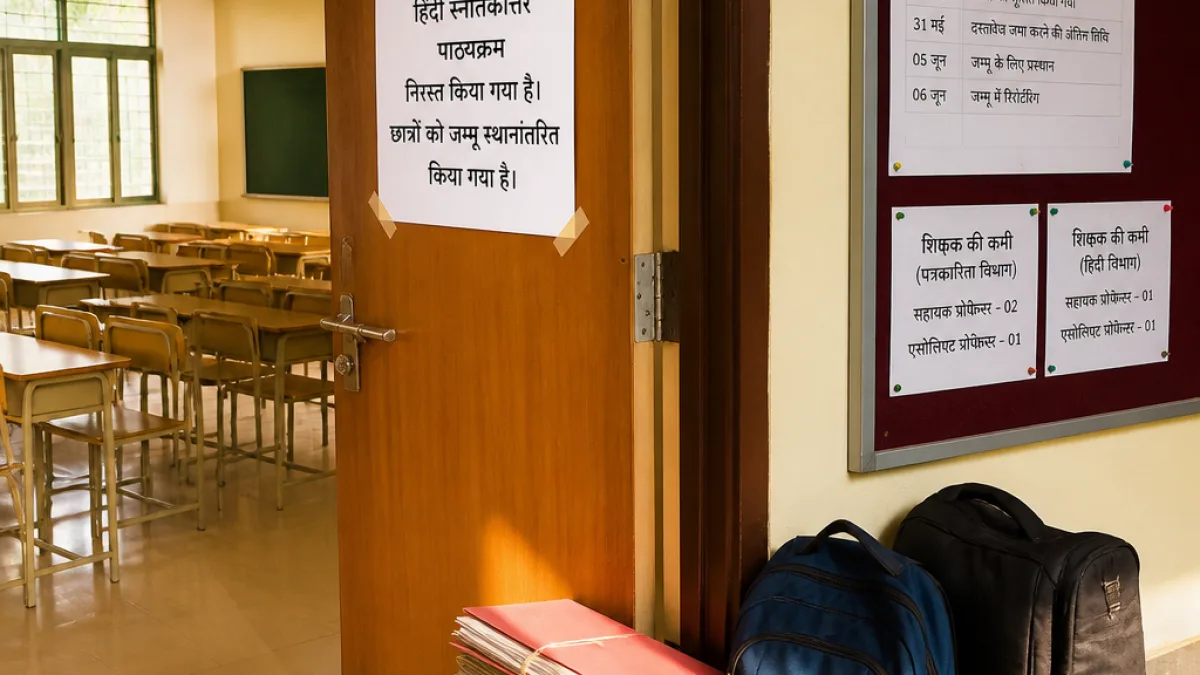
Amravati, Maharashtra — The Indian Institute of Mass Communication (IIMC) centre in Amravati has discontinued its Postgraduate Diploma in Hindi Journalism for the current academic year after the course failed to attract the minimum required number of students, officials and media reports said.
Minimum intake not met; students shifted to Jammu
According to a Times of India report, IIMC's Regional Director Raj Singh Kushwaha said the Hindi journalism course requires a minimum of 10 students to run. This year the intake fell short and the institute decided to suspend the course. The few students who had enrolled in the Hindi journalism programme have been transferred to IIMC's Jammu centre, the report added.
- Established purpose: The Amravati centre was set up four years ago at the initiative of former President Pratibha Patil to provide professional journalism training to youth in Vidarbha.
- Sanctioned seats: The centre had been sanctioned 30 seats each for Hindi journalism, English journalism and Marathi journalism.
- Current enrolment: This year, enrolments fell well below capacity across courses, prompting concern over the centre's sustainability.
Enrolment and faculty figures
Officials and the media report provided the following enrolment snapshot for the current year.
| Course | Sanctioned seats | Enrolled (current year) |
|---|---|---|
| Hindi Journalism | 30 | Below minimum (course discontinued) |
| English Journalism | 30 | 9 (plus 2 external students) |
| Marathi Journalism | 30 | 10 |
The Times of India account said that after including two external students in the English journalism course, total enrolment across the two remaining streams stands at 21 students — a far cry from the 90 seats sanctioned across three disciplines.
Students raise concerns about placements and faculty
Students at the Amravati centre have voiced grievances that contribute to the enrolment slump. They alleged a lack of placement support, limited career opportunities in the region, and shortages in faculty and facilities that hampered training. Some students claimed that last year the English journalism course was taught in Hindi, creating additional difficulties for those enrolled for instruction in English. Students from the Marathi journalism stream also reported that employment-related expectations have not been met.
"Efforts had been made to boost admissions through promotional activities," Raj Singh Kushwaha said, according to the Times of India.
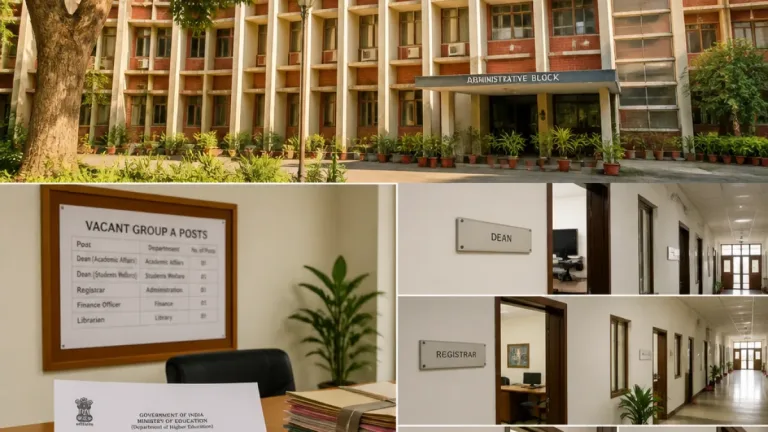
On the academic staffing issue, the report noted vacancies for the post of Assistant Professor. The regional director maintains that the centre has four faculty members in place, which he said is in line with UGC norms.
Local implications and prospects
The suspension of the Hindi programme affects prospective journalists in Vidarbha who were expected to access professional training closer to home. The shift of enrolled students to Jammu entails relocation costs and disruption to study plans. For the Amravati campus, running well below capacity raises questions about long-term viability and the ability to attract faculty and recruiters, particularly given the competition from larger media training centres and the regional job market.
When launched four years ago, the centre was hailed as a means to decentralise media education and build a talent pool in eastern Maharashtra. The current situation — a discontinued course, low enrolments and student dissatisfaction — marks a setback to that objective and will place pressure on trustees and state education authorities to review governance, outreach and placement support if the centre is to meet its founding goals.
Officials at the IIMC headquarters and the state education department were not quoted directly in the Times of India report summarised here.