Transplants up but waiting-list deaths persist
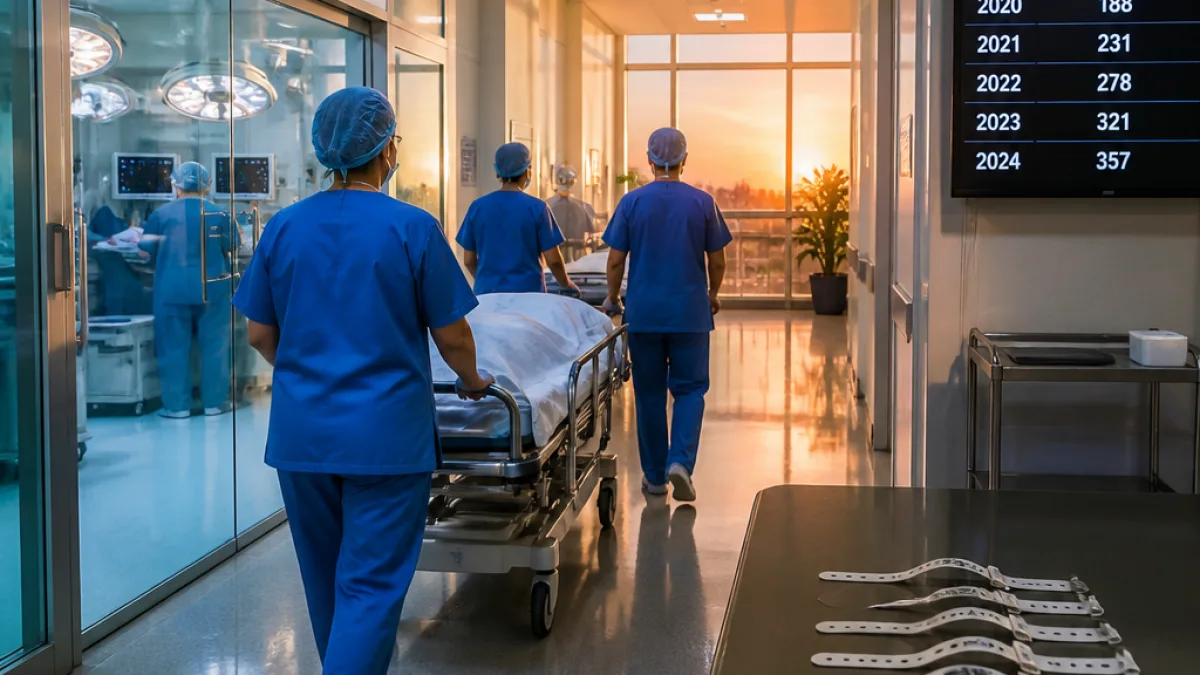
Gujarat has recorded a substantial increase in kidney transplant activity over the past five years, yet fatalities among patients awaiting donor organs remain a worrying feature of the state's renal-care landscape. Data presented in the Lok Sabha on August 7 show that Gujarat performed 4,489 kidney transplants between 2021 and 2025, with annual procedures rising from 685 in 2021 to 1,099 in 2025.
The figures represent an overall growth of about 60.4% in annual transplant numbers between 2021 and 2025. The year-on-year progression was not uniformly upward: after an increase to 869 transplants in 2022, numbers dipped slightly to 818 in 2023 before climbing to 1,018 in 2024 and then to 1,099 in 2025.
Numbers at a glance
| Year | Kidney transplants |
|---|---|
| 2021 | 685 |
| 2022 | 869 |
| 2023 | 818 |
| 2024 | 1,018 |
| 2025 | 1,099 |
| Total (2021-25) | 4,489 |
While the growth in surgical capacity and procedures indicates strengthening transplant services in the state, the Lok Sabha data indicate a sobering counterpoint: 16 patients in Gujarat died while on the waiting list for a kidney during the five-year period.
Context within national picture
The Gujarat totals form part of a wider national increase in kidney transplantation. Across the states and Union Territories covered in the government's five-year submission, 62,189 kidney transplants were recorded between 2021 and 2025. Gujarat's 4,489 procedures account for roughly 7.2% of that combined total.
Gujarat was not among the top three transplant-performing states during the period, according to the same dataset, but it is a significant contributor to the national caseload. The pattern of growth — a strong uptick in 2024 followed by further gains in 2025 — points to improved surgical throughput and perhaps expanded capacity in public and private centres.
What the data indicate for patients and policy
Health experts and practitioners typically caution that increased transplant numbers alone do not resolve systemic bottlenecks such as organ donation rates, timely matching and equitable allocation. The recorded 16 waiting-list deaths underline that procedural capacity must be matched by improvements in donor registration, deceased-donor programmes and logistics for organ retrieval and allocation.
For patients with end-stage renal disease, delays can be fatal. The figures imply that while more operations are being conducted, a segment of patients is still not receiving organs in time. Measures to address this include strengthening deceased-donor networks, widening public awareness campaigns, improving referral pathways from peripheral hospitals and enhancing transplant coordination across centres.
Practical implications for Gujarat
- Increased transplant volume suggests more trained surgical teams and improved infrastructure in certain centres.
- Waiting-list deaths point to persistent shortfalls in organ availability and allocation timeliness.
- Policy focus may need to shift from solely expanding surgical capacity to boosting donor rates, cold-chain logistics and expedited matching systems.
The Lok Sabha figures do not break down the data by public versus private hospitals, district-level distribution or deceased- versus living-donor transplants for Gujarat. Those details are essential to design targeted interventions that reduce waiting-list mortality while sustaining the increase in successful transplants.
As Gujarat's transplant programme grows, policymakers and health administrators will face pressure to ensure that gains in volume translate into improved patient survival and access. The five-year data present both a marker of progress and a reminder of the gaps that remain in organ donation and allocation systems.