Ahmedabad: Gujarat health officials have issued an advisory and operational directives after a surge of Chandipura virus–linked acute encephalitis syndrome (AES) in neighbouring states, with authorities reporting 35 laboratory‑confirmed cases and 22 deaths linked to the infection.
State circular lays down early‑detection and containment measures
The state health department's circular, circulated to civic bodies, district health officers and designated fever officers, asks teams to prioritise surveillance in identified “Chandipura‑sensitive” villages, with particular focus on children below 15 years presenting with high fever, behavioural change, convulsions or loss of consciousness. Suspected patients are required to be admitted immediately to the nearest government hospital.
Joint health services director Dr Sandeep Sangale emphasised simultaneous laboratory testing to rule out other causes of AES. "Cerebrospinal fluid samples must be sent simultaneously to test for dengue, Japanese encephalitis and Chandipura and ensure an early, definite diagnosis," he said.
"Cerebrospinal fluid samples must be sent simultaneously to test for dengue, Japanese encephalitis and Chandipura and ensure an early, definite diagnosis," said Dr Sandeep Sangale.
Vector control and community measures
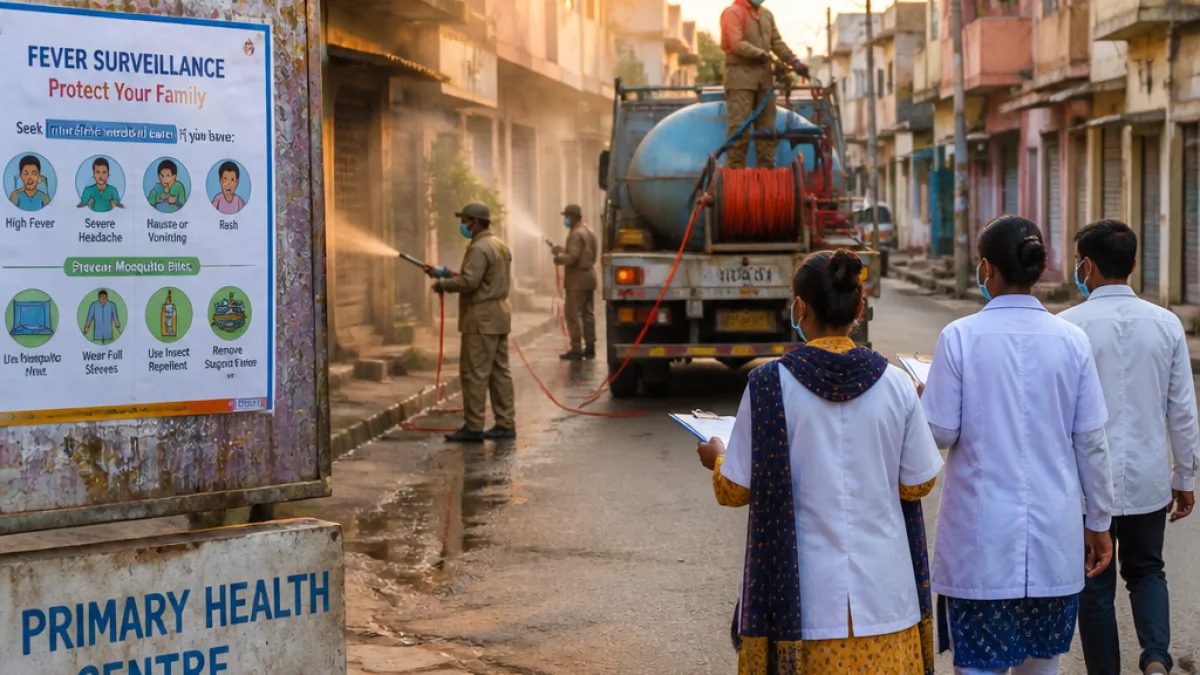
The circular prescribes aggressive vector control, including targeted insecticide spraying in homes and cattle sheds in affected villages and in communities within a 5 km radius. Spraying guidance specifies application up to a height of four feet on both interior and exterior walls.
Field teams have been instructed to carry out door‑to‑door screening in high‑risk areas and to promote household measures aimed at reducing sandfly exposure, the primary vector implicated in Chandipura transmission. The state has also asked health workers to intensify awareness campaigns on cleanliness and drainage management in villages.
- Age focus: Children under 15 years.
- Key symptoms to watch: High fever, altered behaviour, convulsions, loss of consciousness.
- Immediate actions: Prompt admission to government hospitals for suspected cases; simultaneous CSF testing for dengue, JE and Chandipura.
- Vector control: Insecticide spraying in homes and cattle sheds, plus a 5 km buffer spraying requirement.
Surveillance and reporting
The circular mandates reporting of all suspected vector‑borne and AES cases, including those possibly due to Chandipura virus, on the Integrated Health Information Platform (IHIP) to facilitate real‑time surveillance and response coordination. Health officials noted that Maharashtra has not recorded a confirmed Chandipura case in three years but is being counselled to remain vigilant.
Authorities warned that Chandipura infection can progress rapidly and may be fatal within 24–48 hours of hospitalisation, underscoring the need for swift detection and referral. Both Gujarat and Rajasthan have intensified screening and containment measures in response to the recent surge.
Practical guidance for families and local bodies
Public health guidance issued with the circular advises families in at‑risk areas to consider the following precautions to lower exposure to sandflies:
- Use bed nets, particularly for young children and infants.
- Keep sleeping areas away from walls where sandflies tend to rest.
- Ensure children are fully clothed during evening and night hours.
- Maintain cleanliness and proper drainage around homes and livestock shelters to reduce vector breeding sites.
| Metric | Reported figure |
|---|---|
| Lab‑confirmed Chandipura cases | 35 |
| Deaths linked to outbreak | 22 |
| Surveillance radius for spraying | 5 km |
District health teams have been asked to ensure availability of referral transport, stockpile essential consumables, and keep paediatric emergency care readiness high at government hospitals receiving suspected AES cases. The circular also directs local authorities to carry out focussed insecticide spraying in the walls of houses and cattle sheds up to four feet from floor level.
Public health experts have in the past highlighted the rapid course of Chandipura encephalitis in children and the difficulty of early clinical differentiation from other causes of AES. The state's current steps reflect a combination of rapid diagnostic protocols, vector control and community awareness to arrest spread and reduce fatalities.
Health departments in Gujarat and neighbouring states will continue to monitor the situation, reinforce surveillance and update protocols as laboratory confirmations and epidemiological information become available.
Reporting from Ahmedabad.