Mumbai: Former Bombay High Court judge Justice R. C. Chavan resigned from the Maharashtra government’s seven-member committee tasked with preparing a draft framework for implementing a Uniform Civil Code (UCC), saying he had serious reservations about how the panel was operating and how public feedback would be sought.
Resignation cites restricted consultation and procedural concerns
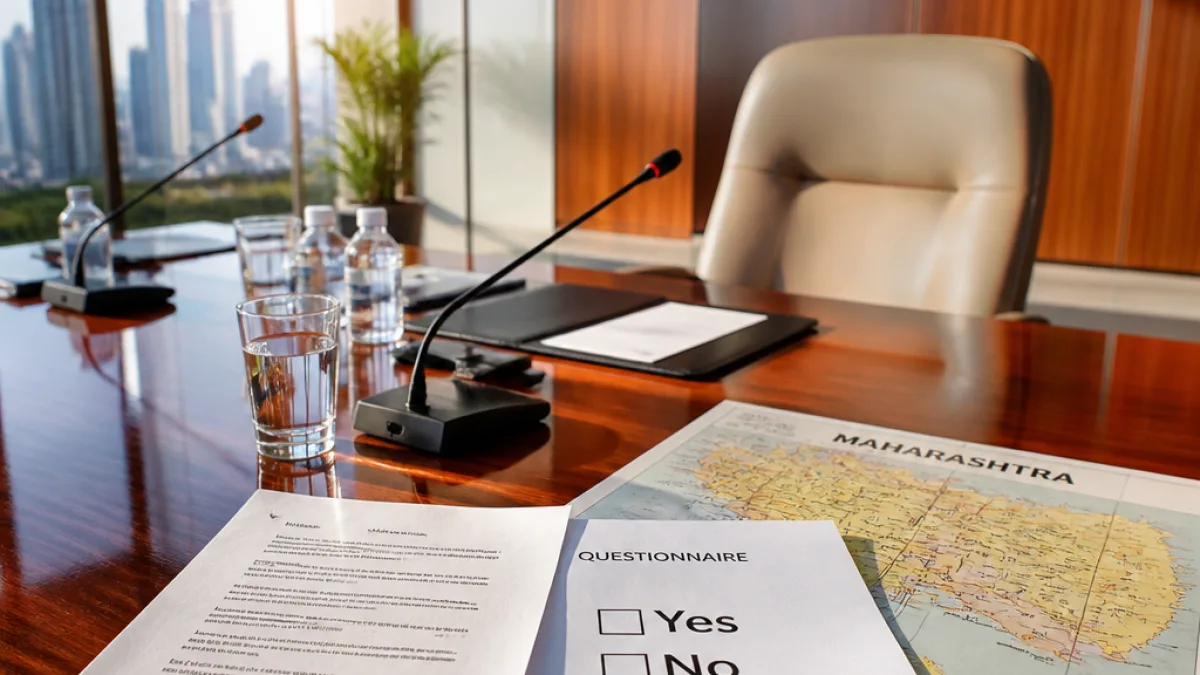
Justice Chavan stepped down on September 19, according to the resignation letter made public. He complained that the committee’s approach would reduce complex social questions to a binary “yes/no” format, which he said would defeat the purpose of generating a broad public consensus on sensitive issues such as delayed marriages, infertility, matrimonial instability and lengthy dispute resolution mechanisms.
In his letter to the committee chairperson, retired Supreme Court judge Justice Ranjana Desai, Justice Chavan said he originally understood the committee’s mandate to be the collection of detailed views from people across Maharashtra to enable reasoned consensus-building. He contended that the questionnaire had already been finalised by the chairperson and circulated for uploading, leaving little scope for members’ suggestions on framing questions to elicit substantive responses.
“Now that the misunderstanding is removed, I realise that the aim is to just provide an opportunity to people who may care, to share their responses, in a ‘yes or no’ format to the questions posed so that analysis of data becomes easy,” the letter said.
Justice Chavan also alleged that meetings were being wrapped up without meaningful discussion. He said routine agenda items — including confirmation of minutes, website modifications and finalisation of questionnaires — were being handled swiftly on the directions of the chairperson, and that suggestions by members were not being considered.
Concern over involvement of an outsider
Another issue raised by the former judge was the presence of an officer from outside Maharashtra on the committee. Justice Chavan said the involvement of a non-State officer could give rise to concerns that local administrative officers were considered incapable of performing the task, or that the outsider’s role had not been properly defined within the panel’s functioning.
He added that, in light of these concerns, he was vacating his seat so the government could fill the vacancy promptly.
Background: panel, mandate and process
The Maharashtra government announced the constitution of the seven-member committee in July, naming retired Supreme Court judge Ranjana Desai as chairperson. The committee’s mandate is to draft a framework for implementing a Uniform Civil Code in the State — a law that would establish common civil laws across religions on matters such as marriage, divorce and property.
Public consultation and the framing of a questionnaire were listed as part of the committee’s workplan. Justice Chavan’s letter implies disagreement within the panel over how extensive and open that consultative process should be, and how responses will be solicited and analysed.
Implications and immediate fallout
Justice Chavan’s resignation highlights internal differences at an early stage in the committee’s work. The concerns he has flagged — narrow response formats, pre-circulated questionnaires and an external officer’s role — are likely to draw attention from stakeholders, advocacy groups and political parties, given the UCC’s sensitive social and communal implications.
- Vacancy on panel: Government will need to appoint a replacement member following the resignation.
- Consultation design: Debate over whether public input should be open-ended or limited to structured options may shape the legitimacy of the eventual draft.
- Transparency questions: Speedy disposal of agenda items and pre-finalisation of material could attract scrutiny from civil society and legal commentators.
Justice Chavan described the assignment as a learning experience and wished the panel well in his letter, while also stressing that he intended his resignation to allow the government to fill the position without delay.
What happens next
The government has not publicly commented, as of the details available in Justice Chavan’s resignation, on whether it will review the committee’s internal procedures or the format of public consultation. Observers will watch whether the chairperson or the State issues clarifications on the questionnaire, the role of the external officer and the scope for incorporating members’ suggestions.
| Item | Detail |
|---|---|
| Committee constituted | July (State government) |
| Chairperson | Retd. Supreme Court Justice Ranjana Desai |
| Resignation | Justice R. C. Chavan — 19 September |
| Key concerns | Limited public response format, pre-finalised questionnaire, outsider officer involvement |
As the committee proceeds to prepare a draft, how it engages with citizens and balances the need for structured data with meaningful qualitative inputs will be central to shaping both the content and the acceptability of any UCC proposal in Maharashtra.
Sameer Joshi is the Maharashtra correspondent.