International exchange focuses on rainwater harvesting, LRI and on-farm monitoring
A five-member delegation from the Water and Land Resources Centre (WLRC), Addis Ababa, visited Jhansi on Thursday to study integrated water, land and natural resource management initiatives implemented by the International Crops Research Institute for the Semi-Arid Tropics (ICRISAT), ICRISAT officials said.
The delegation comprised WLRC directors Behailu Berehanu, Adey Nigatu, Yonas Tesfa, Tibebu Kassaw and Desalegn Amelaku, accompanied by ICRISAT’s country representative in Ethiopia, Gizew Desta, the report said. During the visit the team inspected field interventions across 40 villages covering nearly 28,000 hectares in Tahrauli tehsil and held technical discussions at ICRISAT’s Jhansi project office.
- Focus areas included use of Land Resource Inventory (LRI) and hydrology‑based planning for rainwater harvesting and groundwater recharge.
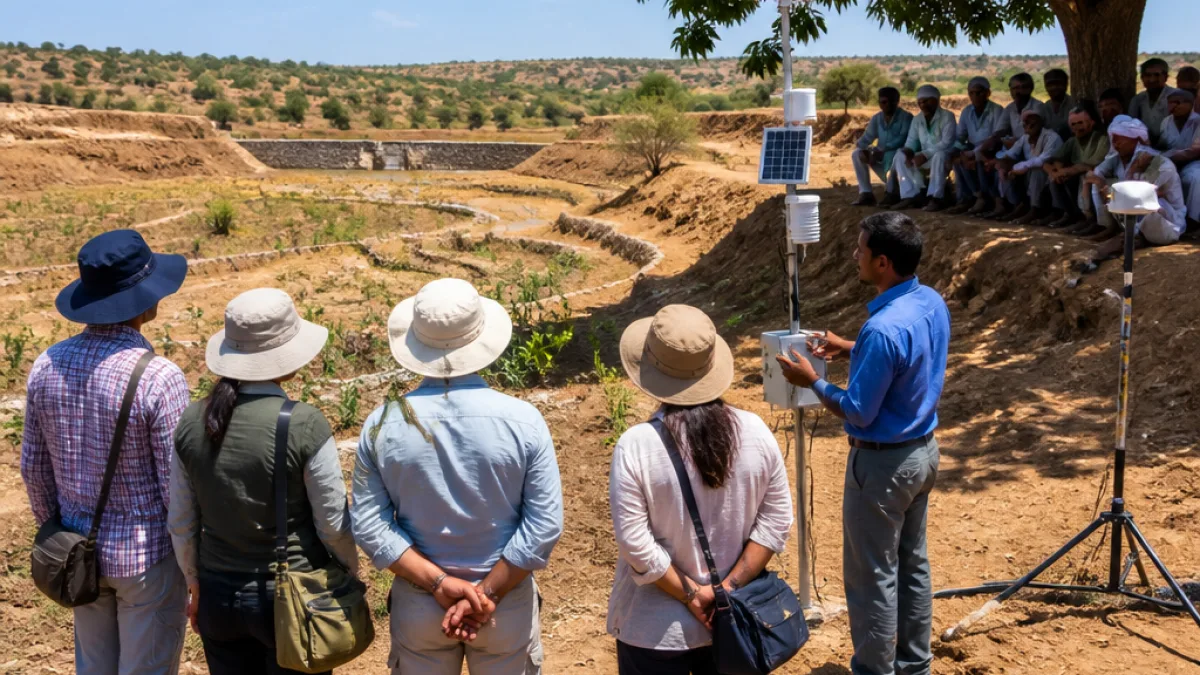
- Delegates saw community-level assets such as a pond in Nota village and met members of the Natural Resource Management Committee and local farmers.
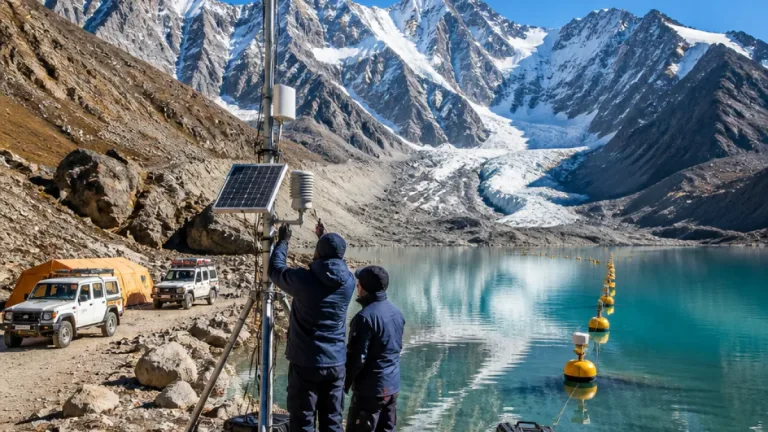
- Scientific monitoring systems demonstrated during the visit included Time Domain Reflectometry (TDR) devices and Automatic Weather Stations (AWS), used to record soil moisture and weather parameters.
ICRISAT officials said the Ethiopian delegation was briefed on how data from TDR and AWS devices are used for planning and improving natural resource management in the semi-arid Bundelkhand landscape. The visitors also discussed the role of collective farmer organisations in enhancing market access and input supply chains.
"The visit covered scientific and developmental interventions, and focused on hydrology-based planning and monitoring systems used for addressing water scarcity," the report said.
The delegation met directors and promoters of Progressive Bundelkhand Farmer Producer Company Ltd to understand the role of farmer producer organisations (FPOs) in organising producers and ensuring availability of quality seeds and other inputs. ICRISAT reported that the discussions covered implementation, outcomes and the impact of natural resource management interventions on local communities and agriculture.
The exchange brings an international perspective to longstanding local challenges in Bundelkhand — a region that frequently faces water scarcity and variable rainfall. ICRISAT’s interventions in Jhansi combine on-ground infrastructure for water conservation with scientific monitoring to inform decision-making at village and watershed scales.
Officials emphasised that combining land resource inventories with real-time and periodic monitoring can help prioritise sites for interventions such as ponds, check dams and recharge structures, and guide cropping and input choices for farmers. Delegates examined these principles in situ by visiting the community pond at Nota village and interacting with Natural Resource Management Committee members and farmers about practical benefits and maintenance.
| Delegation / Stakeholder | Focus during visit |
|---|---|
| WLRC directors (Behailu Berehanu, Adey Nigatu, Yonas Tesfa, Tibebu Kassaw, Desalegn Amelaku) | LRI, hydrology-based planning, community ponds, monitoring systems |
| ICRISAT (including Gizew Desta) | Project implementation, scientific monitoring, technical briefings |
| Progressive Bundelkhand Farmer Producer Company Ltd | Role of FPOs in market access, seed and input availability |
The delegation’s visit illustrates a transfer of technical knowledge between semi-arid regions; Ethiopia and Bundelkhand face comparable constraints in groundwater recharge and variable rainfall. ICRISAT reported that monitoring technologies such as TDR and AWS play a central role in generating data that can be translated into practical actions for smallholder farmers.
For Jhansi residents and local farming communities, the exchange could strengthen the scientific basis for future water-conservation investments and improve the capacity of farmer collectives to obtain quality agricultural inputs and better market linkages. ICRISAT said the visit included technical discussions on outcomes and implementation, signalling continued collaboration and learning between the project and international partners.
ICRISAT and WLRC did not provide estimates of immediate new investments or a timeline for follow-up activities in the report. The institutions said discussions covered existing interventions and their demonstrated impacts on natural-resource use and agriculture in the project area.