Economic shift strengthens Saharanpur’s mid-tier status in western Uttar Pradesh
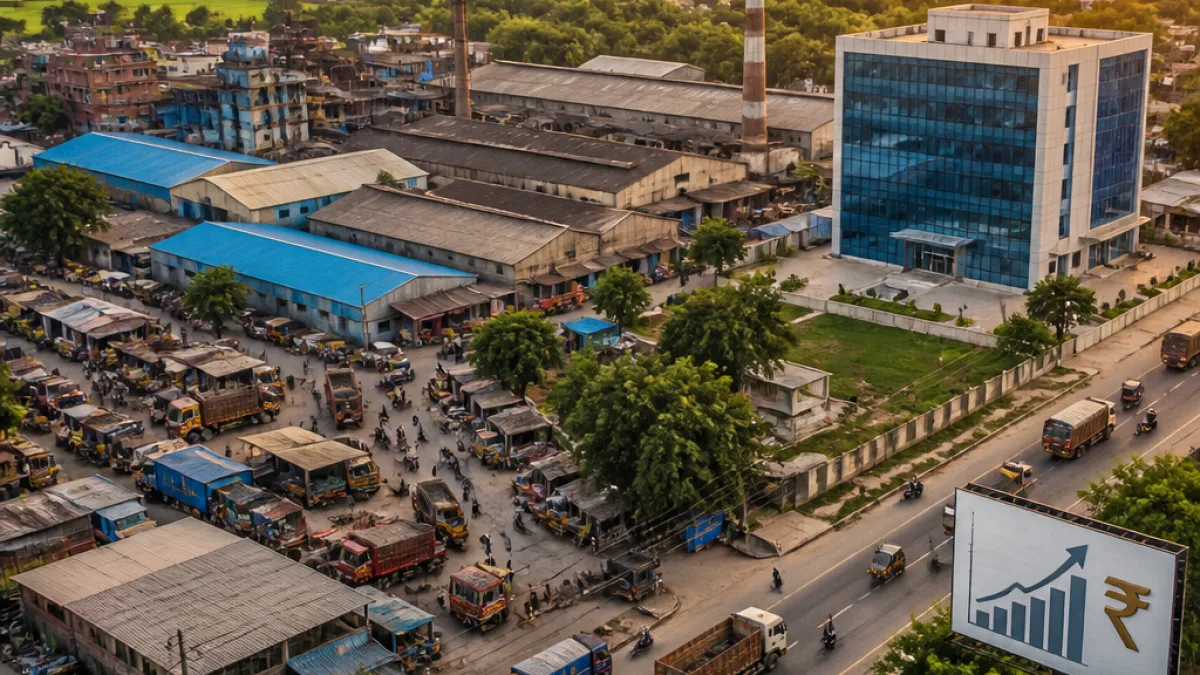
Saharanpur’s economy has recorded sustained growth and structural change over the last seven to eight years, moving beyond a narrow dependence on agriculture and cottage-level manufacturing to a more diversified mix of farming, industry, services and traditional crafts. Official estimates and compiled district figures indicate the Gross District Domestic Product (GDDP) rose sharply in the latest reported year, underscoring the district’s emerging role as a mid-tier economic centre in western Uttar Pradesh.
Data compiled from district-level accounts show the GDDP increased from around ₹32,230 crore in 2019-20 to an estimated ₹53,058 crore in 2024-25, a rise that represents annual growth of roughly 13 per cent in the most recent year. The district is now estimated to contribute about 1.75–1.79 per cent of Uttar Pradesh’s Gross State Domestic Product and is placed around the 13th rank among the state’s districts by size of economy.
- Primary sector: reported growth of about 16.5 per cent, driven by sugarcane, foodgrains and allied activities.
- Secondary sector: expansion of approximately 14.3 per cent, reflecting gains in manufacturing and trademark woodcraft and furniture production.
- Tertiary sector: services grew by around 12.1 per cent, supported by better connectivity and rising household incomes.
Officials and published district indexes cited the balanced expansion across these three broad sectors as a notable feature. While agriculture continues to underpin the local economy—especially sugarcane cultivation and related processing—manufacturing and services have registered meaningful contributions in recent years. Traditional sectors such as Saharanpur’s woodcraft and furniture have been highlighted as important sources of employment and value addition.
“Saharanpur has steadily broadened its economic base, supported by infrastructure improvements, better connectivity and a revival of traditional crafts,” the district profile said.
The trajectory since 2019-20 shows an uneven but persistent rise in output. After a modest recovery period, the district economy accelerated to approximately ₹33,900 crore in 2021-22 and ₹41,365 crore in 2022-23. Estimates for 2023-24 ranged between ₹45,942 crore and ₹46,935 crore before the reported leap to the 2024-25 figure. These year-on-year increases reflect both nominal expansion and underlying real activity in several sub-sectors.
| Year | Estimated GDDP (₹ crore) |
|---|---|
| 2019-20 | 32,230 |
| 2021-22 | 33,900 |
| 2022-23 | 41,365 |
| 2023-24 | 45,942–46,935 |
| 2024-25 | 53,058 |
For Saharanpur residents, the changes carry practical implications. A broad-based industrial and services expansion can mean more employment opportunities beyond seasonal farm work and small-scale manufacturing. Improved transport links and infrastructure investment cited in the district profile may also reduce transaction costs for traders and artisans, potentially increasing returns for local producers.
At the same time, the figures point to policy challenges. Sustaining inclusive growth will depend on supporting small and medium enterprises, upgrading skills for new jobs, and ensuring agri-processing and craft sectors receive targeted assistance to move up the value chain. Observers note that while the district has not reached the economic scale of larger Uttar Pradesh centres such as Gautam Buddha Nagar or Lucknow, the steady rise positions Saharanpur as a significant intermediate economy whose continued growth will affect labour markets and fiscal receipts across western UP.
Going forward, district planners and state policymakers will be watching whether recent momentum translates into durable gains in employment, per capita incomes and living standards across urban and rural communities in Saharanpur.