Bahujan Samaj Party president Mayawati on Wednesday said the party has begun preparations for the 2027 Uttar Pradesh Assembly elections, with work underway to strengthen its base across communities and to select candidates at the assembly level. She also said senior leader Satish Chandra Mishra had been entrusted with an important election-related responsibility.
Grassroots push, candidate announcements at assembly-level meetings
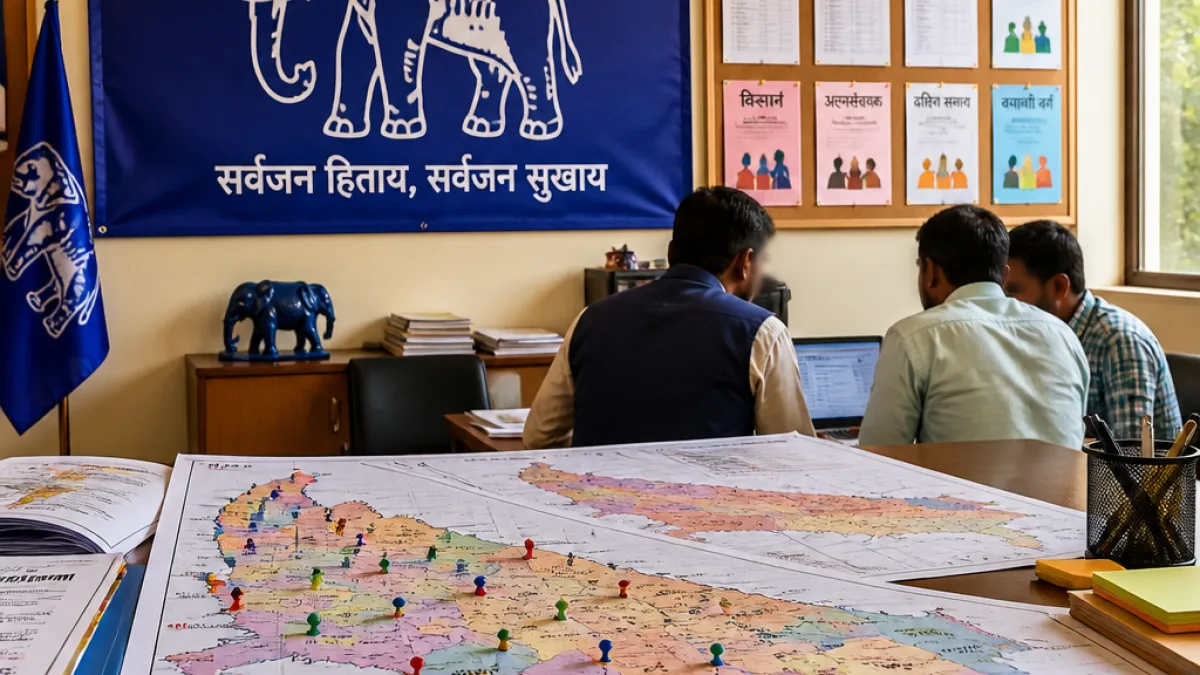
In a post on social media platform X, Mayawati said the party was working "at the grassroots level" to expand its support among what she described as "sarv samaj" — all sections of society — and had started selecting candidates and announcing names at assembly-level workers' conferences. She added that the process had caused disquiet among rival parties.
"The process of strengthening the BSP's base among all sections of society on the ground, as well as selecting party candidates and announcing their names at the party's assembly-level workers' conferences, is underway," she said.
Mayawati said the exercise had produced "considerable restlessness" among opponents and that consequent changes were now a natural development in both the ruling Bharatiya Janata Party and other opposition parties.
Targeting an expanded social coalition
As part of the preparations, Mayawati said the BSP had been giving representation to the Brahmin community among its candidates, framing this as an effort to build a broad-based coalition aimed at forming a majority government along lines similar to the BSP's 2007 victory in the state. She said this has prompted discussion and concern among rival parties.
- Assembly-level candidate selection and announcements have begun.
- Grassroots outreach to "sarv samaj" is being prioritised.
- Satish Chandra Mishra has been given a significant election-facing role.
The party did not, in the post, provide detailed timelines for when candidate lists would be completed or publicly released, nor did it specify the precise responsibilities assigned to Mishra.
Political context and likely implications
The BSP's move comes more than a year ahead of the 2027 Assembly polls in Uttar Pradesh, a contest that will shape political dynamics nationally as well as within the state. The BSP has historically sought to forge coalitions across caste lines to challenge dominant parties in UP; the reference to widening representation to include Brahmin candidates signals a continuation of that strategy.
Political analysts and senior party observers note that early candidate selection and assembly-level outreach can be intended to signal organisational strength, solidify local cadres and pre-empt rival recruitment. Mayawati's public comment that rival parties are "restless" frames the exercise as both a tactical and psychological operation in a highly competitive polity.
Satish Chandra Mishra's elevated role
Mayawati's announcement that Satish Chandra Mishra has been given an important election-related responsibility underlines the BSP leadership's reliance on trusted senior organisers to coordinate campaign work. Mishra, a longstanding leader within the party, has previously held organisational and legal roles; the party statement did not enumerate his new duties.
| Item | Reported Detail |
|---|---|
| Candidate selection | Started; assembly-level workers' conferences to announce names |
| Ground outreach | Expanding support among "sarv samaj" |
| Brahmin representation | Increasing inclusion among BSP candidates |
| Leadership role | Satish Chandra Mishra given important election-facing duty |
Mayawati's emphasis on multi-caste outreach and early candidate announcements may also affect alliance arithmetic among opposition parties and the BJP's own campaign strategy. The BSP's 2007 campaign, which delivered a sizeable victory, remains a reference point for the party's organisers now seeking to expand electoral appeal beyond traditional vote banks.
What remains unclear
The party's public remarks did not specify whether candidate selection would prioritise sitting legislators, newly identified local leaders or particular demographic targets beyond the mention of Brahmin representation. It also did not elaborate how the party plans to translate social outreach into electoral mobilisation, or how it will navigate potential seat-sharing with other parties should pre-poll alliances be considered.
With the 2027 election still some distance away, early organisational moves by the BSP signal the start of a prolonged period of political contestation in Uttar Pradesh. How rival parties respond to the BSP's groundwork will shape campaign narratives and seat calculations in the months ahead.
Reported from Uttar Pradesh.