Akola, Maharashtra — As households in Akola plan purchases for festivals, weddings and investment, buyers are being urged to pay close attention to purity, making charges and regulatory requirements when purchasing gold, according to a market guide published by BusinessToday.in.
Understand purity and why karat matters
Gold purity is expressed in karats. The Business Today guidance outlines the commonly used standards:
- 24K (99.9%) — the purest form of gold, best suited to coins and bars because it is relatively soft for everyday jewellery.
- 22K (91.6%) — widely used in traditional Indian jewellery for a balance of purity and durability.
- Lower karats such as 18K and 14K — contain more alloy metals and offer greater strength for certain designs.
The guide also notes that yellow, white and rose gold differ only in the metals used for alloying; the karat value determines the actual gold content, not colour.
How the showroom price is formed
Buyers in Akola often assume the online daily gold rate is the final payable amount. Business Today emphasises the online rate is a benchmark; the showroom price typically includes several additions. The final price components listed include:
- Base gold price per gram (benchmark rate)
- Making charges, which vary by design and are often negotiable
- 3% GST on the making charges and on the value as applicable
- Stone deductions in studded jewellery — the weight of embedded stones is excluded when calculating net gold weight
"The daily online rate is only a reference. Final show‑room prices will include making charges and taxes, and buyers should insist on a detailed bill that breaks down each component," the Business Today guide said.
Local jewellers in Akola traditionally quote making charges per gram or as a fixed amount for a design; customers are advised to seek written breakdowns and compare rates across shops, especially during peak buying seasons such as Gudi Padwa and Diwali.
Authenticity: BIS hallmark and HUID verification
Verification of purity is central to consumer protection. The guide highlights the BIS hallmark as the standard assurance of purity. Buyers should look for:
- BIS logo
- Purity grade (for example, 916 for 22K)
- 6‑digit alphanumeric HUID code — which can be verified using the BIS Care mobile app
Citizens in Akola are advised to retain invoices and check HUID codes before completing payment, particularly for high‑value purchases.
Paper and digital alternatives for Akola investors
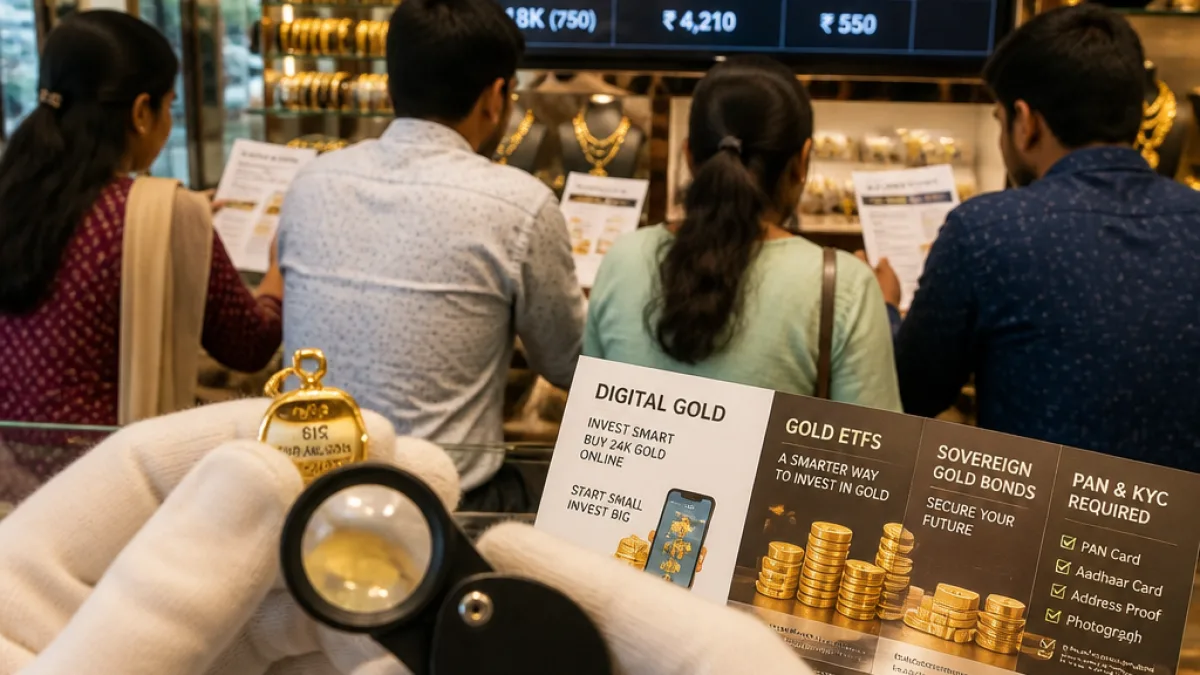
For residents who prefer to avoid physical storage and making charges, Business Today lists several paper‑gold options that are accessible from Akola:
- Digital gold — allows purchase of small quantities online, often from Re 1, with the gold stored by the provider.
- Gold ETFs and mutual funds — liquid financial assets that track the market price of gold.
- Sovereign Gold Bonds (SGBs) — government‑issued securities that pay a fixed annual interest in addition to price appreciation.
The guide underscores differences in liquidity, storage risk and tax treatment between physical gold and paper alternatives — factors Akola investors should weigh before choosing an instrument.
Regulatory and tax reminders
Business Today reiterates the key regulatory points that affect local transactions:
| Requirement | Note |
|---|---|
| KYC | PAN mandatory for purchases above ₹2 lakh; strict KYC for cash purchases over ₹10 lakh |
| GST | Flat 3% GST applies on gold purchases |
| Capital gains | Selling gold is subject to capital gains tax depending on holding period |
The guide adds that gifts and inheritance have particular rules: inherited gold is not taxed until sold, while gifts may be tax‑free in certain family situations but taxable above threshold limits.
For Akola buyers, the immediate takeaways are straightforward: insist on a detailed invoice, verify the BIS hallmark and HUID, compare making charges, and consider paper‑gold if concerned about storage and design costs. With festival and wedding seasons approaching, informed decisions can protect savings and avoid disputes at the point of sale.