Patna-area, Bihar — Union minister and Lok Janshakti Party (Ram Vilas) chief Chirag Paswan said on Saturday that Bihar’s prohibition law in its current form had not achieved its goals and should be reviewed to make it more effective. He also voiced support for the style of politics pursued by Jan Suraaj Party founder Prashant Kishor, saying it focuses on development rather than mobilising voters on religious or caste lines.
Prohibition law falling short, says Paswan
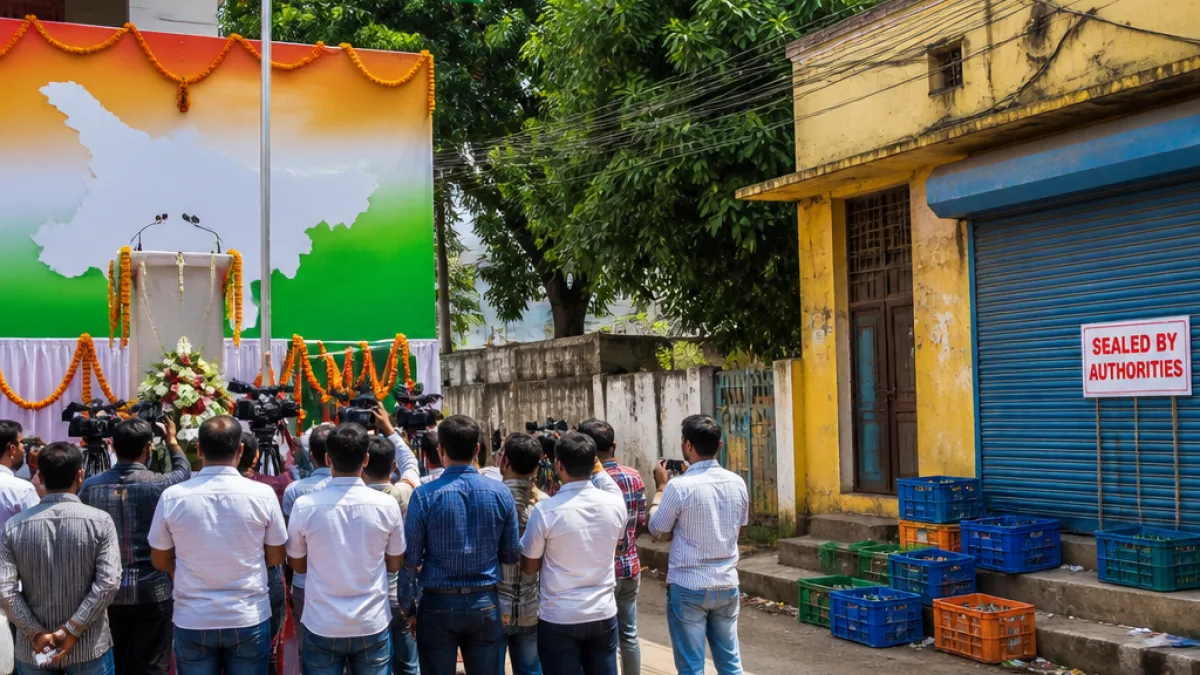
Speaking to reporters after hoisting the national flag on Independence Day at his party office, Paswan argued that despite the ban on alcohol introduced in 2016, reports of sale, manufacture and purchase of liquor — including spurious variants — continue to surface. He said this indicates the policy’s objective is not being met and that the legislation needs re-examination.
"Even after prohibition was implemented, reports of liquor sale, purchase and manufacture, including spurious liquor, continue to emerge. The policy’s objective is not being fulfilled, and the law needs to be reviewed to make it more effective," Paswan said.
Paswan recalled that his party had supported the prohibition law when it was enacted while in opposition and emphasised a continuing need to create mass awareness about the harms of alcohol consumption. He did not outline a specific amendment or technical change to the law during the remarks reported on Saturday.
Political context within the NDA and Bihar
The Lok Janshakti Party (Ram Vilas) is an alliance partner of the NDA both in Bihar and at the Centre. Paswan’s remarks come shortly after concerns were raised publicly by another NDA ally, Hindustani Awam Morcha (Secular) leader and Union minister Jitan Ram Manjhi, who called for stricter enforcement of the state’s prohibition, suggesting a model along the lines of Gujarat.
By endorsing Prashant Kishor’s emphasis on development rather than identity-based mobilisation, Paswan highlighted a strand of political rhetoric gaining traction in Bihar ahead of future electoral cycles. He framed Kishor’s approach as centring on governance and developmental outcomes.
Practical implications and public interest
A review of Bihar’s prohibition policy, if taken up, would raise practical questions about enforcement resources, penalties, cross-border smuggling and public-health outreach. Paswan’s call for enhanced mass awareness underscores the public-health angle of prohibition debates: whether the policy is primarily a moral-legal measure or needs stronger supportive measures such as rehabilitation, education and economic alternatives for those affected.
- Key observation: Paswan said prohibition has not stopped illegal liquor activity.
- Political stance: He expressed support for development-centred politics promoted by Prashant Kishor.
- Alliance dynamics: Paswan’s view follows similar concerns from other NDA partners about enforcement.
| Issue | Paswan’s observation |
|---|---|
| Illegal liquor trade | Continues despite prohibition, requiring review of the law |
| Public awareness | Needs strengthening on harms of alcohol consumption |
| Political approach | Supports development-focused politics over caste/religious mobilisation |
Paswan’s comments did not include specific legislative proposals or timelines for any government-initiated review. The state prohibition law, introduced in 2016, has been a recurring subject of debate in Bihar’s public discourse, with questions repeatedly raised about its enforcement and unintended consequences.
Any move to revisit the law would require political consensus within the ruling coalition in the state and at times could involve consultations with law enforcement officials, the state health department and civil-society groups working on addiction and rehabilitation, though Paswan did not describe such consultations in his remarks.
For now, his statement adds a fresh voice to an ongoing conversation among Bihar politicians and civil society on how best to balance public-health aims with on-the-ground enforcement challenges and the socio-economic implications of prohibition.