Protest, restoration and aftermath
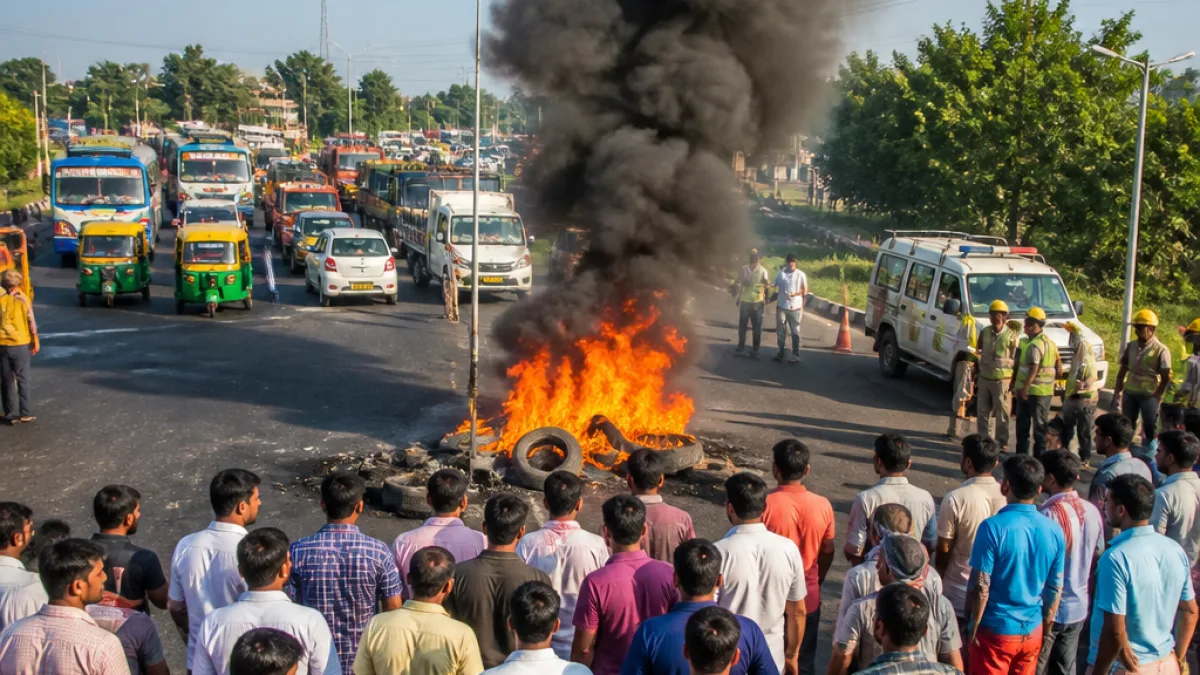
Hundreds of villagers on Sunday blocked the Patna-Gaya State Highway at the Beldarichak intersection under Gaurichak police station, halting traffic for nearly four hours in protest against a three-day power crisis, police and residents said. The blockade began at about 9 am and was lifted around 1 pm after electricity supply was restored to the affected localities.
Protesters, who included residents from panchayats under Lakhan Purvi and Barna, set fire to tyres and raised slogans against the electricity department, bringing both lanes of the highway to a standstill. Vehicles — buses, trucks, autos and private cars — were queued up near the Bihta-Sarmera bridge during the agitation, police said.
Local impact: services and daily life
Residents said the intermittent power supply had persisted for three days, at times leaving homes without electricity for several hours. The outage disrupted routine household work, children’s studies and access to mobile phone charging. Electric motors used for filling water tanks and operating pumps were affected, causing water-supply disruption as well.
- Start of blockade: about 9 am
- End of blockade: about 1 pm
- Primary complaints: erratic electricity, poor response from department personnel, interruption to water and study routines
“The crisis has affected children’s studies and routine household work. Many people have not even been able to charge their mobile phones,”
said villager Vishwajeet Ram, reflecting the frustration that prompted the demonstration.
Authorities' response and course of events
Gaurichak SHO Suman Kumar and a police team went to the spot and tried to persuade the protesters to clear the highway, but the villagers refused to lift the blockade until power was restored, according to police statements. A brief scuffle between police personnel and protesters was reported during the standoff.
As the agitation intensified, an official from the electricity department arrived and, following repairs, power was restored to the affected areas. Police opened the highway after supply resumed and normal traffic movement was reported. An electricity department official subsequently assured residents that damaged wires had been repaired and regular supply would be maintained.
Timeline and immediate outcomes
| Event | Time |
|---|---|
| Blockade begins | ~9:00 am |
| Power restored | ~1:00 pm |
| Highway reopened | After restoration |
Wider context and implications
The protest underlines long-standing grievances in peri-urban and rural pockets around Patna where erratic power supply affects livelihoods, schooling and water access. Residents alleged that repeated attempts to contact the junior engineer of the electricity department had gone unanswered, and that stated causes such as storms, waterlogging, damaged wires and faulty poles often failed to resolve the underlying reliability issues.
Local leaders and officials who attended the scene included Gaurichak police personnel. Names of other local functionaries present were not given in official remarks. The electricity department’s assurance of repaired wiring will now be measured against sustained supply over the coming days — a key demand behind the villagers’ decision to block a state highway that connects Patna to Gaya and is used by long-distance traffic.
The incident adds to administrative pressure on local civic bodies and utility departments to improve responsiveness and preventive maintenance, particularly ahead of seasons that can exacerbate faults. For road users, the episode reiterated the vulnerability of long stretches of highway to localised protests and the need for contingency plans to manage disruptions.
Police cleared the highway after power was restored and traffic resumed, according to officials at the scene.