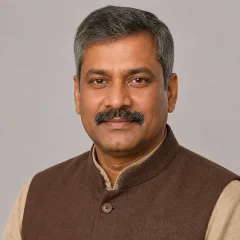
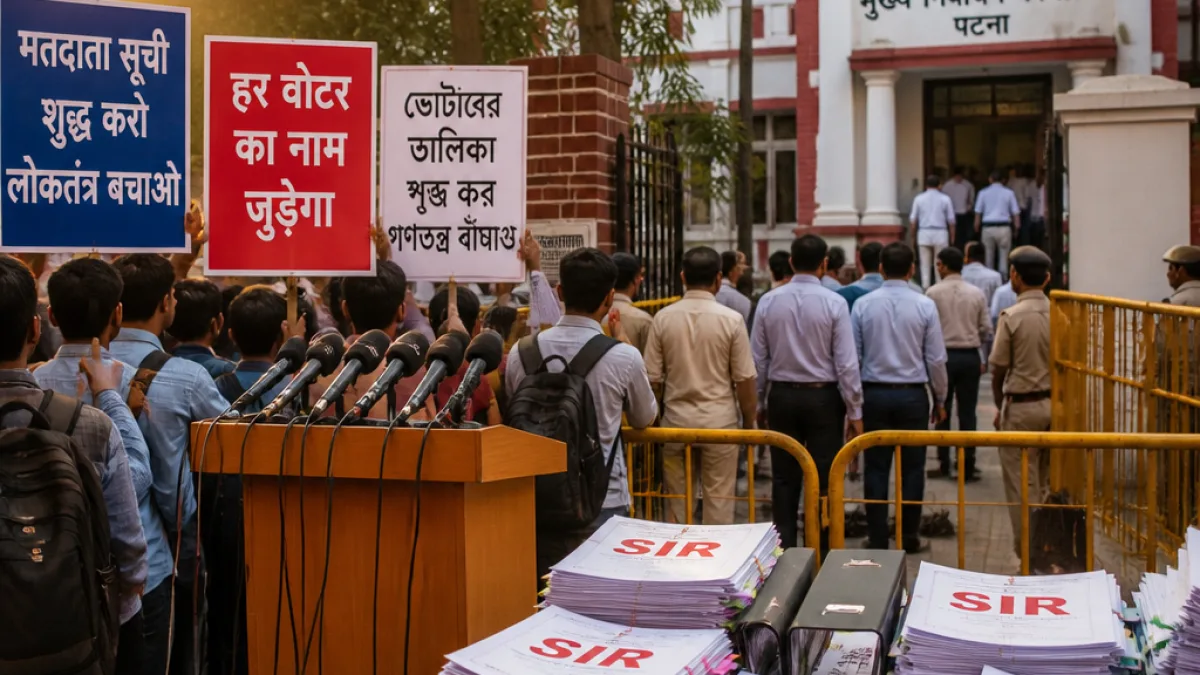
Patna: Bihar's Leader of Opposition, Tejashwi Prasad Yadav, on Wednesday urged fresh assembly elections in both Bihar and West Bengal, asserting that the Election Commission had been manipulated to benefit the ruling Bharatiya Janata Party. The demand followed reports of internal objections by two Election Commissioners over electoral-roll and voter-registration decisions.
Allegations over electoral-roll exercise and EC functioning
Speaking to the media, Tejashwi alleged that the Special Intensive Revision (SIR) of electoral rolls had been carried out arbitrarily in several states, including Bihar and West Bengal, and that the exercise militated in favour of the BJP. He claimed the process had resulted in deletions and other changes designed to influence outcomes, though he did not produce documentary proof during his remarks.
Tejashwi also took issue with changes to post-poll procedures for electronic voting machines (EVMs), saying the revisions would complicate preservation of evidence in case of disputes. He criticised the central government’s handling of the appointment process for the Chief Election Commissioner, alleging that the role of the Chief Justice of India in selection had been diminished.
Background: internal EC objections reported
Media reports cited by the opposition indicated that two election commissioners, Sukhbir Singh Sandhu and Vivek Joshi, had registered formal objections on multiple occasions to decisions concerning voter registration, deletions and restorations, changes to Form 6 and overall electoral-roll management. The reports said the pair had raised objections at least 14 times over a 10-month span while internal decisions were being made.
The Election Commission has responded to such reports by stating that all decisions, including those related to the SIR, were adopted with the concurrence of all three commissioners. The commission described any differences aired during internal deliberations as part of normal institutional decision-making, and denied that the process was compromised.
Claims on campaign-day transfers and Bihar election
Referring specifically to the recent Bihar Assembly election, Tejashwi alleged that targeted transfers of funds — he cited an instance of ₹10,000 credited to women’s bank accounts on polling day — had conferred electoral advantage to the BJP-led alliance. He maintained that objections raised by opposition parties to the Election Commission’s conduct were not adequately addressed.
The Election Commission has not accepted the contention that such transfers were coordinated to sway the vote, and there has been no official finding to substantiate the allegation. Tejashwi’s demand for fresh elections is premised on the assertion that the commission’s actions undermined the fairness of the outcome.
Political stakes and likely follow-up
Tejashwi’s call for re-polling elevates scrutiny on institutional impartiality ahead of future contests. The demand places pressure on the Election Commission to clarify procedural questions raised by the opposition and to make public the record of internal dissent, if any. It also underscores the heightened politicisation of administrative processes in the run-up to national-level contests.
- Demand: Fresh assembly elections in Bihar and West Bengal.
- Basis cited: Reported internal objections by two election commissioners and alleged irregularities in SIR and EVM post-poll rules.
- Allegation: Transfer of ₹10,000 to women voters on polling day benefited BJP (no documentary proof presented).
What authorities have said
The Election Commission maintains that decisions were collective and that internal disagreements do not imply improper conduct. The commission framed the reported objections as part of routine deliberations rather than evidence of systemic bias.
| Issue | Opposition claim | Election Commission position |
|---|---|---|
| Electoral-roll SIR | Arbitrary deletions, benefited BJP | Decisions taken with approval of all three commissioners |
| Internal objections | Two EC members objected 14 times (report) | Differences are part of normal deliberations |
| EVM rules | Changes hinder evidence preservation | No admission of impropriety |
With the Opposition seeking fresh polls, the matter could prompt legal scrutiny or an official inquiry if parties pursue the issue before courts or through parliamentary channels. For now, the row highlights heightened mistrust between the principal opposition in Bihar and the Election Commission.
Local political observers say the demand is likely to be taken up as a campaign issue by the Opposition, while the ruling alliance will seek to defend the conduct of the election and the commission’s autonomy. How the Election Commission chooses to publicly address the specific objections reported in the media will determine whether the controversy escalates into legal or parliamentary proceedings.
Ranjan Prasad, Patna bureau.