Patna: Bihar's prohibition, excise and registration minister Madan Sahni on Thursday said officials have been directed to register FIRs against firms whose liquor brands are seized in the state's long-standing dry regime, signalling a tougher enforcement stance amid renewed public debate on prohibition.
Enforcement focus on brands as well as individuals
Sahni was responding to questions about demands by Union Minister Jitan Ram Manjhi that Bihar adopt a Gujarat-style implementation of its prohibition law. The minister reiterated that "Only the Bihar model will remain here" and that authorities were strictly enforcing the ban.
"Only the Bihar model will remain here. Authorities concerned are strictly enforcing the prohibition law in the state," said Madan Sahni.
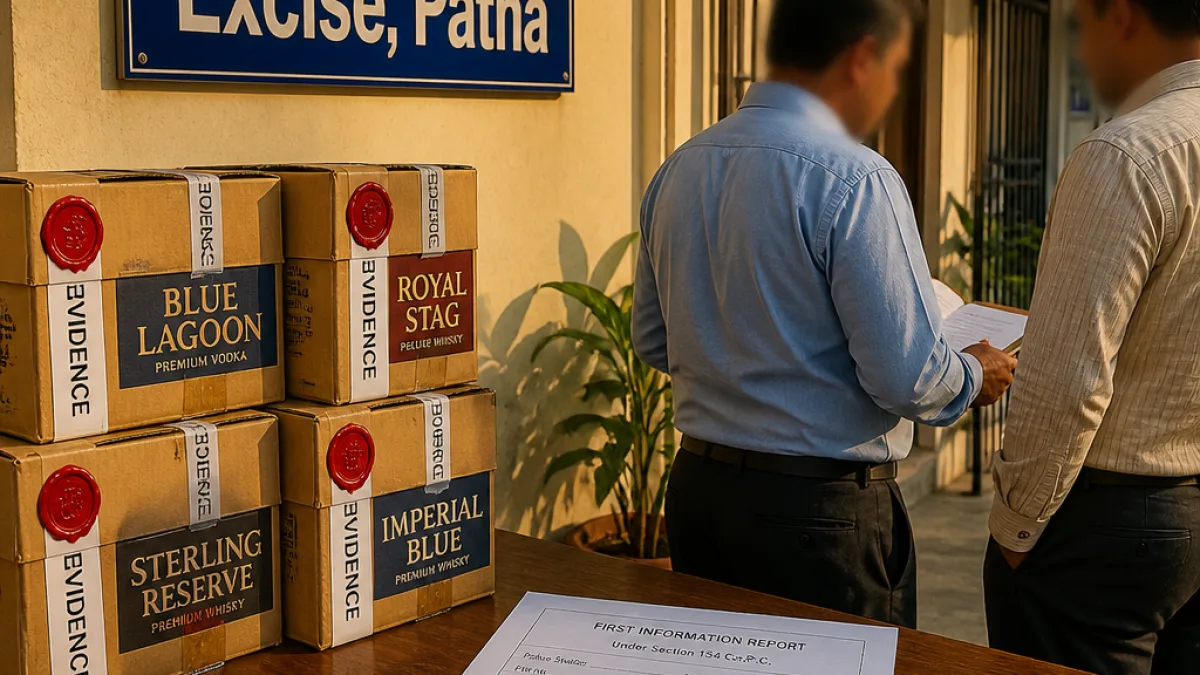
Under the directive, state officials will move beyond detaining individuals found carrying liquor and will initiate criminal cases against companies whose brands — including Indian-made foreign liquor (IMFL) — are seized. The move places corporate accountability on the enforcement map alongside traditional focus on users and bootleggers.
Context: a decade of prohibition and recent debate
Bihar imposed a complete ban on the sale and consumption of alcohol on 5 April 2016. The prohibition has been a politically charged policy since its inception, affecting enforcement patterns, state revenue and livelihoods linked to alcohol production, distribution and retail.
In recent days, state ministers have publicly dismissed suggestions of revisiting the law. State minister Dilip Jaiswal on Wednesday ruled out any review of the prohibition, accusing opponents of being driven by what he termed the "liquor mafia" and some "liquor lovers".
The debate was further sharpened by a research paper from the National Council of Applied Economic Research (NCAER) that estimated lifting the ban could raise state revenues by about 14–15 per cent. Asked about this finding, Jaiswal urged critics to concentrate on awareness campaigns highlighting the ill-effects of alcohol consumption rather than pushing for policy change.
What the government's stance means on the ground
Officials implementing the minister's instructions will likely prioritise seizure operations that identify brands, consignments and possibly supply chains. While the announcement does not specify procedural changes, criminal cases against companies could open fresh avenues for penal action, including searches, seizures and prosecution under relevant provisions of the prohibition and excise statutes.
- Who is targeted: Firms whose liquor brands are seized, as well as persons found carrying liquor.
- Legal consequence: Registration of FIRs in addition to existing penalties for possession and sale under state law.
- Policy position: Government reiterates continued adherence to the Bihar model of prohibition; no review planned.
Key statements and positions
The following table summarises public positions mentioned in recent statements and reporting:
| Actor | Statement |
|---|---|
| Madan Sahni (Prohibition, Excise & Registration Minister) | Directives to register FIRs against firms whose brands are seized; "Only the Bihar model will remain here." |
| Dilip Jaiswal (State Minister) | No review of prohibition; critics labelled as driven by "liquor mafia" and "liquor lovers"; urged awareness on ill-effects. |
| NCAER (research) | Estimated that lifting the ban could increase state revenues by 14–15% (as reported). |
| Jitan Ram Manjhi (Union Minister) | Called for enforcement along the lines of the Gujarat model (prompting questions to state ministers). |
Implications for businesses and citizens
Registration of FIRs against companies could expose manufacturers, distributors and brand owners to criminal investigations where seized consignments bear clear brand identification. For citizens, the government's stance signals continued strict policing of consumption and movement of liquor within Bihar.
Authorities have not publicly detailed the procedural template for pursuing FIRs against firms — whether investigations will target local distributors, interstate suppliers, brand owners or logistical intermediaries. Legal practitioners say complexities can arise when alcohol movement involves multiple jurisdictions; however, the state’s decision to pursue corporate FIRs could encourage tighter scrutiny at checkpoints and in warehouse operations.
Outlook
The state government's reassertion of the prohibition policy and the step to register FIRs against firms mark a firm administrative response to both domestic debate and external calls for different models of enforcement. How the new emphasis on corporate FIRs will play out in prosecutions, cross-border supply chains and court challenges will depend on subsequent operational directives and investigative follow-up, which authorities have not yet made public.
Reporting and official statements around this development underlined both the political sensitivity of prohibition in Bihar and the continuing will of the administration to preserve the policy as a matter of public order and health.