Forest rights pattas, patrol vehicles aimed at strengthening community protection
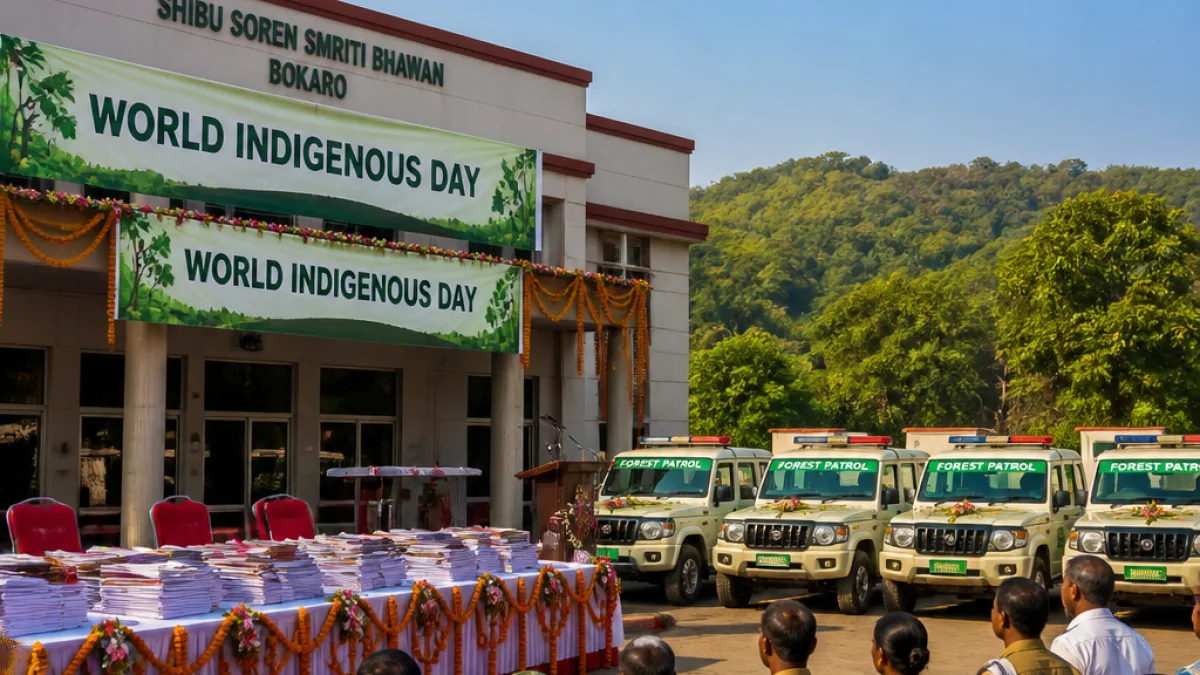
The Bokaro Tribal Festival 2026, held to mark World Indigenous Day, became a forum for formalising community rights and boosting forest protection when the district administration distributed community forest rights pattas covering 4,300 acres to six villages and handed over five patrol vehicles to forest guards on Sunday.
The event at Shibu Soren Smriti Bhawan was inaugurated by minister Yogendra Prasad and attended by local legislators including MLA Shweta Singh and Chandankiyari MLA Umakant Rajak, along with deputy commissioner Ajay Nath Jha, SP Nathu Singh Meena and other officials.
“We do not need to show them something or teach them; we need to learn from them and understand their way of life,”
Deputy Commissioner Ajay Nath Jha said, underlining the administration’s stated approach of engaging with tribal communities rather than imposing development. MLA Shweta Singh described the festival as an opportunity to deepen understanding of tribal culture and its relationship with nature.
What was granted and its local significance
The most significant administrative action announced at the festival was the issuance of community forest rights pattas on recorded forest land. According to the district administration, the distribution covers six villages in Gomia and Peterwar blocks. Two village-level allocations specified in official remarks were:
- Chorgaon — rights over 2,800 acres
- Gangpur — rights over 900 acres
The combined covered area amounts to 4,300 acres. District officials said recognising community forest rights is intended to strengthen gram sabhas’ role in protecting, managing and using local forest resources.
| Village | Area (acres) |
|---|---|
| Chorgaon | 2,800 |
| Gangpur | 900 |
| Other four villages (combined) | 600 |
| Total | 4,300 |
Officials also handed over five patrol vehicles to forest guards. The administration said the vehicles will improve surveillance in forest areas and assist efforts to curb illegal felling, wildlife offences and other unlawful activities.
Festival combined culture, awareness and administration
Beyond formal administrative actions, the festival included traditional performances such as Chhau dance, musical presentations, and exhibitions of handicrafts and paintings depicting tribal life in Jharkhand. Students staged a play under the Namami Gange programme to promote clean water sources and created Sohrai and Jadupatua paintings. Winners of an essay competition were felicitated.
Organisers and officials framed the event as both a cultural celebration and a practical step towards devolving forest governance. By issuing pattas under community forest rights, the administration has signalled support for a governance model in which gram sabhas exercise recognised authority to protect and manage local resources.
Local context and likely implications
Community forest rights, as recognised under the Scheduled Tribes and Other Traditional Forest Dwellers (Recognition of Forest Rights) Act, 2006, transfer certain rights over forest land and resources to gram sabhas and eligible forest-dwelling communities. In Bokaro, the pattas now issued cover recorded forest land and are intended to enable communities to legally protect and sustainably use forest resources.
The provision of patrol vehicles suggests local officials are coupling rights recognition with enhanced enforcement capacity to deter illegal activities in forests. How gram sabhas and forest departments coordinate implementation will determine whether the combined measures reduce illegal felling and support conservation while safeguarding livelihoods.
Officials at the festival emphasised learning from tribal communities and preserving cultural identity alongside conservation objectives, signalling an administrative intent to integrate cultural respect with environment management in Bokaro’s forested blocks.