State approves two major corridors to speed up Bhopal–Raipur travel
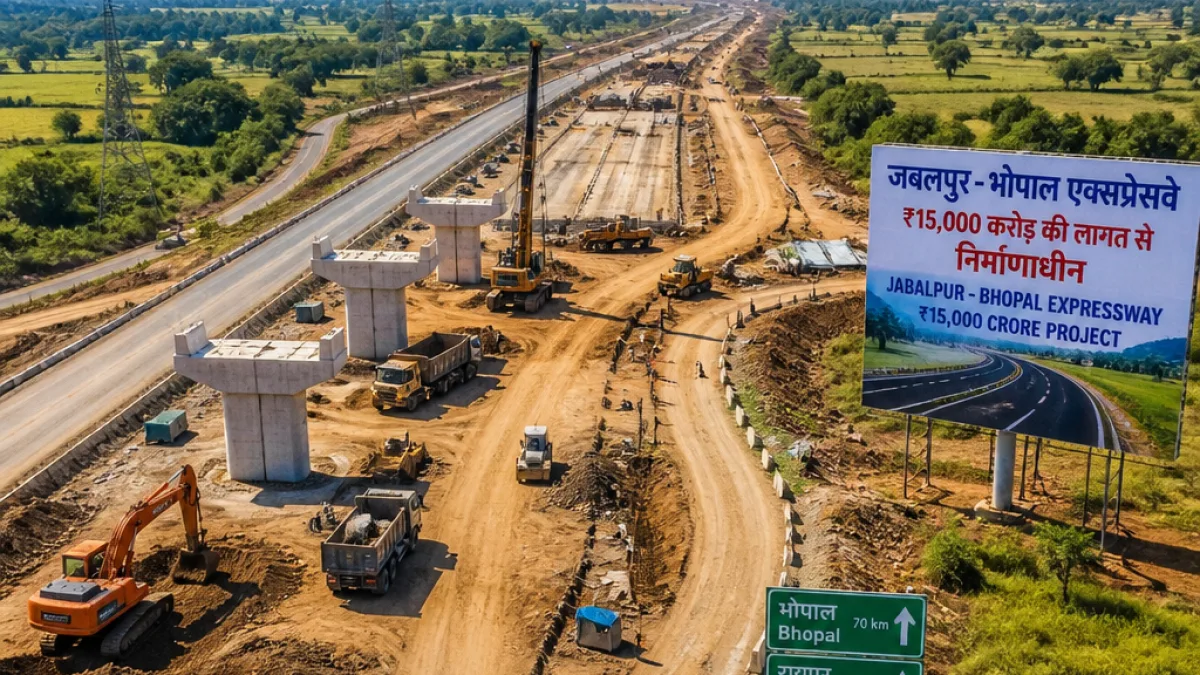
The Madhya Pradesh government has approved two large road projects totalling ₹15,000 crore, including a greenfield expressway linking Jabalpur and Bhopal and a six‑lane corridor from Jabalpur via Mandla to the Chhattisgarh border, officials reported. Together, the schemes are projected to substantially shorten journey times between Bhopal and Raipur and improve connectivity across central India.
According to the announcement carried by national media, the proposed greenfield expressway will pass through key MP districts and towns including Bhopal, Sagar, Damoh, Jabalpur and Mandla before reaching the state boundary with Chhattisgarh. The second project envisages a six‑lane road from Jabalpur to the Chhattisgarh border via Mandla, creating a faster inter‑state link.
- Combined investment: ₹15,000 crore for the two projects.
- Estimated travel time reduction: Bhopal–Raipur from about 14–15 hours to around 6–7 hours.
- Distance shortening: Bhopal–Jabalpur projected to fall from 320 km to about 255 km.
Officials and reports indicate the expressway would cut the Bhopal–Jabalpur drive from the current 6–7 hours to roughly 2.5–3 hours. The Jabalpur–Raipur stretch, now taking about 7–8 hours by road, is expected to be reduced to approximately 3.5–4 hours once the six‑lane corridor reaches the border.
"The combined corridor is expected to speed up movement of people and goods between Madhya Pradesh and Chhattisgarh," the report said.
Regional impacts: trade, tourism and conservation
Transport planners and local stakeholders are likely to view the projects as significant for trade flows. The route serves as an important commercial link between the two states and connects several districts in Madhya Pradesh — Narmadapuram, Narsinghpur, Damoh, Sagar, Dindori, Mandla — and Chhattisgarh towns including Raipur, Kawardha, Bemetara and Simga.
Faster road connectivity could also influence tourism and wildlife visitation. Reports noted that improved access may make it easier for travellers to visit protected areas and reserves across the region. The state government has concurrently announced a separate conservation-related scheme — a ₹5,500‑crore tiger corridor intended to link Kanha, Bandhavgarh and Panna tiger reserves — which officials say will further boost connectivity to key wildlife destinations.
| Project | Estimated cost | Key benefit |
|---|---|---|
| Jabalpur–Bhopal greenfield expressway | Part of ₹15,000 crore | Reduce Bhopal–Jabalpur distance to ~255 km; cut travel time to 2.5–3 hrs |
| Jabalpur–Mandla–Chhattisgarh six‑lane corridor | Part of ₹15,000 crore | Shorten Jabalpur–Raipur travel time to ~3.5–4 hrs; strengthen trade route |
| Tiger corridor (separate) | ₹5,500 crore | Link Kanha, Bandhavgarh and Panna reserves; improve access to parks |
Local considerations and next steps
While the announcement outlines ambitious travel‑time gains, several practical considerations remain. Detailed alignment plans, land acquisition schedules, environmental clearances and the financing and procurement modality (public‑private partnership or government contracting) will determine the pace of delivery and the extent of local impacts.
Communities along the proposed corridor and stakeholders in agriculture, trade and tourism will be watching for project notifications and surveys that precede land acquisition. Improved connectivity often brings both opportunities — easier market access, tourism revenues and reduced travel costs — and challenges such as displacement, ecological pressure and increased traffic through sensitive zones.
For Bhopal, quicker road access to Raipur could deepen economic ties with Chhattisgarh, shorten freight times for perishables and enhance options for regional tourists. The concurrent tiger‑corridor proposal signals the state’s intention to couple infrastructure growth with conservation investments, though implementation details will determine outcomes on the ground.
Officials have described the approvals as a step toward modernising central India’s road network. Further public disclosures are expected as project planning advances.