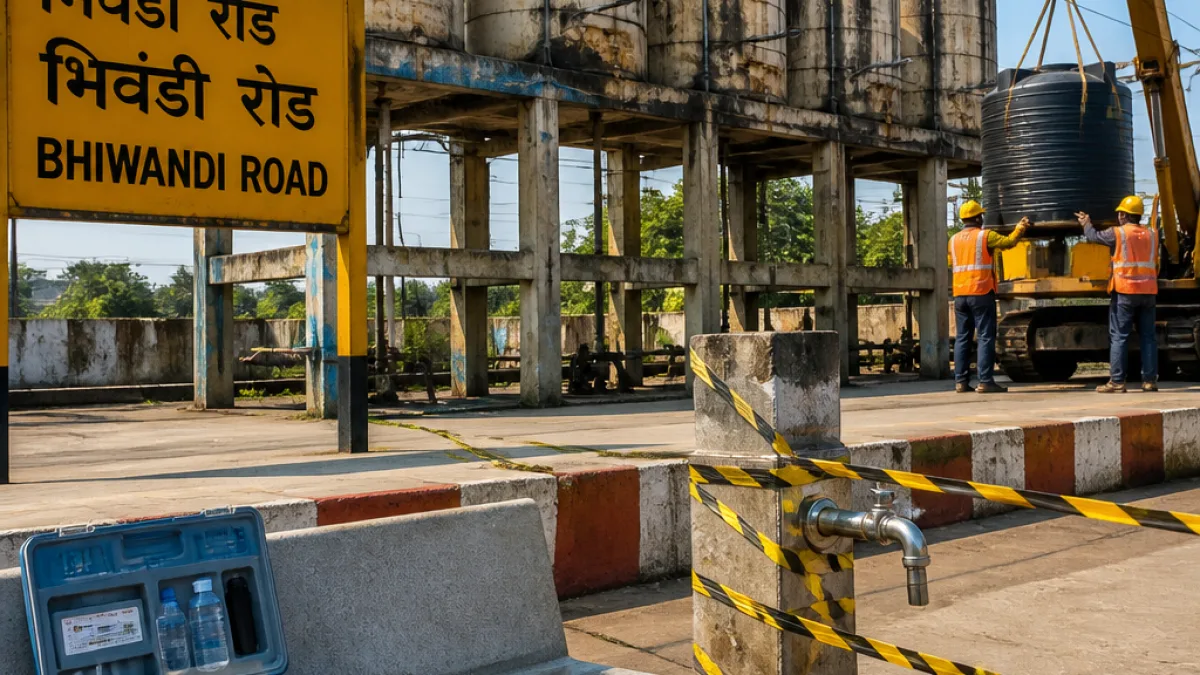
Bhiwandi (Maharashtra), 18 August —
The Comptroller and Auditor General of India (CAG) has detected Escherichia coli (E. coli) in drinking-water samples taken from four Central Railway stations, including Bhiwandi Road, and has flagged systemic shortfalls in water-quality monitoring and basic passenger amenities across the network.
The CAG’s audit, covering 512 railway stations nationwide, found E. coli in samples from Chhatrapati Shivaji Maharaj Terminus (CSMT), Kalyan, Bhiwandi Road and Lonavala. The report further said that prescribed testing equipment was missing at numerous stations, preventing routine checks of supply systems.
"Water supply systems should be tested at least twice a year," the audit noted, pointing to widespread non-compliance with the rule.
What the audit found
The audit highlighted several shortcomings that affect water safety and passenger basic amenities. Key findings include:
- 436 stations across 15 railway zones did not have the equipment required to test water supply systems.
- Of these, 28 stations were under the Central Railway zone.
- Out of 512 stations examined, 458 were found to be lacking one or more prescribed amenities such as drinking-water facilities, waiting areas, seating, platform shelters and toilets.
| Item | Number |
|---|---|
| Stations audited | 512 |
| Stations lacking one or more amenities | 458 |
| Stations without water-testing equipment (all zones) | 436 |
| Stations without testing kits (Central Railway) | 28 |
| Stations where E. coli detected | 4 (including Bhiwandi Road) |
Railway response and planned measures
Following the audit, Railway Minister Ashwini Vaishnaw, the Chairman and CEO of the Railway Board and senior officials conducted a day-long assessment of water-quality arrangements, the CAG report said. The railways have proposed several remedial steps:
- Replacement of identified water tanks.
- Strengthening routine water-quality testing, cleaning and maintenance regimes.
- Introduction of a "tank to tap" filtration and monitoring system at about 20,000 locations across the network.
- Monitoring of implementation and ongoing tracking of water quality by the Railway Board.
Railway sources cited in the audit said that without testing kits at stations, local authorities could not carry out the prescribed checks. The CAG reiterated that, as per railway rules, water supply systems should be tested at least twice a year, a requirement not being met at many locations.
Local implications for Bhiwandi commuters
Bhiwandi Road is an important halt for commuters from the satellite town and surrounding industrial areas. Detection of E. coli in station water raises immediate public-health concerns for daily travellers and informal vendors who rely on station taps and stored water tanks.
In practical terms, the CAG’s findings mean passengers and municipal bodies in and around Bhiwandi may need to adopt short-term precautions — favouring packaged water, using portable filtration where possible, and avoiding direct consumption from station outlets until remedial work is complete. Longer term, implementation of the "tank to tap" systems and routine twice-yearly testing could reduce contamination risks if executed effectively and monitored transparently.
The CAG audit also brought attention to broader gaps in passenger amenities — from seating and shelters to sanitation — which affect daily comfort and public health. The Railway Board has been asked to ensure compliance with prescribed procedures for drinking-water examination and to report progress on corrective measures.
Local municipal and health authorities can expect coordination requests from railway officials as tank replacements and filtration upgrades are rolled out. For now, travellers at Bhiwandi Road station are advised to exercise caution and seek information from station staff about the status of water outlets and any ongoing cleaning work.