Silver clarity: purity, pricing components and options for Bhavnagar buyers
Bhavnagar residents who buy silver for jewellery, investment or household use should note that the daily quoted silver rate is only a benchmark and the final showroom price will include additional elements, according to recent reporting by BusinessToday.in. The report outlines how purity grades, making charges, taxes and the growing availability of digital silver and exchange-traded funds (ETFs) affect what consumers actually pay.
Local jewellers and traders in Ghogha Road and the traditional jewellery markets of Bhavnagar have long priced goods on weight and purity; the BusinessToday.in summary reinforces established practice while highlighting alternatives that may change local demand patterns over time.
How purity is defined
Purity in silver is expressed as fineness, indicating the parts of pure silver in 1,000. The report lists standard categories used by manufacturers and retailers:
- 0.999 (Fine silver) — commonly called fine or pure silver, containing 99.9% silver.
- 0.958 (Britannia silver) — contains 95.8% silver; historically introduced in Britain.
- 0.925 (Sterling silver) — the most common grade in jewellery and household items, 92.5% silver plus 7.5% other metals, typically copper.
- 0.900 (Coin silver) — 90% silver and 10% copper, historically used for coinage.
| Grade | Fineness |
|---|---|
| Fine silver | 999 (99.9%) |
| Britannia | 958 (95.8%) |
| Sterling | 925 (92.5%) |
| Coin silver | 900 (90%) |
What determines the showroom price
BusinessToday.in reported that the final payable amount on silver jewellery or artefacts comprises the base bullion price plus making charges, and applicable taxes. The summary emphasises three practical points for Bhavnagar consumers and traders:
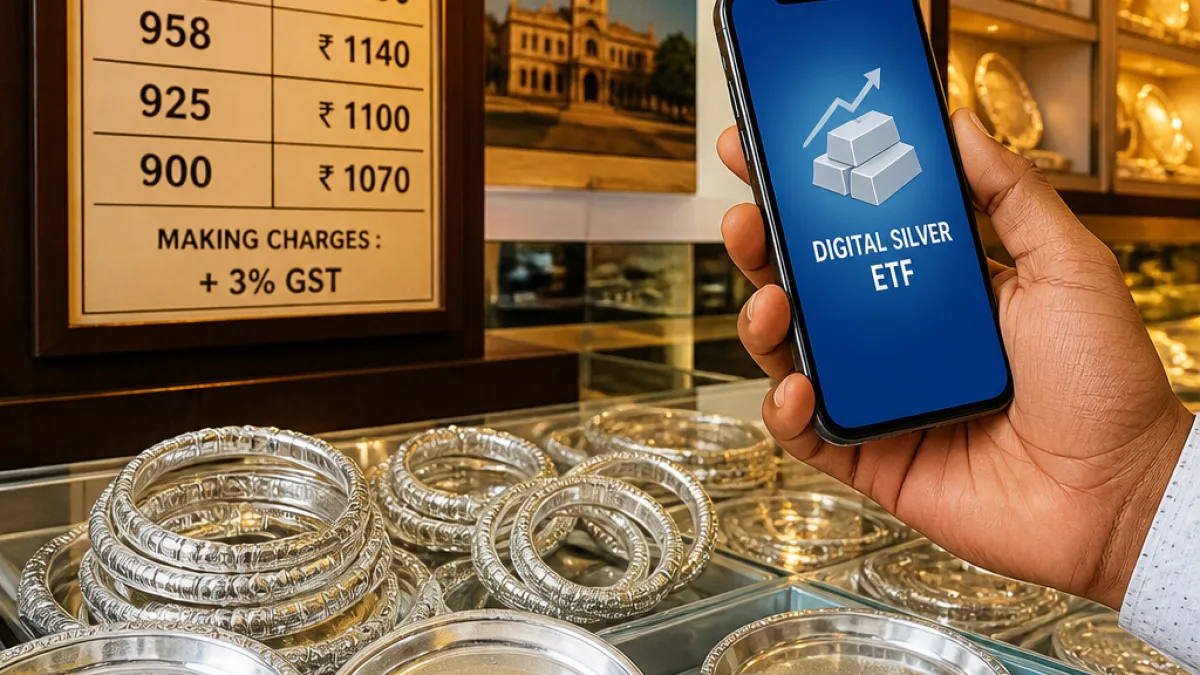
- Making charges — vary by design and retailer and can materially affect the final cost of ornaments.
- GST — 3% is applied on the final calculation, raising the landed price for buyers.
- Stone deductions — for studded silver jewellery, the weight of embedded stones is excluded from net silver weight when computing price.
"The daily silver rate you see online is just a benchmark. The final showroom price will always be higher due to additions such as making charges and GST," BusinessToday.in reported.
For Bhavnagar traders, this underlines the importance of transparent billing: specifying gross weight, stone deductions, net silver weight, purity grade and the breakup of making charges helps avoid disputes and builds buyer confidence.
Authenticity and non-physical investment routes
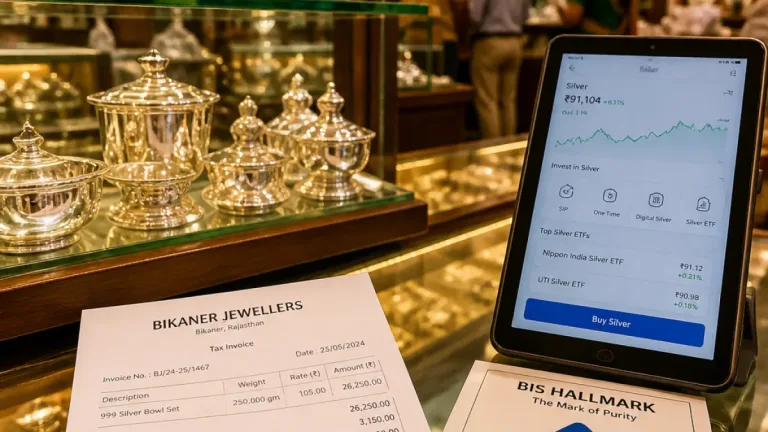
Verification of purity is a critical consumer concern in Bhavnagar’s jewellery markets. The report points to BIS hallmarking as the standard method to confirm metal quality. BIS marks (for example, 925 or 999) and, where present, HUID codes increase traceability and buyer assurance at the point of sale.
Beyond physical ownership, BusinessToday.in highlighted alternatives that may appeal to investors and price-sensitive buyers in Bhavnagar:
- Digital silver — platforms let investors buy and hold silver without taking delivery. The report notes these instruments are not regulated by SEBI and cautions about transparency and investor protection.
- Silver ETFs and funds — traded on exchanges, ETFs enable buying and selling silver exposure like a stock and avoid making charges and storage hassles.
Local financial advisers and traders in Bhavnagar may see rising interest in these instruments from younger or urban investors who prefer paper-based assets. However, the lack of SEBI regulation for some digital silver programmes means due diligence is needed before participation.
Implications for Bhavnagar markets
For Bhavnagar’s retail and wholesale silver markets, the reporting consolidates practical guidance rather than announcing new policy. Clear hallmarking, transparent bills and consumer education about purity grades and additional charges will help sustain trust. Meanwhile, growth in ETFs and digital products could gradually shift some investment demand away from physical silver — with consequences for local jewellers, pawnshops and allied services that depend on bullion trade.
Consumers planning purchases for festivals, weddings or investment should ask for documented purity certification, an itemised price breakup and weigh the pros and cons of taking physical delivery versus using non-physical silver products, the report recommends.