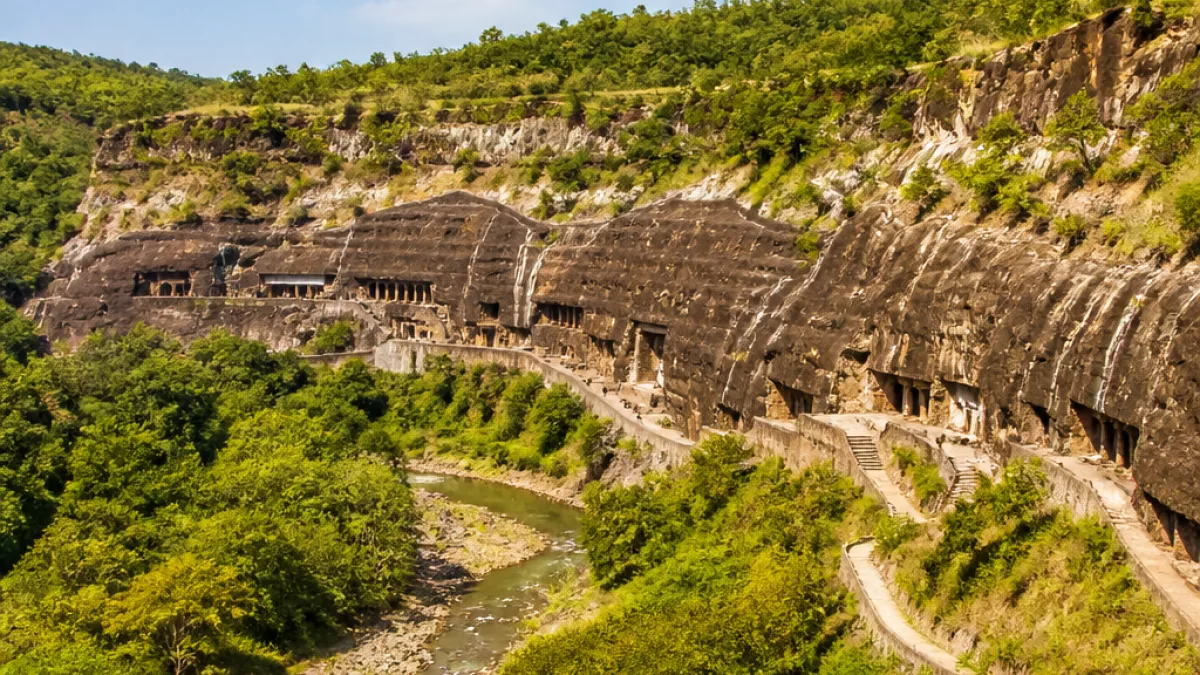
Aurangabad, Maharashtra — The Ajanta Caves near Aurangabad form a near–semicircular chain of rock-cut Buddhist sanctuaries and monastic residences carved into a basalt cliff above the Waghora River, according to a recent account detailing the site’s geography and history.
Site and setting
The caves occupy a horseshoe-shaped gorge about 550 metres long where the Waghora has cut into the Deccan plateau, exposing a band of basalt. The cliff rises above a bend in the river and the cave entrances open in sequence along a ledge reached by a climb from the valley below.
- Number of excavations: around 30 caves carved into the rock.
- Positioning: caves face the forested valley, separated from surrounding countryside by the gorge.
- Construction: each cave is a man‑made interior carved from solid basalt rather than adapted natural caverns.
The contrast between the rough exterior of the cliff and the worked interiors — including columns, shrines and painted surfaces — is highlighted in the account as a defining visual experience of Ajanta.
Two broad phases of excavation
The site’s development is described as occurring in two principal waves separated by several centuries.
| Phase | Approximate period | Characteristics |
|---|---|---|
| Early phase | 2nd–1st century BCE | Austere sanctuaries and monastic halls (chaityas and viharas) under the Satavahana rulers |
| Later phase | 5th–6th century CE | Elaborate caves with richly carved façades and painted interiors during the Vakataka period |
According to the account, the earliest group is associated with the Satavahana dynasty and includes prayer halls known as chaityas and simpler vihara residences with minimal figurative carving. A later wave of activity during the Vakataka reign transformed the complex, producing more richly worked façades and interiors.
"A horseshoe gorge filled with rock-cut sanctuaries"
Heritage and local implications
For Aurangabad district, Ajanta is both a major heritage asset and a focal point for local tourism. The chain of caves, carved directly into basalt, presents specific conservation challenges: preserving painted interiors, maintaining carved stone façades and managing visitor access on the narrow ledge above the river valley.
Local authorities and heritage managers routinely balance visitor facilities and pathways with conservation work in and around the caves. The physical separation of the complex from the countryside — the approach involves climbing from the river valley to the ledge where entrances open in sequence — shapes both preservation strategies and infrastructure planning in the precinct.
Why the site matters
Ajanta’s art and architecture illustrate a long arc of Buddhist religious practice and artistic expression, from early aniconic worship in the Satavahana phase to richly figurative painting and sculpture in the Vakataka period. The juxtaposition of worked interiors and the raw cliff face creates an aesthetic and archaeological record that is significant for scholars, pilgrims and tourists alike.
Given its scale — roughly 30 excavations in a semicircular ravine — Ajanta continues to be central to Aurangabad’s cultural identity and tourism economy. Conservation work, visitor management and local infrastructure around the Waghora valley will remain priorities for the district as custodians seek to protect the caves’ painted and carved surfaces while accommodating visitors.
Local planners in Aurangabad may also consider the physical geography described in the account — the ledge approach, cliff face and river below — when reviewing access, safety and conservation measures for one of Maharashtra’s most visited and studied heritage sites.