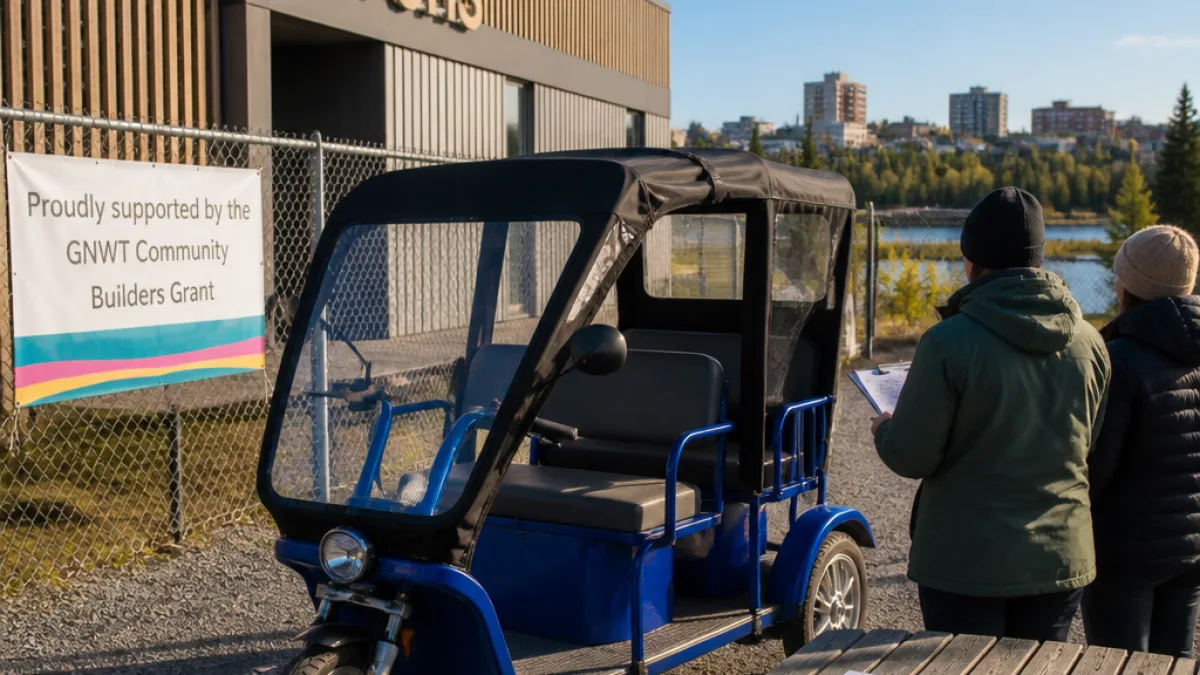
Trishaw to serve seniors, promote inclusion and spur route design questions
Shift NWT, Yellowknife’s community bike-share organisation, will introduce free rides for seniors and people with restricted mobility after becoming a chapter of the international Cycling Without Age movement. The group said the program will be funded in part by a $60,000 grant from the Government of the Northwest Territories over three years and that the first specialised trishaw should be ready for use in summer 2027.
The model for the initiative is a bench-seated electric tricycle, known as a trishaw, that places one or two passengers at the front and a volunteer pilot at the rear. Shift NWT said the trishaw will be stored at Avens and the organisation is actively recruiting volunteers to drive it. Corporate sponsors have also been invited to support the program.
“The aim of Cycling Without Age Yellowknife will be to create meaningful connections, reduce loneliness, foster social inclusion, and promote active living,”
The news release from Shift NWT notes the trishaw will give Elders direct access to civic destinations such as the Frame Lake trail, the farmers’ market, cafés and community celebrations. It also points to practical limits: because the vehicle is low-speed and large, its route options will be constrained by where bike or multi-use paths exist.
Timeline and planned equipment purchases
| Item | Planned timing |
|---|---|
| Trishaw (e-tricycle with bench seating) | Summer 2027 |
| Accessible tricycle | 2027 |
| Wheelchair pilot bike (pilot project) | 2028 |
The program sits within a broader Canadian network: Cycling Without Age began in Denmark in 2012 and now has chapters across Canada and one in Yukon, Shift NWT said. For Yellowknife, the local chapter will adapt those practices to northern streets and seasons, balancing community demand with safety and infrastructure realities.
Where the trishaw can — and can’t — go
Shift NWT warned the trishaw’s operation will be limited in some parts of the city. A short list of likely accessible destinations the group highlighted includes:
- Frame Lake trail (where multi-use paths exist)
- Yellowknife farmers’ market
- Local cafés and community events such as parades
At the same time, roads without bike lanes or multi-use paths will present barriers. Shift NWT used the announcement to urge municipal planners to consider street designs that better accommodate all users.
For residents who want to borrow other equipment, Shift NWT also continues to offer a fleet of bikes, e-bikes, e-cargo bikes and e-tricycles that can be rented for free for two weeks. The trishaw and the planned accessible cycles expand that offering specifically for people with mobility restrictions.
Community and planning implications for Yellowknife
The initiative combines mobility, social programming and volunteer engagement. For seniors and people with restricted mobility, organised trishaw rides can reduce isolation by restoring easier access to outdoor destinations and community gatherings. For volunteers, the scheme offers a civic role that blends recreation with social service.
But the limits Shift NWT identified underline a larger, municipal question: how will Yellowknife’s network of streets and trails evolve to serve diverse users — from pedestrians to cargo bikes to low-speed trishaws? The group’s statement was clear that the trishaw’s operational envelope will depend on where safe, connected paths exist.
Shift NWT is inviting volunteers and corporate sponsors to come forward. Residents interested in volunteering as pilots or supporting the program financially are being asked to contact the organisation directly.
The Yellowknife chapter will join a global effort that began in Europe and has spread across Canada. With dedicated funding from the GNWT and a multi-year equipment plan, the local Cycling Without Age initiative aims to be a visible, practical example of inclusive active transportation in the North.
Further details about volunteer training, seasonal schedules and exact route maps will be released by Shift NWT as the project approaches its 2027 launch.