
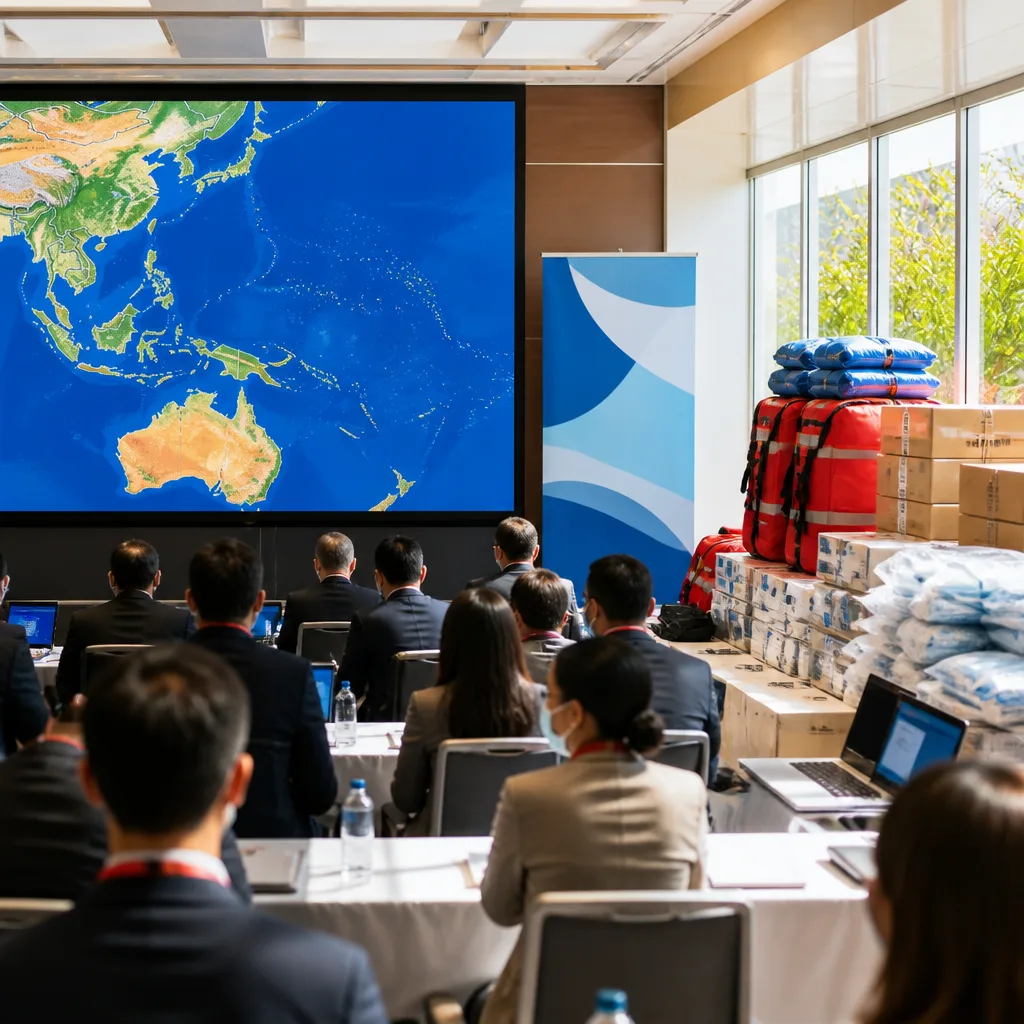
More than 100 health emergency experts from 56 institutions across 21 countries in the World Health Organization’s Western Pacific Region pledged renewed cooperation to strengthen the region’s readiness and resilience at the annual meeting of the Global Outbreak Alert and Response Network (GOARN).
Focus on workforce and technical gaps
The two-day meeting, co-hosted by WHO and the Korea Disease Control and Prevention Agency, brought partners together to map current capacities and identify priority shortfalls across multiple technical areas. Delegates examined needs in cybersecurity and critical infrastructure resilience, water, sanitation and hygiene (WASH) and environmental health, and preparedness for biological, nuclear and radiological emergencies.
Participants concluded with a commitment to close those gaps through coordinated action and shared expertise, strengthening the region’s ability to detect, prepare for and respond to health emergencies.
Surge deployments and recent missions
GOARN, coordinated globally by WHO, is designed to assemble a better-connected emergency health workforce ready to surge at the request of Member States. According to WHO, GOARN partners in the Western Pacific supported nine experts on six missions this year, providing surge capacity for epidemiology, surveillance and clinical case management.
Examples cited by WHO include responses to a measles outbreak in Viet Nam and an HIV outbreak in Fiji. Those missions illustrate how rapid deployments can supplement national capacity while authorities manage local response operations.
"GOARN partners across the Western Pacific and globally have repeatedly demonstrated the power of what we can do collectively, when we join forces, share expertise and build on each other’s strengths,"
The comment came from Dr. Gina Samaan, WHO Regional Emergency Director for the Western Pacific, in her opening remarks at the partners meeting, underscoring the emphasis on partnership and mutual support.
- Participants: Over 100 experts from 56 institutions across 21 countries.
- Recent GOARN activity: Nine experts deployed on six missions this year.
- Priority gaps: Cybersecurity, WASH, environmental health, biological and radiological emergencies.
Why the meeting matters
Health emergency responses increasingly hinge on more than clinical care. Surveillance systems, secure information networks and resilient critical infrastructure are central to detecting threats early and coordinating effective responses. By mapping capacities and technical shortfalls, partners aim to target investments and training where they will most improve surge readiness.
For countries in the Western Pacific — a diverse region with differing health-system capacities — better-coordinated regional mechanisms can shorten the time between detection and response. That is especially important for fast-moving outbreaks where temporary gaps in epidemiology or case management capacity can worsen transmission and outcomes.
| Metric | Number |
|---|---|
| Experts present | Over 100 |
| Institutions represented | 56 |
| Countries represented | 21 |
| GOARN missions supported this year | 6 (9 experts) |
WHO’s regional emergency director framed the meeting as a step toward longer-term partnerships, noting that combining technical skills across agencies and countries strengthens collective preparedness. The commitments made in the meeting reflect a continuing push to professionalize and expand the pool of responders who can be mobilized rapidly when Member States request assistance.
As climate change, urbanization and interconnected travel increase the pace and complexity of health threats, fostering cross-border cooperation — and ensuring the workforce to act on it — will remain a central element of global health security planning.















