Vernon — An injured camper who became unable to drive on the Aberdeen Plateau was located and evacuated by Vernon Search and Rescue (VSAR) and RCMP on the morning of Saturday, Sept. 12.
Swift deployment, phone ping helps pinpoint location
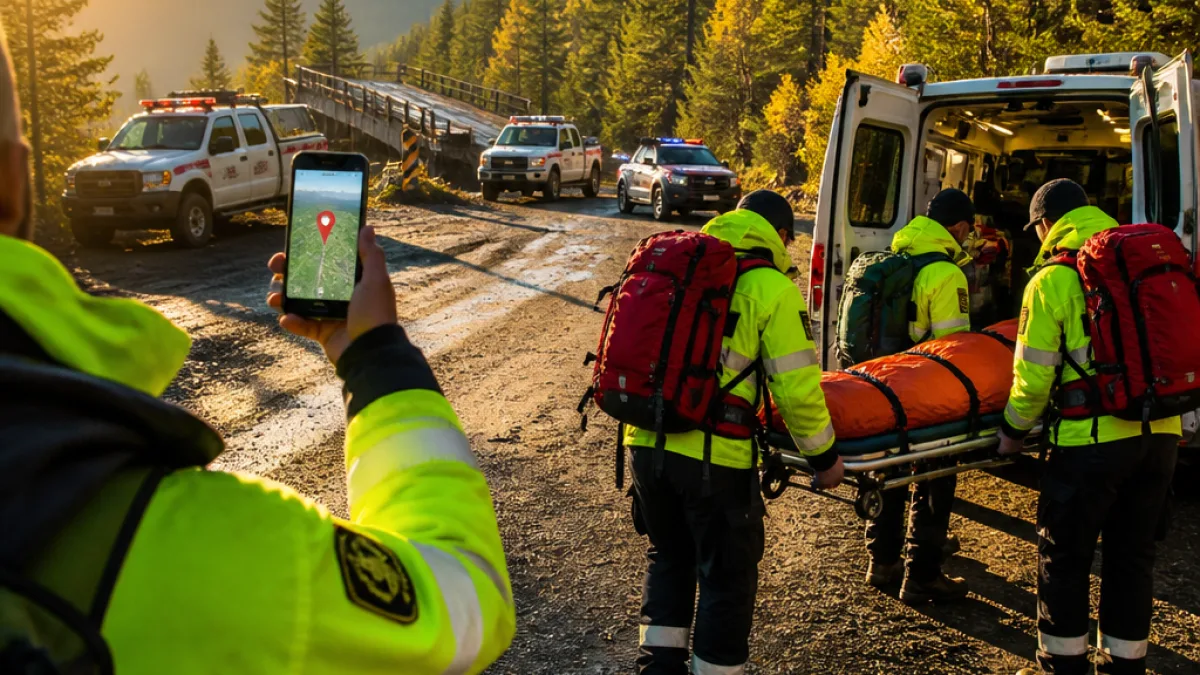
VSAR were deployed at about 7:30 a.m. after emergency responders were alerted to the injured camper. Members of the team and local RCMP used a cell‑phone ping to approximate the individual’s location on the plateau. Six VSAR members responded in three vehicles and reached the camper by 9:45 a.m., with transportation to a waiting ambulance completed by 10:30 a.m.
| Event | Time (approx.) |
|---|---|
| VSAR deployment | 7:30 a.m. |
| Team reached camper | 9:45 a.m. |
| Transported to ambulance | 10:30 a.m. |
Limitations of mobile-location technology
While the operation concluded successfully, VSAR cautioned the public that relying on cell‑phone pings as a primary method of locating people in the backcountry can be unreliable.
"Phone pings can be hit-and-miss… triangulation can be error prone in fringe areas with weak cell tower coverage, people don’t always stay in the same place after making their call, and Forest Service Roads can be a maze to (navigate) due to deactivations and seasonal issues like bridge reparis and washouts," VSAR said.
The service’s statement underscores practical challenges responders face in the North Okanagan: uneven mobile coverage, rugged terrain and the seasonal condition of forest service roads, which may include deactivated segments, bridge repairs and washouts that complicate approach routes.
Local context and safety reminders
The Aberdeen Plateau and surrounding areas are popular with campers and off‑road users from Vernon and the region. This rescue adds to a string of recent callouts that emphasise preparation and redundancy when travelling into backcountry and rural recreation areas.
Responders and local outdoor groups recommend the following precautions before heading into the plateau or other remote areas:
- Tell someone your planned route and expected return time and check in if plans change.
- Carry a fully charged phone and a portable battery pack, but do not rely on cellular coverage alone.
- Consider a satellite messaging device or personal locator beacon for areas with spotty reception.
- Know the condition of forest service roads and carry a detailed map and compass or GPS unit.
- Travelling with at least one other person reduces risk and can assist if a medical emergency occurs.
Vernon Search and Rescue’s quick response and coordination with the RCMP ensured the injured camper was delivered to ambulance care within three hours of deployment. The team’s own warnings about the limitations of phone pings serve as a reminder that technology can aid rescues but cannot replace preplanning and appropriate equipment.
As fall approaches and trail and road conditions change, residents and visitors are urged to adjust plans accordingly and to consult local resources for updates on road closures and trail advisories.