
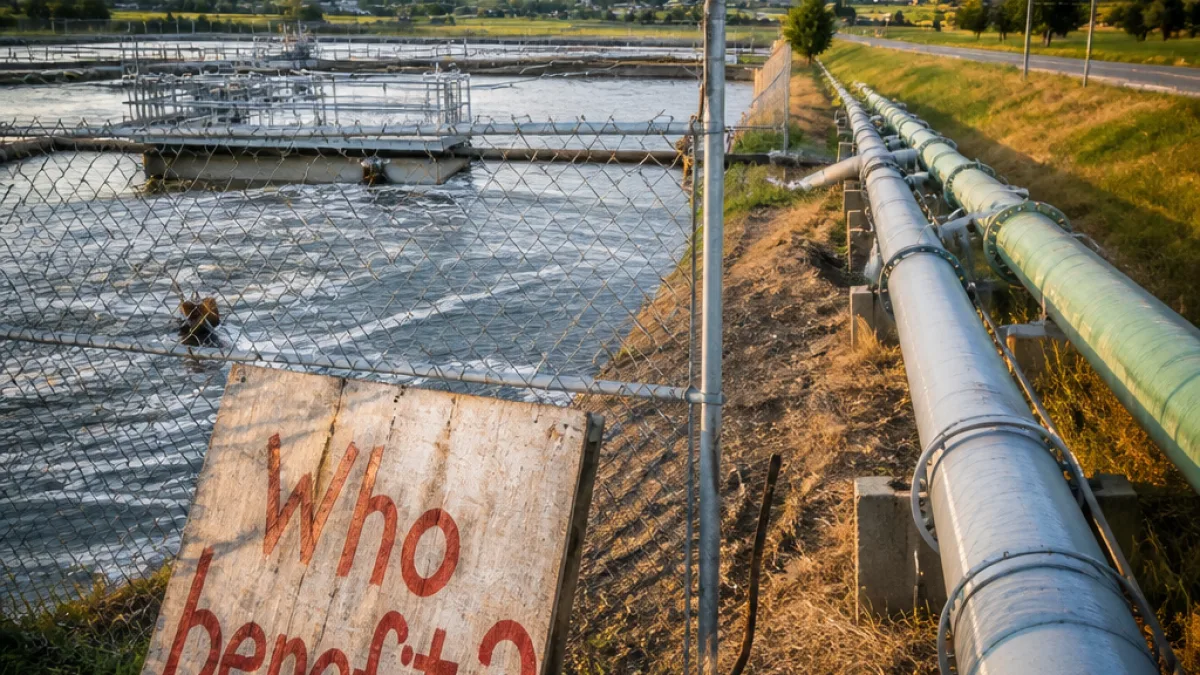
Questions about who benefits from Swan Lake wastewater project
Concerns about the distribution of reclaimed water from the Swan Lake corridor wastewater project and the scope of local benefits have been raised by a Vernon resident, who says the project as currently planned will offer little advantage to parts of the BX and other rural areas.
The letter, published in the local paper, criticizes what the writer calls a "failing AAP" on the Swan Lake waste treatment plant and says the project has been presented mainly in terms of its benefits: industrial development of the Swan Lake corridor, reclaimed water for farmers and improved water quality for Swan Lake through reduced reliance on septic tanks.
However, the writer contends that much of the reclaimed water will not return to the BX area but instead will be distributed to farms in Spallumcheen — farms that the writer says already receive reclaimed water from the Armstrong treatment plant, stored in the large reservoir off Thomas Hayes Road. The planned Swan Lake facility, the letter says, is an aerated lagoon and will not reduce nutrient levels to the same degree as Vernon’s tertiary treatment plant.
No reclaimed water will come back to the BX to help these farmers. All this reclaimed water will go to farms in Spallumcheen, which are already supplied with reclaimed water from the Armstrong waste plant, stored in the large reservoir off Thomas Hayes Rd.
The resident also highlights differences in the intended capacity and use of reclaimed water: Vernon’s tertiary-treated reclaimed water has been used at large scale — the letter cites 5 million cubic metres sprayed in six months — while the Swan Lake aerated lagoon is framed as a more limited treatment approach.
Loans, service area and local service concerns
The letter notes that the Regional District of North Okanagan (RDNO) asked Area B and C voters to approve loans after the original bylaws were passed, with the assurance that no additional loans would be necessary because sufficient funds were available. The writer argues those assurances have not held.
The letter details recent borrowing figures and expresses concern the promised service area has been reduced. It says the service, originally intended to serve the PV Road area, is now only slated to run as far south as the Vernon Christian School and the end of Baker Hogg Road.
| Loan | Amount |
|---|---|
| Recent loan cited | $4.8 million plus |
| Previous loan | $5.2 million |
The writer lists a set of properties and uses they expect will be serviced by that borrowing:
- Vernon Christian School
- Castle Hotel
- Local water slide
- Trailer court on Swan Lake
- 49 acres of developable land in IR#4 area
- Baker Hogg Road and any identified development in Spallumcheen north of that
Those details underline the resident’s assertion that the BX area — much of it in the Agricultural Land Reserve with small neighbourhood pockets — is receiving "very little benefit" from the project. They call into question whether the community as a whole, if it wants more intensive development paired with a modern sewer plant, should have another vote on the matter.
Local context and consequences
The concerns touch on several thorny local issues: how reclaimed water is allocated between municipalities and agricultural users; the technical differences in treatment processes and nutrient reduction; and the fairness of financing mechanisms that ask some property owners to shoulder debt for services they may not directly receive.
For Vernon residents, the outcome has implications beyond technical treatment levels. Decisions about where reclaimed water is sent can affect agricultural operations, land-use pressure on ALR parcels, and the local environment — including the health of Swan Lake. The financing questions raised also bear on future tax or rate obligations for households and property owners in Areas B and C.
Public debate over wastewater projects typically centres on trade-offs: cost vs. environmental benefit, local control vs. regional efficiency, and short-term construction impacts vs. long-term operational outcomes. The letter frames those trade-offs as unresolved for some Vernon-area residents, who say they were told additional loans would not be required.
As the project progresses, residents and elected officials in Vernon and neighbouring jurisdictions will need clearer information on the expected path of reclaimed water, the treatment standards the new facility will reach, the precise geographic limits of the service area, and the ultimate financial impacts on property owners who supported the bylaws and loans.
Those are questions that matter not just for infrastructure budgets, but for how growth, agriculture and lake health are balanced across the North Okanagan — a balancing act the community is still negotiating.
















