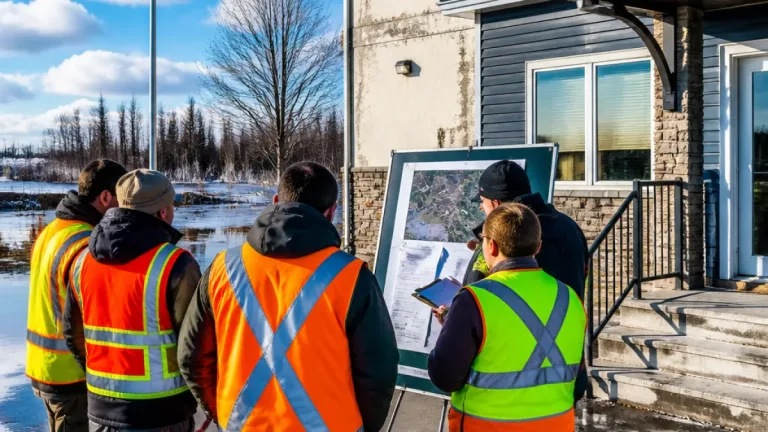

Labour action by unionized Metro Vancouver outside workers is raising the prospect of delays to harbour work in Vancouver after picket lines went up at two water main projects in the city and neighbouring North Vancouver.
Union escalates job action amid long-running contract dispute
The Greater Vancouver Regional District Employees’ Union says its members are off the job and picketing the projects, which it says must be finished before dredging under the Second Narrows Ironworkers Memorial Bridge can proceed in September. That dredging has been framed by federal officials as necessary to allow larger oil tankers to transit Burrard Inlet.
The union and Metro Vancouver have been without a collective agreement for 19 months, and the dispute has already produced a series of targeted job actions, the union said. Union president Jesse Medeiros told media the union does not want to halt major public works, but that it will intensify action until a deal is reached.
"Until we negotiate and ratify a new contract, this union will escalate job action, including shutting down projects like Burrard Inlet dredging,"
Metro Vancouver and the Vancouver Fraser Port Authority did not immediately respond to requests for comment, according to the union statement. The potential for work stoppages to intersect with major marine projects has stirred concern among residents and stakeholders who track port operations, maritime safety and local economies tied to the harbour.
Local consequences and logistics
Port dredging in Burrard Inlet is linked to how vessels are loaded and routed through the Second Narrows, a constrained portion of the waterway beneath the Ironworkers Memorial Bridge. Delays to preparatory or related municipal infrastructure work could affect the scope or timing of dredging operations planned for the fall.
While the union stresses its aim is to press for a fair collective agreement, it expressly framed the pickets as leverage capable of interrupting non-municipal projects that depend on municipal infrastructure. For Vancouver residents, that means a labour dispute over water-main projects could ripple into marine traffic patterns and commercial activity at the port.
- Outside workers have mounted picket lines at two water main projects in Vancouver and North Vancouver.
- The union says those projects must be finished before September dredging under the Second Narrows Bridge can take place.
- The federal government supports the planned dredging to admit larger oil tankers through Burrard Inlet.
Observers noted that the dispute sits at the intersection of municipal services, regional labour relations and federal transportation strategy. A disruption that delays dredging could have knock-on effects for shipping schedules and for companies that depend on larger vessel access, though specifics depend on how long the job action continues and whether negotiations advance.
| Project | Location | Union status |
|---|---|---|
| Water main project A | Vancouver | Picket lines up |
| Water main project B | North Vancouver | Picket lines up |
| Burrard Inlet dredging | Under Second Narrows Bridge | Planned for September — at risk of delay |
Metro Vancouver manages water infrastructure and regional services across the Lower Mainland. The union represents outside workers who carry out hands-on construction, maintenance and utility tasks. Disputes over front-line conditions, wages and contract terms can slow or suspend essential work when talks stall.
Labour leaders say their actions are calibrated to increase pressure while remaining mindful of major public projects, but the explicit threat to the Burrard Inlet dredging underlines how municipal labour disputes can spill into projects that involve federal and provincial interests as well as regional stakeholders.
Until either side moves toward a negotiated settlement or an interim arrangement is reached, the timeline for the September dredging will remain uncertain. Residents who use the harbour precincts, businesses engaged in shipping and local municipal services are likely to monitor developments closely in the coming weeks.