
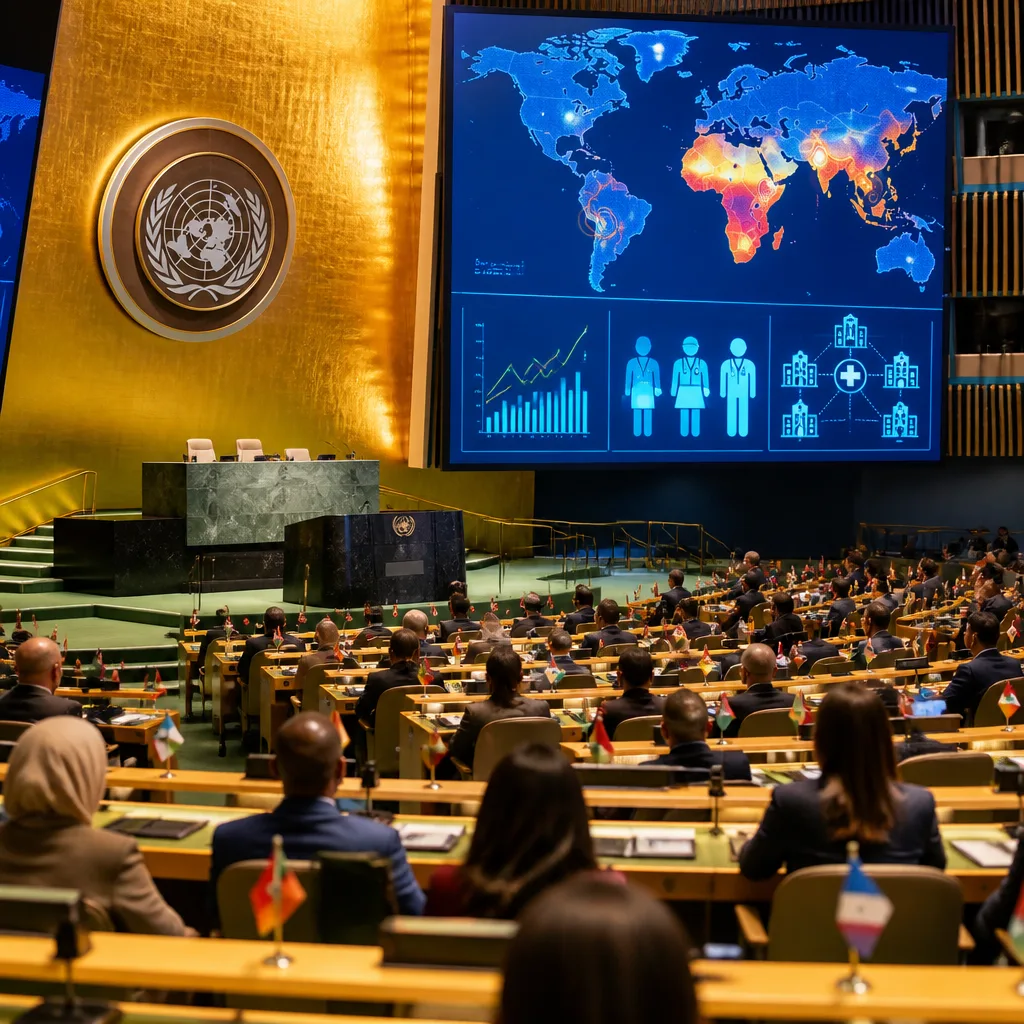
The Future Health – A Global Initiative by Abu Dhabi hosted a high-level dialogue on the sidelines of the 81st session of the United Nations General Assembly in New York, urging governments and health leaders to move from pilot programmes to population-scale prevention and prediction strategies.
Chaired by H.E. Ahmed Al Sayegh, the United Arab Emirates' minister of health and prevention, the meeting brought together ministers and senior officials from a range of countries — including Angola, Brazil, Ethiopia, Finland, Guyana, Indonesia, Madagascar, Mali, Nigeria, Rwanda, Sweden, the United Republic of Tanzania, the United Arab Emirates, the United Kingdom and the United States.
Four priorities for redesigning systems
Participants identified four interconnected needs as essential to shifting health systems towards earlier action and broader prevention:
- Population data to detect risk earlier;
- Financing and incentives that favour prevention;
- Delivery capacity to convert insight into timely services; and
- Trusted, inclusive systems that reach people where they live.
Those priorities reflect a common concern: scientific advances are producing more knowledge about risk, but health systems must adapt to ensure those insights translate into earlier, equitable care at scale.
“Investing in prevention is an investment in people, and in the future of our societies. As science gives us a better understanding of risk, we must ensure that knowledge leads to earlier action and better health,” said H.E. Ahmed Al Sayegh.
From pilots to population-scale delivery
Speakers examined specific approaches that can move systems from proof-of-concept projects to routine population-level services. Examples highlighted at the dialogue included national, life-course screening programmes; integration of demographic, clinical and genomic data; support for community health workers through digital records; and decentralised models of care. Policy measures aimed at improving nutrition, affordability and healthy behaviours were also discussed as part of a prevention agenda.
Delegates emphasised prevention as an investment in human capital rather than merely a cost-saving exercise. The discussion stressed that prevention depends not only on clinical services but on the environments in which people live and work.
Practical levers discussed
While the dialogue was framed around broad system priorities, the conversation underscored practical levers that countries might deploy. These included stronger data linkages to identify at-risk populations earlier, financial reforms to align incentives with prevention, and expanded delivery platforms — such as community health workers equipped with digital tools — to reach underserved communities.
| Priority | Illustrative action |
|---|---|
| Population data | Integrate demographic, clinical and genomic information |
| Financing | Create incentives that prioritise prevention |
| Delivery | Support community health workers with digital records |
| Trust & inclusion | Decentralise care and reach people where they live |
Representatives from low-, middle- and high-income countries contributed perspectives, reinforcing that the challenges and potential solutions traverse different national contexts. The dialogue therefore framed prevention as a shared global challenge that requires collaboration, shared learning and capacity building.
For national health planners, the discussion provides a timely reminder that technological and scientific gains must be matched by investment in routine systems, workforce supports and governance arrangements that ensure equitable access. For international partners, it points to opportunities to share experience and to co‑ordinate efforts around common system redesign goals.
The Future Health initiative said it will continue to promote actions that take insight to scale, with a focus on prediction, prevention and population health outcomes.















