
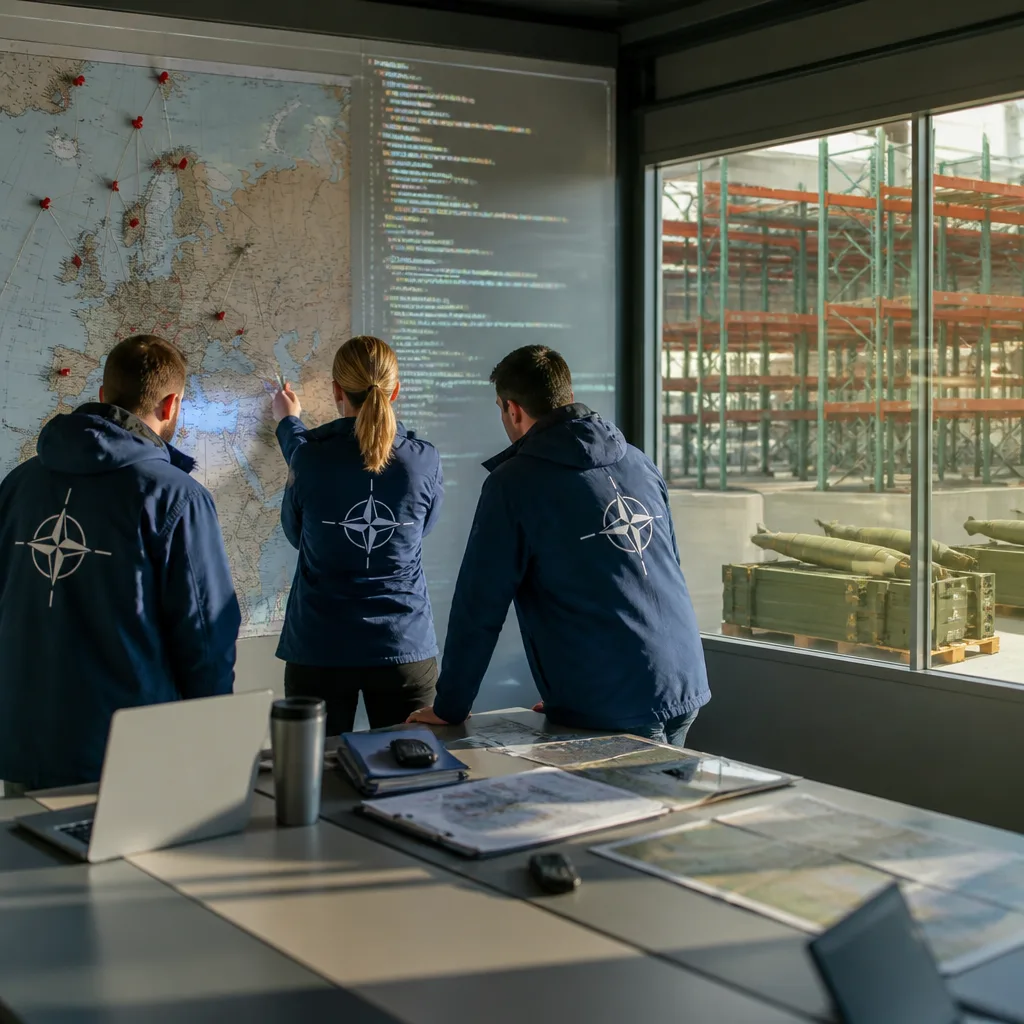
U.S. intelligence officials say Russian President Vladimir Putin could seek to test NATO’s cohesion in the coming years through limited operations that fall short of a full-scale invasion, according to reporting by the Wall Street Journal. The scenarios described range from cyberattacks to a small-scale ground incursion into a NATO ally.
Alarms amid depleted munitions
The assessments arrive as Western stockpiles of certain critical munitions have been substantially reduced. U.S. officials cited transfers to Ukraine following Russia’s 2022 invasion and supplies expended in the United States’ own conflict with Iran as contributing factors.
Officials singled out specific weapons that are now considered at risk of shortfall, including:
- Long-range Precision Strike Missiles
- Army Tactical Missile Systems (ATACMS)
- Short-range Stinger surface-to-air missiles
While the reporting does not contend that Moscow currently plans an immediate attack, the intelligence judgment emphasises the political utility for Moscow in conducting limited, deniable or ambiguous operations that could put allied capitals in a difficult position: respond forcefully and risk escalation, or show restraint and risk emboldening further aggression.
Implications for NATO and Canada
For NATO members, including Canada, the assessment raises two interconnected concerns. The first is deterrence: a force posture and political consensus strong enough to deny Moscow the benefit of probing actions. The second is sustainment: ensuring allied militaries possess and can replenish the stockpiles needed to respond to contingencies.
Canada, which contributes to NATO collective defence and has provided materiel and other support to Ukraine, faces the same strategic balancing act as other allies — demonstrating credible resolve without inadvertently prompting wider conflict. The U.S. observation that critical munitions have been drawn down underscores the logistical and political choices partners must now confront about production, procurement and stockpiling.
What the assessment says — and what it does not
The reporting frames the intelligence judgement as a warning about plausible Kremlin options rather than an imminent, specific plan. It identifies a catalogue of potential attack modes that span the military, cyber and hybrid spectrums, a recognition that modern coercion often blends conventional and non-kinetic tools.
At the same time, the story links the assessment to supply challenges for Western militaries. Transfers to Ukraine and weapons expended in recent confrontations have reduced inventories of several guided munitions that would be relevant in responding to cross-border or aero-missile threats.
| Munition | Role |
|---|---|
| Precision Strike Missiles | Long-range strike and stand-off engagement |
| Army Tactical Missile Systems (ATACMS) | Short- to medium-range battlefield missiles for land forces |
| Stinger surface-to-air missiles | Short-range air defence, protecting forces from aircraft and drones |
Addressing such shortages typically requires both increased production and political consensus to prioritise replenishment. That can be costly and time-consuming, and it often entails complex decisions about industry capacity, export controls and allied burden-sharing.
Broader strategic context
The possibility of limited, probing actions fits a pattern analysts have observed in recent years: using calibrated coercion to exploit allied divisions and test thresholds for collective response. Cyberattacks, disinformation campaigns and tactical incursions can inflict damage and create political dilemmas while remaining below the threshold many states treat as constituting full-scale war.
For Canadians, the intelligence assessment is a reminder that Euro-Atlantic security remains contested and that the effectiveness of NATO’s deterrence depends not only on political unity but on practical readiness — from munitions on hand to the resilience of infrastructure and command arrangements.
Allied officials will now face pressure to translate the warning into tangible measures: shoring up supplies, accelerating production where possible, and refining plans for rapid reinforcement — steps that will shape NATO’s posture in the years ahead.