
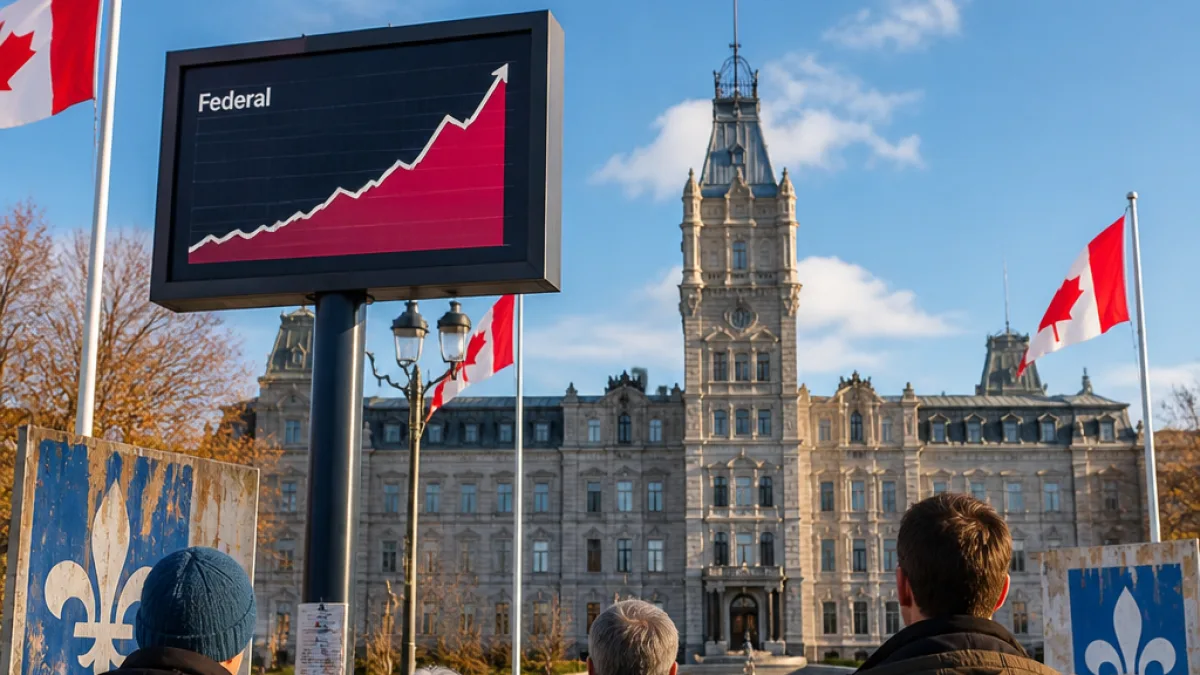
The abrupt collapse of trade negotiations between Canada and the United States has forced a rapid reordering of political priorities in Quebec, with voters increasingly focused on who can protect the province’s economy and culture from actions in Washington rather than on questions of sovereignty, strategists say.
Polling swing and political consequences
Pollster David Coletto, CEO of Abacus Data, told The Hill Times that the rupture in talks with the U.S. administration in late August has "completely overshadowed" both the final days of the federal byelection campaign in Chicoutimi—Le Fjord and the start of Quebec’s provincial race. The effect, he said, was a rapid reversal of a tightening that had been seen earlier in August.
According to Abacus polling cited by Coletto, in early August the Liberals’ lead in Quebec had narrowed to roughly 37 per cent, just two percentage points ahead of the Bloc Québécois, with the Conservatives at 18 per cent. By the end of the month, one week after talks collapsed on Aug. 21, the Liberals had rebounded to 45 per cent support while the Bloc stood at 34 per cent and the Conservatives at 16 per cent.
| Party | Early August | Late August (Aug. 30) |
|---|---|---|
| Liberals | ~37% | 45% |
| Bloc Québécois | ~35% | 34% |
| Conservatives | ~18% | 16% |
| NDP | — | 9% |
Quebecers’ priorities tilt toward defence from U.S. policy
Coletto said concern about President Donald Trump and the fallout from the failed negotiations surged to levels not seen since the early months of 2025, when those issues were central to the federal campaign. In the Abacus survey released on Aug. 30, Canada‑wide worry about Trump topped the agenda for 45 per cent of respondents. In Quebec the figure was higher: 64 per cent of respondents named him among their top three concerns.
"It’s the only region of the country where Trump outpaces the cost of living as a top issue," Coletto said.
That dynamic, he added, helps explain why parties and candidates who emphasise federal unity and economic ties with Canada are gaining traction while separatist messaging has lost momentum in the short term.
What this means for sovereigntist politics
Strategists say the sudden prominence of cross‑border trade and Ottawa‑Washington relations has put sovereigntist movements on the defensive by reframing the primary threat to Quebecers as external rather than internal. With voters anxious about tariffs, market access and cultural protection amid strained U.S. relations, attention has shifted to which federal actors can shield the province from economic shock.
The shift does not erase long‑standing debates about identity and autonomy in Quebec, but it compresses the political calendar: short‑term economic risk and the need for stable federal representation now dominate the immediate public conversation.
- Trade breakdown occurred on Aug. 21, according to Abacus reporting.
- Abacus poll (Aug. 30) shows Liberals at 45%, Bloc at 34%, Conservatives at 16%.
- Quebec voters are the most likely in Canada to rank Trump among their top three concerns (64%).
Political operatives and commentators note that media coverage and campaign messaging will now centre on protecting economic interests and cultural institutions from U.S. policy, a narrative that benefits parties perceived as effective in federal‑level bargaining and crisis management.
Outlook
While these polling shifts are notable, strategists caution they reflect a fluid environment: a single international development or agreement could again reorder priorities. For now, however, the collapse of trade talks has reoriented the province’s political debate, elevating concerns about external threats and testing the resilience of sovereigntist appeals in Quebec’s electorate.
As the federal and provincial campaigns progress, observers will watch whether this surge in pro‑Canada sentiment endures or proves to be a temporary reaction to unfolding international tensions.