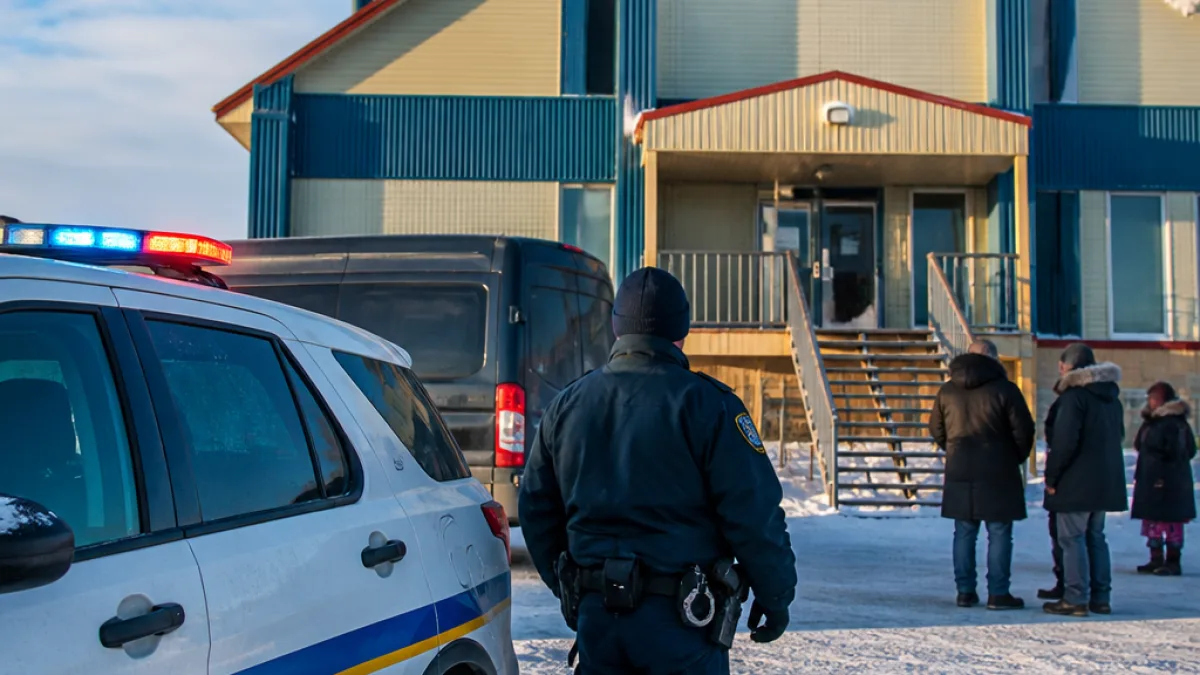
An officer with the Nunavik Police Service has been formally charged after Quebec’s Bureau des enquêtes indépendantes (BEI) concluded an investigation into alleged assaults in the Hudson Bay community of Umiujaq.
Arrest and court appearance
The BEI says the officer appeared in court Monday in Kuujjuarapik, where charges of assault and assault with a weapon were laid. The alleged incidents took place on Aug. 26, 2025, in the village of Umiujaq, about 160 kilometres northeast of Kuujjuarapik on the shore of Hudson Bay.
According to the watchdog, the charges were the result of its investigation. The case is expected to proceed to trial.
Role of the BEI in northern and Indigenous cases
The Bureau des enquêtes indépendantes is the provincial body tasked with probing criminal allegations against police officers under specific circumstances. Its mandate includes investigations when the victim or complainant is Indigenous, as well as cases involving sexual offences by on-duty officers and incidents where a civilian is killed, seriously injured or shot during a police intervention or while in detention.
The BEI’s involvement in this file underscores the agency’s statutory role in policing oversight, particularly in northern and Indigenous communities where questions of trust and accountability are often acute.
- Date of alleged incident: Aug. 26, 2025
- Location of alleged incident: Umiujaq, Quebec
- Court appearance: Kuujjuarapik
- Charges: Assault; assault with a weapon
- Investigator: Bureau des enquêtes indépendantes (BEI)
Local context and community implications
Umiujaq is one of the smaller Inuit communities within Nunavik, the vast northern region of Quebec administered in part by the Kativik Regional Government. Allegations of misconduct by a member of the local police force are likely to reverberate in communities where residents often rely on local officers for emergency response, safety and day-to-day enforcement.
Accountability processes conducted by independent bodies such as the BEI play a central role in maintaining public confidence in policing, particularly where cultural and geographic distance can make scrutiny more difficult. The BEI’s investigative remit for incidents involving Indigenous complainants is a reflection of provincial policy aimed at impartial oversight when complex jurisdictional and social dynamics are at play.
What happens next
With charges laid, the file will move through Quebec’s criminal justice system toward a trial date, as indicated by the BEI. Further court dates, disclosure of evidence and procedural steps will be determined by prosecutors and defence counsel in accordance with standard criminal procedure.
Because the BEI is an investigative body rather than a prosecutorial authority, any decision to proceed to trial rests with Crown prosecutors, who will consider the investigation’s findings and the available evidence.
| Entity | Role |
|---|---|
| BEI (Bureau des enquêtes indépendantes) | Independent investigator of alleged offences by police under specific circumstances |
| Nunavik Police Service | Employer of the charged officer; local policing body |
| Crown prosecutors | Responsible for any charges being prosecuted at trial |
Broader accountability landscape
The case highlights ongoing tensions and sensitivities around policing in Indigenous and remote communities across Canada. Independent investigations are intended to ensure impartiality and transparency when allegations involve on-duty officers and vulnerable populations.
For residents of Nunavik and neighbouring communities, the outcome of legal proceedings will be significant not only for the individuals directly involved, but also for local perceptions of fairness, safety and the rule of law.
The BEI’s public statements have been limited to procedural details about the investigation and the laying of charges. No further specifics about the nature of the alleged assault or the identity of the officer have been released by the watchdog.
As the case progresses through the courts, local and provincial authorities will be expected to provide updates through official channels. Community members seeking information can contact the BEI or the local court registry in Kuujjuarapik for procedural details.
This report will be updated as new, verified information becomes available from the BEI, the courts or prosecutorial authorities.