
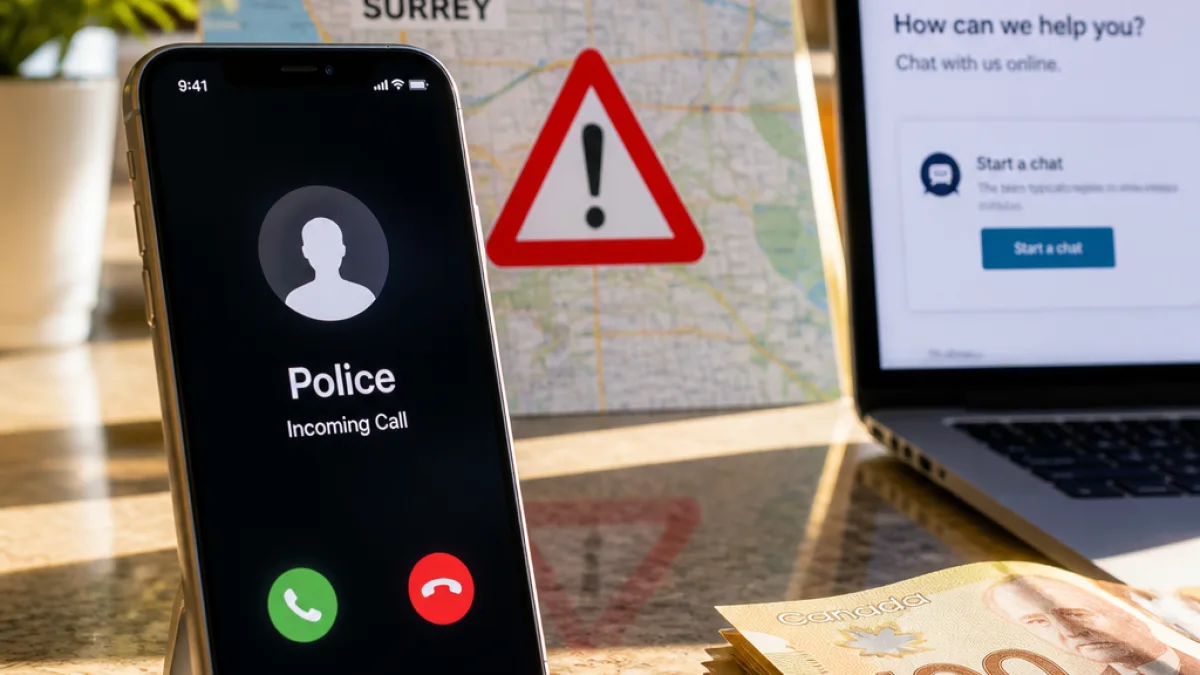
Residents in Surrey are being urged to be vigilant after a spate of phone scams in which callers impersonate police officers by spoofing official numbers. Fraudsters are using technology to make their calls appear to come from legitimate police lines and then attempting to extract personal information or persuade people to transfer money.
How the scam works
According to a statement reported by regional media, callers are using spoofing software that masks their true number and replicates a police force’s public telephone number. The aim, the statement said, is to trick recipients into disclosing personal details or sending funds.
“If you receive a call from someone claiming to be a police officer, take their details and message us, call 101, or use the online chat function on our website to confirm their identity.”
The statement added that genuine officers will never ask you to withdraw money or purchase high-value items as part of an investigation, nor will they call out of the blue asking for personal information.
Practical steps for residents
Officials advised anyone who receives a suspicious call to take the caller’s details and then contact the police through formal channels rather than engaging further with the caller. Suggested verification methods include:
- Messaging the police via their official channels;
- Calling 101 to reach the non-emergency police number;
- Using the police force’s online chat function to check whether the contact was genuine.
These steps are intended to prevent further disclosure of sensitive information or financial loss. The guidance emphasises that legitimate investigations do not involve demands for immediate cash withdrawals or purchases of items such as gift cards or high-value goods.
Why this matters locally
Phone-based impersonation scams exploit both technology and people’s instinct to cooperate with authority. For residents, the risk is not just immediate financial loss but also the erosion of trust in institutions people rely on for safety. The methods described — caller ID spoofing and pressure tactics — are increasingly sophisticated and can target people across demographics.
Taking a moment to verify a caller’s identity through official channels reduces the chance of falling victim to a scam. Community vigilance also helps police forces identify scam patterns and warn others. Reporting attempts, even if nothing was lost, contributes to the wider picture law enforcement uses to detect and disrupt fraud.
| Risk | Recommended response |
|---|---|
| Unsolicited call from someone claiming to be police | Take details and verify via 101 or official website chat |
| Request to withdraw cash or buy high-value items | Do not comply; end the call and report it |
As the community adapts to evolving scams, simple verification routines and a cautious approach to unexpected requests for money or personal information remain the most reliable protections.
Local police forces and media outlets continue to publish guidance and updates when new scam patterns emerge. Residents are encouraged to follow official channels for the latest advice and to report suspicious contacts promptly.