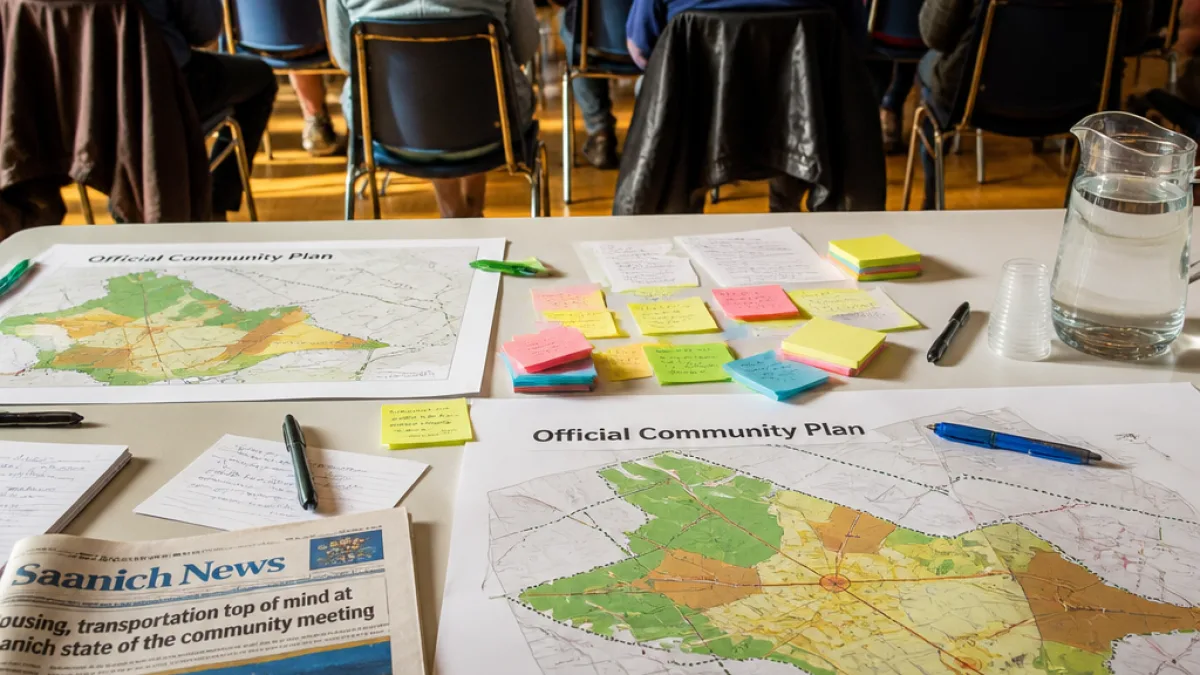
A letter published in the Peninsula News Review has renewed debate about how consultation was conducted for the North Saanich official community plan (OCP), with residents and one critic contending that engagement focused on an urban planning agenda rather than asking the community what it wanted.
The July 30 letter, from Robert Barrs and Patrick Oystryk of Modus Planning, Design & Engagement, defended the firm’s consultation work during the OCP planning period from 2021 into early 2023. A response published Aug. 15 says the Modus letter outlines venues and groups engaged but did not explain the substance of that engagement.
Residents say consultation favoured growth nodes
The respondent, who has direct experience with the Modus process, says consultation did not begin by asking residents whether they wanted to maintain the district’s rural character. Instead, the letter-writer says the process advanced proposals that reflected an urban planning objective: four major growth nodes with higher housing densities, including apartments, condos and townhouses.
- Area 1: a village hub at McTavish;
- Area 2: a marine/waterfront node at Tsehum Harbour;
- a residential intensification area in the southeast quadrant;
- a smaller commercial village in Deep Cove; and
- a commercial “nook” proposed near Ardmore Golf Course.
The writer notes the Area 1 and Area 2 proposals involved moving the Urban Containment Boundary (UCB) — a feature of the Capital Regional District (CRD) Regional Growth Strategy that helps distinguish urban from rural lands. North Saanich sits outside that boundary and is commonly regarded as a rural district because of its agricultural and forest lands.
“The Modus planning and consultation efforts did not ask residents what they wanted for their community, which was to maintain the rural character of the district,” the correspondent wrote.
Public reaction and the handling of feedback
According to the critique, many residents in the areas affected by the proposed nodes rejected the planning ideas and left critical notes on planning maps. The writer alleges those posted comments were not initially collated and summarised by Modus because they were critical of the proposed hubs.
The exchange also shifted into a debate over definitions of rural. Modus representatives, the respondent says, argued there are multiple definitions of rural and pointed to a European “village” model to justify the proposed hubs. The respondent countered that North Saanich is not Europe and argued the Town of Sidney already functions as the local village with services accessible to North Saanich residents.
Implications for local planning and community trust
The letter raises questions about how consultation is framed and reported in municipal planning. When external consultants describe the mechanics of engagement — meetings held, groups consulted — without summarising the substantive views collected, residents may feel their priorities are misunderstood or sidelined. For areas designated rural under the CRD Regional Growth Strategy, proposals to move the UCB or introduce denser nodes are particularly sensitive.
For residents who value farmland, forests and low-density character, the debate over village-style intensification taps into broader anxieties about growth pressure on the West Coast. On the other hand, proponents of managed growth argue that targeted density can protect surrounding rural lands by concentrating housing and services in specific locations.
The published exchange does not include a detailed response from municipal officials in North Saanich or an itemised account from Modus showing how resident input was analysed. What it does underline is a recurring challenge in regional planning: reconciling technical planning concepts and comparative examples with local identity and community expectation.
As municipal councils and planners continue work on OCPs across the region, residents and local groups are likely to press for clearer records of what was heard during consultation and how that feedback informed final recommendations.