
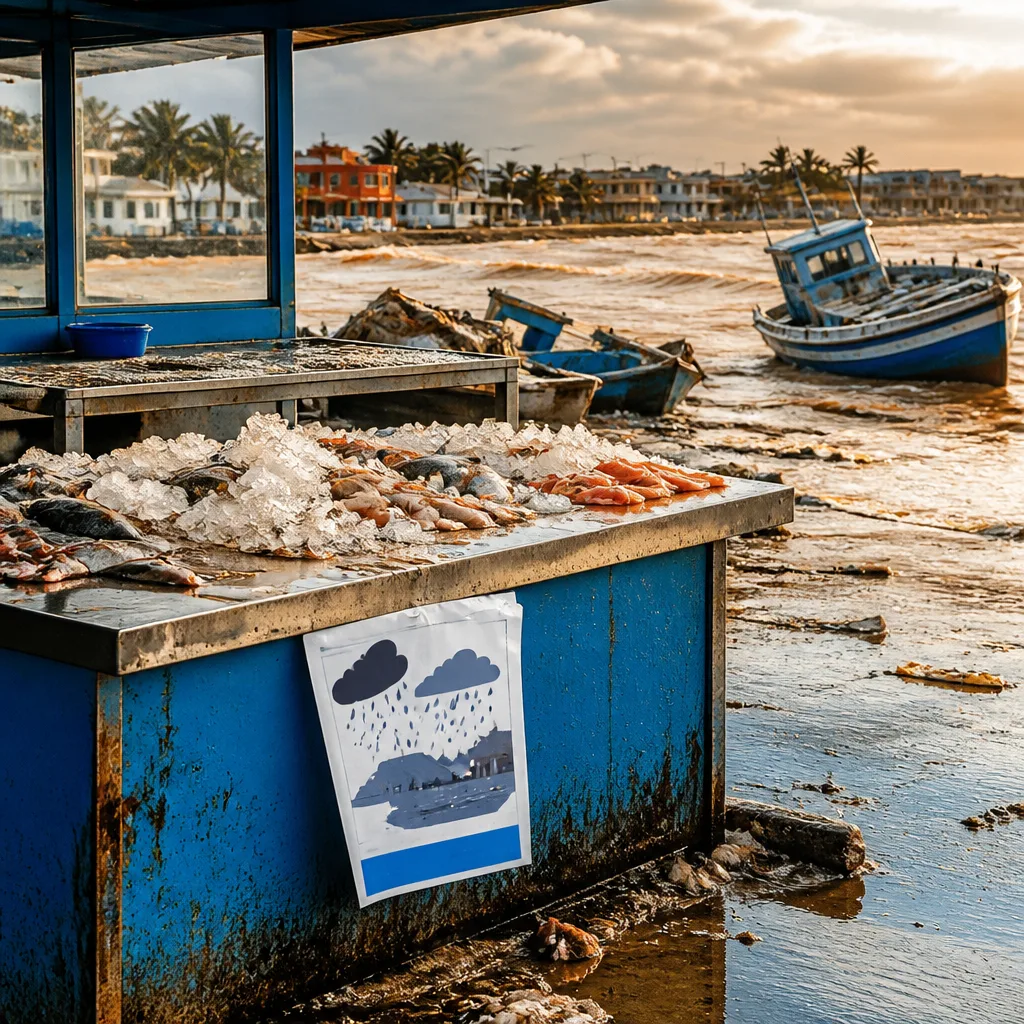
Scientists are urging public-health officials to take marine heatwaves seriously, arguing these episodes of sustained ocean warming pose a growing threat to people’s physical and mental health as well as to food security and livelihoods.
Climate-driven ocean extremes reach beyond ecosystems
A team including researchers from the University of Adelaide and the University of Hong Kong says the focus on marine heatwaves has mostly been environmental — coral bleaching, fisheries collapse and mass mortality of marine species — while the far-reaching human consequences have been under‑recognised. Their review, published in Nature Sustainability, maps the multiple pathways by which abnormally warm seas affect people.
Marine heatwaves are becoming more frequent, longer and more intense as the planet warms. The researchers point to recent extreme weather events linked to anomalously warm ocean conditions — such as Hurricane Otis in 2023, which produced an estimated damage bill exceeding US$15 billion in Mexico, and Typhoon Doksuri the same year, which affected more than two million people across Asia — to illustrate the cascading impacts on human populations.
"Marine heatwaves are no longer just recognised as an environmental issue; they are increasingly also perceived as a human health issue,"
That statement comes from lead author Dr. Laura Falkenberg of the University of Adelaide’s School of Physics, Chemistry and Earth Sciences. She and co-authors describe direct and indirect routes to harm: from increases in extreme weather intensity and atmospheric heatwaves to compromised seafood safety and availability, disrupted livelihoods and growing mental-health burdens among communities that depend on healthy oceans.
How people are affected — multiple, interacting pathways
The paper synthesizes evidence that marine heatwaves can:
- Intensify storms and heatwaves: Ocean warming can energize tropical cyclones and influence atmospheric patterns that exacerbate terrestrial heat extremes.
- Reduce seafood supplies and safety: Warming can trigger algal blooms and fish mortality events, undermining both the quantity and safety of seafood.
- Disrupt livelihoods: Coastal industries, including fisheries and tourism, can suffer sudden and lasting losses from altered marine ecosystems.
- Worsen mental health: Anxiety, grief and other psychological effects can arise in communities facing sustained ecological change and economic uncertainty.
As an illustration, the authors note a harmful algal bloom in South Australia that has been associated with a range of human health problems in coastal communities — an example of an ocean-driven ecological event producing direct health consequences ashore.
| Type of impact | Example |
|---|---|
| Extreme weather | Hurricane Otis — >US$15 billion damage estimate |
| Population displacement or harm | Typhoon Doksuri — affected >2 million people |
| Local health effects | Algal blooms linked to human illness in South Australia |
Implications for public-health planning
The authors urge governments, health agencies and coastal planners to treat marine heatwaves as a legitimate public-health challenge, not solely an environmental one. That would mean integrating ocean temperature monitoring into health surveillance systems, preparing for disruptions to food supply chains, and addressing mental-health needs in communities facing recurrent marine extremes.
Recognising the human-health dimension of marine heatwaves also implies cross‑sectoral collaboration — between meteorologists, oceanographers, fisheries managers and health professionals — to anticipate and respond to compound events where ocean warming contributes to cascading social and health risks.
For countries with extensive coastlines and communities that rely on marine resources, such as Canada, the paper adds to a growing body of evidence that climate change’s health burdens extend into marine and coastal realms. Public-health responses will need to account for unpredictable, fast‑moving biological changes in the ocean as well as the social impacts that follow.
By repositioning marine heatwaves as a health concern, the researchers hope to spur new monitoring approaches, targeted public-health messaging, and planning that reduces vulnerability — especially among populations whose well‑being is closely tied to a healthy ocean.
The study underscores that as oceans warm, the boundaries between environmental and human-health crises blur, creating a need for integrated preparedness strategies.















