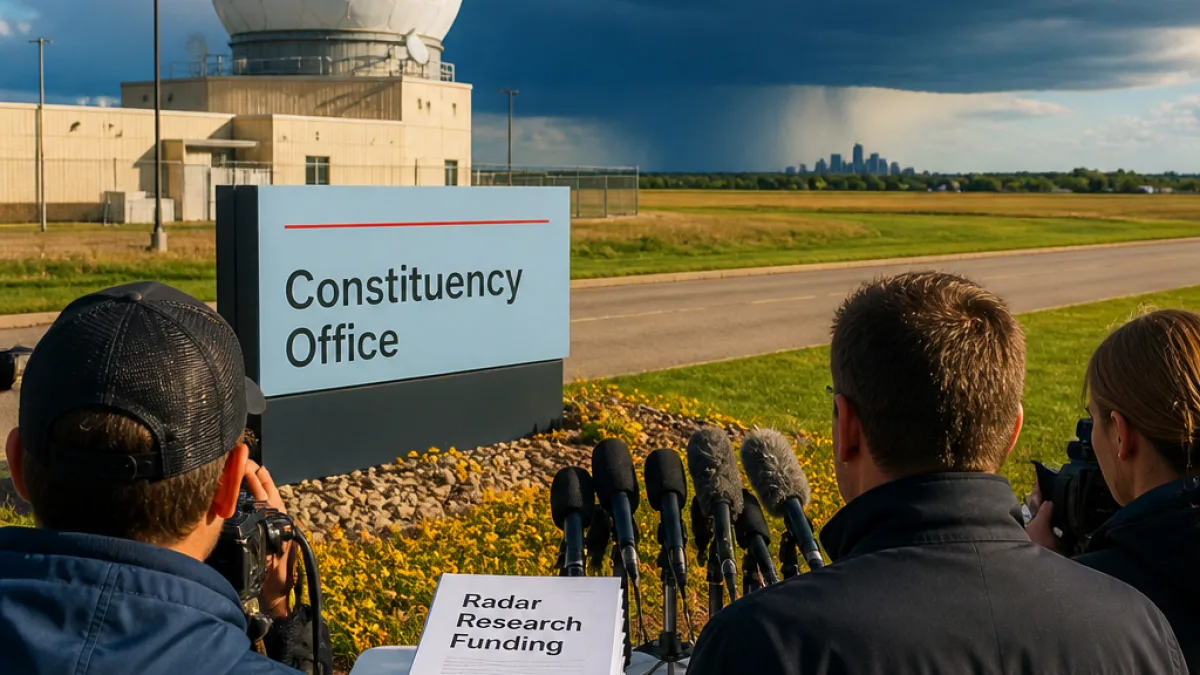
Regina-Lewvan MP Warren Steinley is urging Ottawa to rethink recent changes to Environment and Climate Change Canada’s spending that he says could undermine severe-weather forecasting and the long-term reliability of radar services that communities in Saskatchewan depend on.
Local concern after constituent flags funding shift
Steinley told media he learned of a reduction in funding for weather radar research from a constituent and called the change troubling for prairie communities that face tornadoes, hail, and fast-moving severe storms. He warned that the move could affect the department’s ability to carry out midlife upgrades or future radar replacement programs.
“Weather warning services will be affected long term,”
The MP said if Ottawa is looking to trim expenditures, it should steer clear of areas that directly affect public safety and preparedness.
Federal response: operational capacity to be kept
Environment and Climate Change Canada responded with a statement saying the department identified areas for change while reviewing spending, and that the adjustments will “strengthen how science is delivered.” The federal department said it will continue to provide the scientific and technical expertise required to maintain Canada’s current radar network and ensure it remains operational to provide lifesaving information.
The department also outlined a new approach to media requests, prioritizing inquiries related to active severe weather. A separate statement noted the National Severe Weather Media Access Line will be available 24 hours a day, seven days a week for questions tied to active alerts. Media inquiries not related to active events will be handled during regular business hours.
What this means for Regina and the Prairies
For residents of Regina and surrounding rural municipalities, radar and forecasting services are more than abstract lines on a budget sheet. Accurate, timely radar information helps emergency managers, agricultural producers and municipalities make rapid decisions when storms threaten property and lives. Saskatchewan experienced notable severe-weather events this summer, including tornadoes and downbursts that highlighted the importance of reliable forecasting and post-event research.
- Public safety: Radar research supports improvements in severe-weather prediction and warning lead times.
- Local emergency response: Emergency planners use scientific analysis to inform evacuation orders, sheltering and road closures.
- Long-term resilience: Research feeds projects that modernize radar systems and keep pace with technology.
Steinley’s concern centres on both immediate forecasting and the ability to fund midlife upgrades or replacements for radar assets in the future. He said changes to research funding and media-prioritization policies are linked and could limit access to information outside of active alert situations.
| Actor | Position |
|---|---|
| Warren Steinley, MP (Regina-Lewvan) | Worried cuts will affect severe-weather forecasting and future radar upgrades |
| Environment and Climate Change Canada | Says changes will strengthen scientific delivery and maintain operational radar capacity |
City and provincial emergency management officials did not provide new public statements at the time of reporting, but the exchange between a local MP and the federal department has already stirred questions among municipal staff and community groups about how future research changes might influence warning quality and response coordination.
Next steps and what to watch
Residents and local officials will be watching for detailed briefings from the federal department that clarify what specific applied-research activities are changing, whether any staff or contracts are affected, and how the department plans to sustain modernization programs for radar hardware and software.
For now, Environment and Climate Change Canada maintains that its radar network will remain operational and that life‑saving information will continue to be provided to Canadians. Still, MPs such as Steinley are asking Ottawa to prioritise funding decisions that do not diminish the tools communities need to face extreme weather.
As prairie communities plan for the next severe-weather season, the debate highlights a broader question: how to balance fiscal review with investments that directly protect safety on the ground.