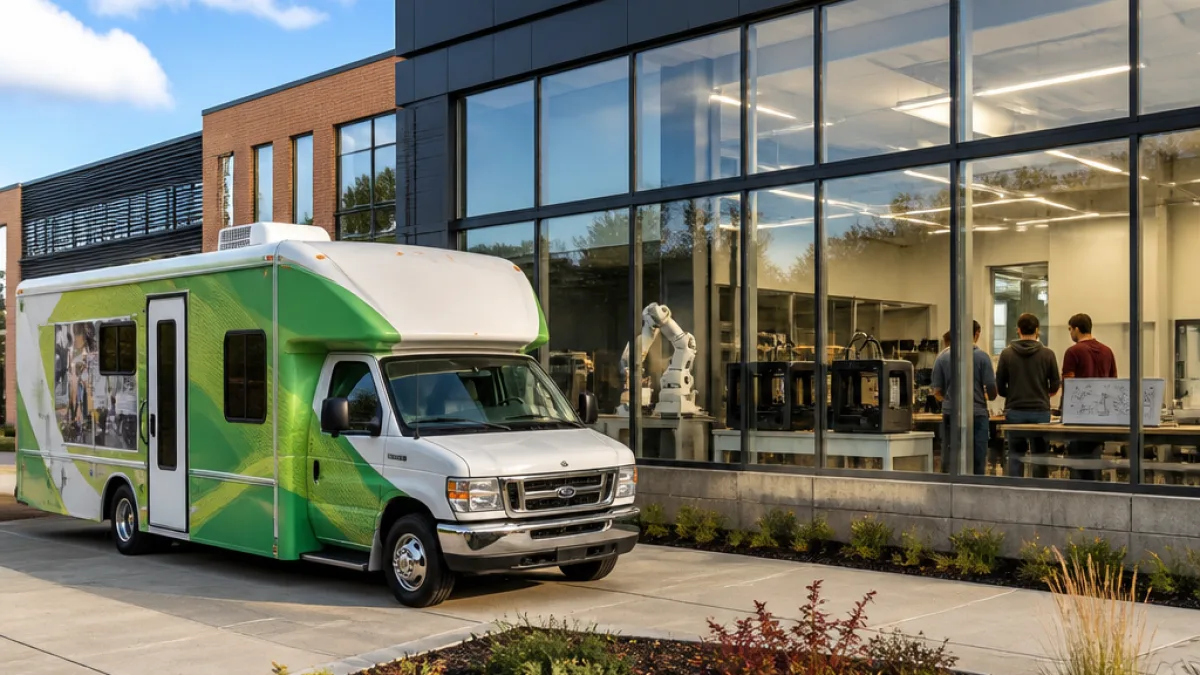
Red Deer Polytechnic (RDP) has landed a federal research boost that will expand the institution’s applied-research capacity in healthcare and energy innovation while directing resources toward rural and remote communities.
Federal investment targets rural healthcare technology
The Canada Foundation for Innovation (CFI) has provided RDP with more than $1.6 million in total support for two projects described by the polytechnic as having national significance. Of that amount, $652,008 comes from the CFI College Fund and will be dedicated to a health-technology initiative aimed at improving access and care in underserved areas.
“Supporting rural and remote healthcare is a key priority for Red Deer Polytechnic. This project is another example of how RDP is driving innovation, fostering collaboration and developing solutions to improve equitable access to care for communities across Alberta and beyond,” said RDP president Stuart Cullum in a statement.
The applied-research project, titled Redefining Person-centred Care in Rural and Regional Communities in Alberta Through Technology and Data Innovation, will develop and test new health technologies — including artificial intelligence, virtual reality, robotics and advanced diagnostic tools — with input from community stakeholders and health partners.
Equipment, mobile unit and on-site testing
RDP plans to use advanced 3D printers and electronics assembly stations to design and produce assistive devices and diagnostic equipment tailored to individual needs. A specialised technology suite and a mobile health unit will be used to collect health data, trial devices and provide hands-on training directly in rural communities.
- Funding: More than $1.6 million from CFI; $652,008 from the CFI College Fund.
- Partners: 28 initial collaborators, including Bethany Care, Primary Care Alberta, Alberta Health Services, Acute Care Alberta and Rocket Doctor.
- Jobs and training: The project is expected to generate more than 30 new jobs and train over 35 students annually, according to RDP.
| Item | Figure |
|---|---|
| Total CFI support | More than $1.6 million |
| CFI College Fund portion | $652,008 |
| Initial partners | 28 |
| Projected new jobs | More than 30 |
| Students trained per year | More than 35 |
RDP says the research will be grounded in real-world practice by involving local stakeholders throughout development and testing. That approach is intended to make the resulting technologies adaptable across different community settings and responsive to specific rural challenges, such as workforce shortages and limited access to specialised services.
Local economic and sector implications
For Red Deer, the grant represents more than an academic win. Applied research that produces commercialisable health technologies can seed local jobs in manufacturing, electronics assembly and clinical evaluation while giving students hands-on experience applicable in the broader Alberta labour market.
RDP’s announcement links the project to growth in Canada’s health-technology sector and to community wellbeing. The polytechnic projects the work will support regional economic strength by fostering innovation that can be scaled beyond Alberta.
Officials also highlight the role of partnerships: collaboration with health-care providers and regional organisations is central to the model, allowing technologies to be tested in the very communities they are meant to serve.
While the CFI funding targets the healthcare project specifically, RDP said the overall package also supports energy-innovation work. Details on the energy project were not expanded in the initial release.
What this means for residents
Residents in Central Alberta stand to benefit in several ways: improved local access to diagnostic and assistive technologies, more direct training opportunities for students and the potential for new employment in applied research and device production. The mobile health unit in particular may provide more immediate, on-site evaluation and service in rural areas where travel to larger centres is a barrier.
The polytechnic will move into the implementation phase with its partners and students, translating the federal investment into equipment, field testing and training activities over the coming months.
This injection of federal funding reflects a national push to decentralise innovation and deliver practical solutions outside major urban research hubs—an outcome that matters on the Prairies, where distance and workforce shortages often complicate health-care delivery.
More details about specific timelines and the energy project are expected as RDP proceeds with project development and partner coordination.