
An Alberta family has taken the provincial government to court seeking to recover nearly $200,000 they say they were forced to pay for out‑of‑country spinal surgery after their daughter waited more than two years in Canada’s health‑care system.
Family says delay closed off less invasive option
In 2021, when she was 13, Vienna Pedatella was diagnosed with idiopathic scoliosis, a condition marked by an abnormal S‑shaped curvature of the spine. The family says they inquired about surgical options early on but were advised that non‑surgical treatment — including wearing a brace for roughly 23 hours a day for nine months, alongside physical therapy and strength training — was preferable.
Those conservative measures, the family says, were intended to correct the curve or at least prevent progression during a primary growth spurt. Instead, Vienna’s condition progressed and she was eventually referred to BC Children’s Hospital. There, surgeons told the family she had missed the window for a procedure called “tethering,” which they believe would have corrected the issue and allowed their daughter to remain active without major loss of mobility.
“We felt really let down,” Janene Pedatella told Global News. “I was very very gutted that day because what does that mean for her now? It means fusion if her curve gets worse.”
When tethering was no longer an option, fusion followed
After being told the tethering option was no longer viable, Vienna was counselled that spinal fusion would be required if her curve worsened. Spinal fusion connects two or more vertebrae using rods, screws and bone grafts; in Vienna’s case the surgery involved 14 levels of vertebrae from the base of the neck to the lower back — a procedure that can affect mobility and flexibility.
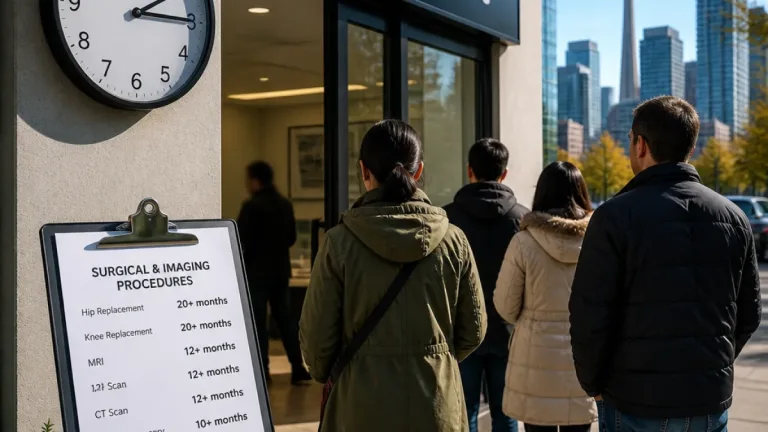
The family says they were then informed the wait list for surgery in Canada exceeded two years. Frustrated and fearful of long‑term loss of function and pain, they arranged out‑of‑country surgery and now seek to recoup nearly $200,000 in costs through court, arguing their daughter’s constitutional rights were violated by the delays.
What the case raises about access and timeliness
The Pedatella family’s legal action highlights several issues Alberta faces around specialist access and timeliness of care:
- Whether conservative treatment advice and specialist referrals can effectively close windows for less invasive procedures.
- How lengthy wait lists for paediatric orthopaedic surgery affect long‑term outcomes and choices families make, including the decision to seek care abroad.
- The potential of constitutional challenges when families argue delayed care results in irreparable harm.
The details provided to Global News do not include the specific court filings or legal arguments put forward by the family beyond their claim that constitutional rights were violated. The province’s health ministry has not been quoted in the material provided.
Practical implications for patients and families
For families dealing with progressive paediatric conditions such as scoliosis, the sequence and timing of interventions can be decisive. In this case, the family describe a progression from bracing and therapy to a referral where a less invasive surgical option was no longer available, followed by a lengthy wait for fusion surgery. That sequence is at the heart of the dispute.
Medical professionals and health‑system administrators will watch this case closely for any precedent it sets about jurisdictional responsibility, timelines for care and the circumstances under which families can seek reimbursement for treatment obtained outside Canada.
Timeline at a glance
| Year / Event | Detail |
|---|---|
| 2021 | Vienna, age 13, diagnosed with idiopathic scoliosis; advised bracing 23 hours/day and therapy. |
| After 2021 | Referred to BC Children’s Hospital; told she had missed the window for tethering. |
| Following referral | Informed publicly reported wait list for surgery exceeded two years; family arranged out‑of‑country fusion. |
| Present | Family pursuing legal action to recover nearly $200,000, alleging constitutional rights violations. |
The case is likely to prompt questions from the public and policymakers about how paediatric orthopaedic care is triaged and how wait lists are managed. For now, the Pedatella family has signalled it will pursue the courts to recover costs and to seek accountability for what they say was a preventable loss of options for their daughter.
As the matter proceeds, WE NEWS will continue to follow developments, court filings and any responses from provincial health authorities.