
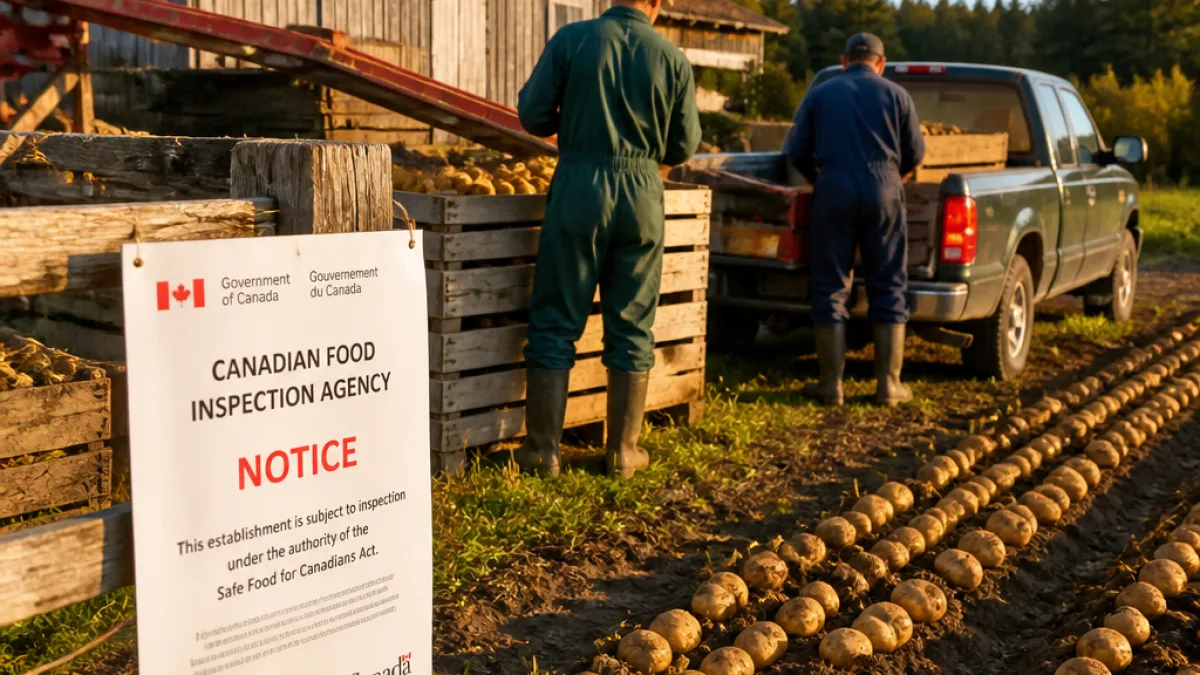
For the first time since the 1980s, potatoes are being harvested again on parts of Vancouver Island — a development with immediate meaning for farmers in neighbouring Central Saanich and for the local food scene.
End of a long prohibition
The federal restrictions that once barred potato production — and other nightshades such as tomatoes and eggplants — were introduced in response to the golden nematode, a microscopic roundworm that devastated tuber crops. The Canadian Food Inspection Agency (CFIA) recently concluded that the threat had receded across much of the area and lifted the complete ban in December, allowing growers to reintroduce these crops.
Long-time farmer and co-owner of Michell Farms, Terry Michell, recalled how disruptive the original prohibition was. "The farmers had meetings and there were, you know, 30 or 40 farmers there, just wondering what the heck they were going to do," he said, describing the 1980s as a difficult time for many family operations. "It forced quite a few other farmers right out of business, actually. After several years, they just couldn't make the transition on their land."
First harvests and local markets
Growers in the region had been preparing for the change; some planted small test blocks this year and are now bringing in their first post-ban crops. Market vendors and consumers on southern Vancouver Island are already seeing potatoes return to stalls and farm stands. Farmer Sol Kinnis noted potatoes are a popular item at the market, underscoring the crop’s consumer appeal and potential to diversify farm income.
- Decades-old federal ban targeted potatoes and other nightshades because of the golden nematode.
- The CFIA lifted the complete ban in December after finding the pest threat no longer present in much of the area.
- Local farmers, including Michell Farms, are harvesting the first potatoes since the 1980s and returning the crop to markets.
What this means for farmers and land use
Allowing potatoes back into rotation creates practical choices for producers. Potatoes can be a high-value crop for market sales, but they also require particular soil management and biosecurity practices. That matters in an area where small- and medium-scale farms were still adjusting from earlier decades of change and where some operators left farming entirely after the original ban.
Farmers who transitioned away from potatoes in the 1980s established new enterprises, altered crop mixes and, in some cases, sold land. The reintroduction does not automatically restore those lost operations, but it does open options for current farmers to diversify or expand market offerings. Any reintroduction will likely be cautious: growers and regulators will be watching soils and pest surveillance closely to avoid recurrence of historic problems.
| Item | Then (1980s) | Now (2025–2026) |
|---|---|---|
| Primary reason for measures | Golden nematode infestation | CFIA found threat reduced; ban lifted in December |
| Crops affected | Potatoes and other nightshades | Potatoes, tomatoes, eggplants can be grown again in much of the area |
| Local impact | Some farms forced out of business; crop rotations changed | First local potato harvests in decades; market reappearance |
Producers will need to balance enthusiasm for a returning cash crop with ongoing soil health management, crop rotation planning and vigilance in monitoring pests.
"The farmers had meetings and there were, you know, 30 or 40 farmers there, just wondering what the heck they were going to do," said Michell, recalling the years after the ban.
Community and market implications
For consumers in Saanich and across southern Vancouver Island, the change is tangible: a familiar local staple has reappeared. For farmers’ markets and local grocers, it means more product to source locally during the season and a potential boost for farmgate sales.
For municipal planners and agricultural advocates, the development also frames longer-running discussions about land use and the sustainability of regional farming. Central Saanich has long been regarded as an agricultural hub on southern Vancouver Island; the ability to grow a broader range of crops could influence farm viability, land stewardship and local food security over time.
While the return of potatoes is not a solution to the complex challenges facing local agriculture, it is a meaningful chapter in the region’s farming story — a reminder that pest management, regulation and the resilience of family farms are intertwined with decisions made decades ago and those being made today.
Residents seeking more information on crop restrictions and biosecurity should consult CFIA advisories and local agricultural extension resources.











