Across British Columbia's southern Interior, an intensifying drought is not only stoking wildfire risk but also stripping farmers of the water they need to keep crops and herds alive. Communities from Kamloops to Coldstream are reporting irrigation sources gone dry and steep cutbacks in allocations that are forcing growers to curtail plantings and ranchers to budget for expensive feed purchases.
Water allocations slashed, production sacrificed
In the north Okanagan, where irrigation is central to vegetable and forage production, some operations have been told to reduce water use dramatically. Coldstream Ranch had its allocation cut by 70 per cent in June; managers say the move has immediate consequences for feed production for their cow-calf herd.
"We're getting a lot less water on our corn crops and we've had to let a bunch of our hay land [go dry] that we would usually get two cuts off of and then use for grazing. But now it's just brown and burnt to the dirt," said Nick Bapty, cattle foreman at Coldstream Ranch, which currently runs 1,800 cows. Bapty estimates the ranch could face about $500,000 in costs to replace feed they could not grow this season.
"We were expecting that at some point we might potentially see some rain. And now we're into mid-August and still nothing." — Rachelle Zelaney, Zelaney Farms
At Zelaney Farms in Coldstream, owners say without meaningful precipitation soon they will have to sacrifice large portions of their vegetable crop. Farmers who rely on irrigation from creeks and reservoirs narrowed by a low snowpack and negligible summer rainfall are being hit first and hardest.
Signs of a historic dry summer
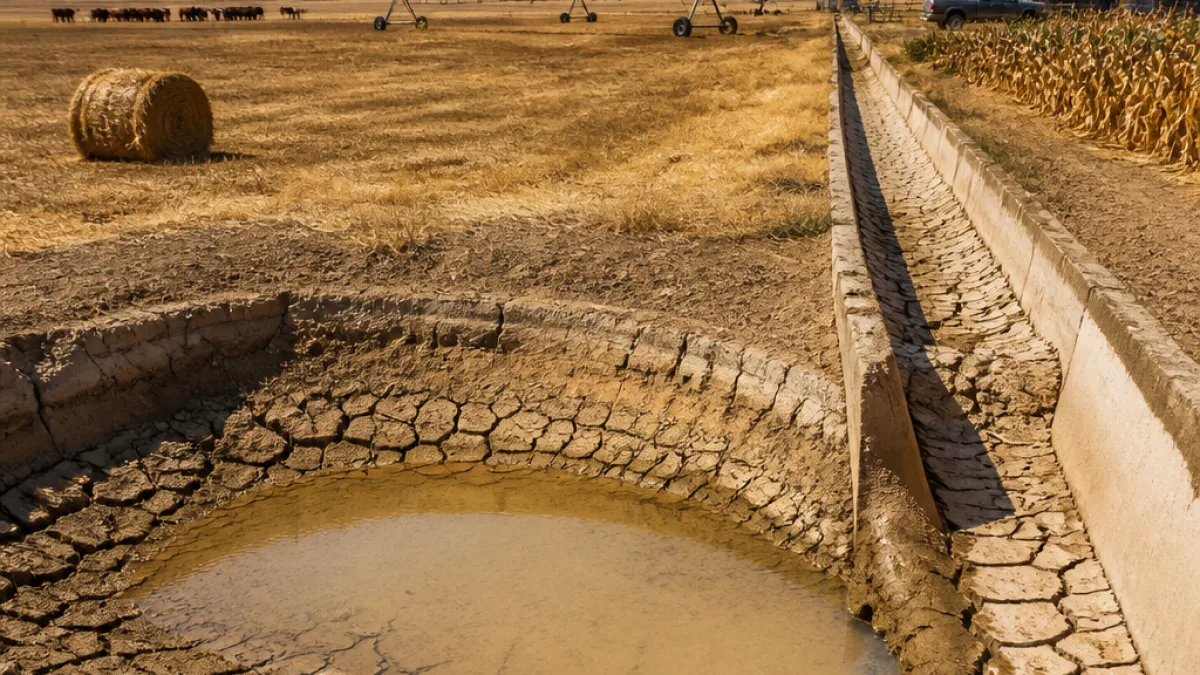
Warming temperatures, minimal spring snowpack and prolonged dry weather have combined to produce what agriculture advisers and producers are calling a historic dry season. The provincial drought monitor has flagged many areas in the Thompson–Okanagan region at Level 4 or Level 5 — the most severe ratings on the scale — indicating widespread water shortages and agricultural impacts.
Producers in Kamloops and surrounding areas reported irrigation intakes that have run completely dry. Ted Blackwell of Blackwell Farms in Kamloops was photographed surveying parched fields where irrigation water is no longer available.
Farm-level responses and practical implications
Farmers are responding with a mix of triage and contingency planning:
- Prioritizing water for high-value or perishable crops.
- Letting lower-priority hay and pasture fields go brown to conserve allocation.
- Purchasing hay or other feed from outside regions to maintain herd health.
Those decisions, while practical, carry costs that ripple through the rural economy: feed purchases eat into margins, reduced hay cuts lower future grazing capacity, and vegetable shortages can raise prices for consumers and shrink growers' revenues.
What the drought means for the season and beyond
With irrigation infrastructure and water licences already allocated, many producers have limited options for additional supply. Short-term relief depends on weather — a significant rainfall event could restore some capacity — but experts warn that long-term adaptation will require investments in water storage, revised allocation frameworks and support for drought-resistant cropping and forage strategies.
| Location | Impact noted |
|---|---|
| Coldstream | 70% cut to water allocation; major vegetable and hay losses |
| Coldstream Ranch | 1,800 cows; estimated $500,000 replacement feed cost |
| Kamloops | Irrigation sources reported run dry at some farms |
For farmers and ranchers already dealing with labour pressures, market volatility and rising input costs, the drought presents another acute threat to farm viability. Local producers say they are watching forecasts closely while weighing whether to invest in emergency purchases of feed or seed, or to reduce herd sizes to conserve limited resources.
As the wildfire season continues to draw headlines, the quieter crisis on the ground in irrigated agriculture underscores how a changing climate is reshaping daily life and livelihoods across the West Coast. Farmers here say policies and municipal planning that acknowledge the region's shifting water reality will be central to sustaining production in the years ahead.
Reporting from the Thompson–Okanagan region for WE NEWS.