
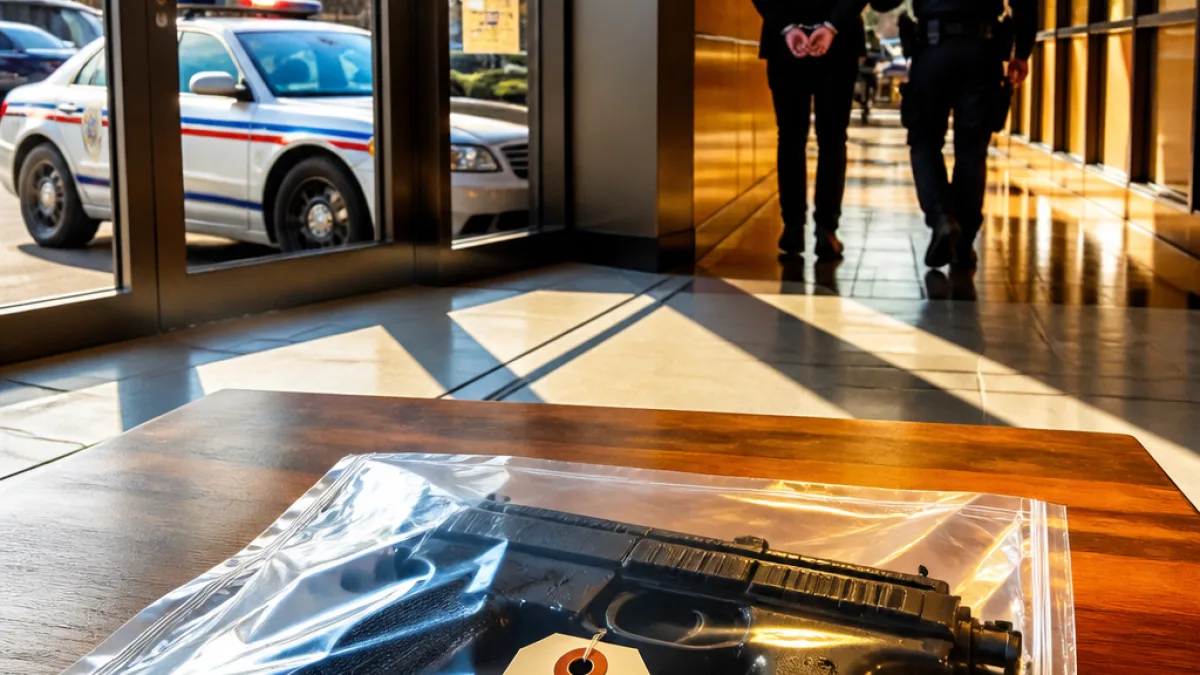
Undercover probe exposes gun sale linked to Nanaimo Hells Angels
Two men with ties to the Nanaimo chapter of the Hells Angels were convicted in July of selling an Uzi submachine gun to an undercover Royal Canadian Mounted Police officer, part of a complex investigation that began in 2018. The transaction, which took place on Feb. 25, 2020, emerged as one of roughly 50 scenarios examined by the Combined Forces Special Enforcement Unit (CFSEU) during a multi-year operation targeting serious organized crime.
The case centres on Kristopher Smith — identified in court records as a full-patch Hells Angel at the time of the sale — and his associate William Thompson. Both men pleaded guilty to the firearms sale and a range of other offences in July and are scheduled to appear again in B.C. Supreme Court on Sept. 28.
Evidence, agent credibility and judicial scrutiny
Justice Robin Baird outlined key details of the investigation in a written decision released this week. The ruling describes how the RCMP recruited a police agent in 2019 who had previously served a jail term for gang-related offending, including drug trafficking. That agent then developed a relationship with Smith and was embedded within the circle around the Nanaimo chapter.
“A decidedly dodgy creature,”
Justice Baird used that phrase in the decision to describe the agent, and said he accepted only the evidence that had been corroborated by other undercover officers, surveillance and intercepts.
The judgment recounts that the undercover officer had already bought a kilogram of cocaine from another Nanaimo Angel, William Paulsen, who earlier pleaded guilty in the same investigation and is serving a seven-year prison sentence. It was on that foundation of undercover dealings that the topic of firearm trafficking was raised with Smith by his handler, the judgment said.
How the sale unfolded
Court documents indicate Smith and Thompson “jointly organized” the sale of the Uzi to the undercover officer. According to the ruling, Smith sent text and voice messages indicating Thompson had the weapon and was prepared to sell it. Smith later argued at trial that he never physically handled the gun, but the judge found that his level of involvement in arranging the transaction was sufficient for conviction.
| Key date | Event |
|---|---|
| 2018 | CFSEU operation begins |
| 2019 | RCMP recruit agent following his jail term |
| Feb. 25, 2020 | Undercover Uzi sale in Nanaimo |
| July 2026 | Smith and Thompson convicted |
| Sept. 28, 2026 | Next B.C. Supreme Court appearance |
What this means for Nanaimo
The convictions form part of a larger CFSEU effort to dismantle violent and well-organized criminal networks operating on Vancouver Island and beyond. For residents, the case underscores both the persistence of illegal firearms and the investigative resources being deployed locally to counteract them.
Police reliance on undercover agents with criminal pasts is not new, but the candid judicial critique of the agent’s character highlights the tightrope investigators walk when balancing operational effectiveness against legal and ethical scrutiny. Justice Baird’s decision makes clear that corroboration — through surveillance, wiretaps and additional undercover work — was central to upholding the evidence.
- Local impact: The Nanaimo chapter figures prominently in the investigation, reinforcing ongoing concerns about gang activity in the region.
- Legal process: Convictions arrived after a multi-year probe; further court hearings are scheduled for late September.
- Enforcement approach: RCMP and CFSEU used undercover agents and coordinated surveillance to secure corroborated evidence.
As Nanaimo continues to grow, the intersection of community safety and organized crime remains a pressing civic concern. The case will return to B.C. Supreme Court on Sept. 28, where remaining sentencing issues and related matters will be addressed. The outcome will be watched closely by residents and law enforcement alike as part of a broader effort to stem the flow of illegal firearms and drug trafficking on Vancouver Island.
This report is based on the written decision of Justice Robin Baird and court records released this week.















