
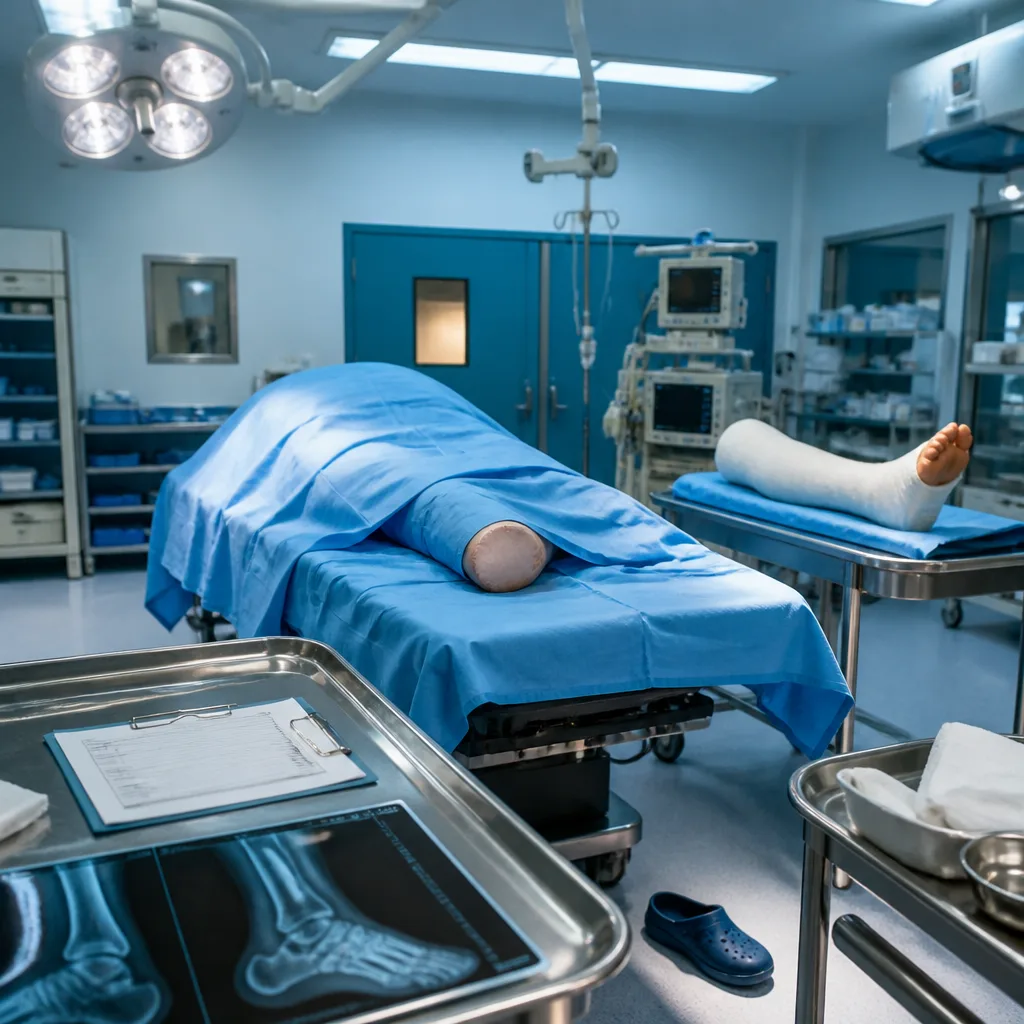
A man has launched a negligence lawsuit against the Winnipeg Regional Health Authority after alleging that surgeons at Grace Hospital amputated the wrong leg two years ago.
Allegation: left leg removed instead of right
The statement of claim filed in the Court of King’s Bench says the patient, identified in court documents as Jason Kennedy, was admitted to Seven Oaks Hospital on Oct. 22, 2024, with pain and infection in his right foot. According to the claim, he was referred to an orthopaedic surgeon at Grace Hospital for possible amputation below the right knee.
Mr. Kennedy’s lawsuit asserts that after transfer to Grace Hospital on Oct. 31, 2024, a different surgeon removed the left leg below the knee. He is said to have discovered the error only after regaining consciousness from anaesthesia.
Alleged failures in documentation, review and consent
The court filing contends that referral documentation and diagnostic imaging all identified the right limb as the one requiring amputation and that no pre-transfer record indicated the left leg needed removal. The statement of claim also alleges:
- the operating surgeon did not review the referral documentation that identified the right limb;
- no physical check to confirm the correct limb was performed before the operation;
- diagnostic imaging relied upon was misoriented or inverted; and
- consent was obtained only after sedating medication and after the patient had expressed he felt unable to proceed.
The claim further alleges that these actions amounted to battery and constituted negligence, and that the other physician involved failed to exercise reasonable care in managing the referral and ensuring the correct diagnosis.
“The Winnipeg Regional Health Authority said in a statement Monday it can't comment on the matter as it is before the courts.”
Disclosure and current status
The suit notes that in November 2024 the WRHA provided what the court filing describes as a critical incident disclosure acknowledging that processes for surgical preparation and consent prior to the operation did not follow standard procedures.
The allegations contained in the statement of claim have not been tested in court. No statement of defence has been filed and the WRHA has declined to comment due to the ongoing legal process. The lawsuit names the Grace Hospital doctors who arranged and performed the procedure.
Context and implications
Wrong-site and wrong-patient surgeries are rare but serious events that prompt review of safety protocols such as preoperative checklists, time-outs and consent practices. In Canada and internationally, hospitals use standard procedures intended to verify the correct patient, procedure and site immediately before incision.
Legal action in such cases typically seeks compensation for medical and non-medical losses and can drive systemic reviews of clinical practice and governance. This claim, if proven, would raise questions about how documentation and imaging were communicated and verified across facilities, how surgical teams conducted preoperative checks, and how consent was obtained and documented when patients were under sedating medications.
| Key dates | Event |
|---|---|
| Oct. 22, 2024 | Admission to Seven Oaks Hospital for infection/pain in right foot |
| Oct. 31, 2024 | Transfer to Grace Hospital; amputation performed |
| Nov. 2024 | WRHA critical incident disclosure to patient |
Patient safety experts say transparency and timely disclosure are critical after such incidents. The WRHA’s acknowledgement in a critical-incident disclosure—if accurately described in the court filing—indicates the health authority recognised procedural shortcomings internally, though the legal claims remain to be adjudicated.
For now, the proceedings will continue through Manitoba’s court system. The allegations in the lawsuit highlight the potential human cost when surgical safeguards fail and underscore the importance of robust, consistently applied verification steps in operating theatres.
This report is based on the statement of claim filed in the Court of King's Bench and public responses from the Winnipeg Regional Health Authority. The claims have not been tested in court.















