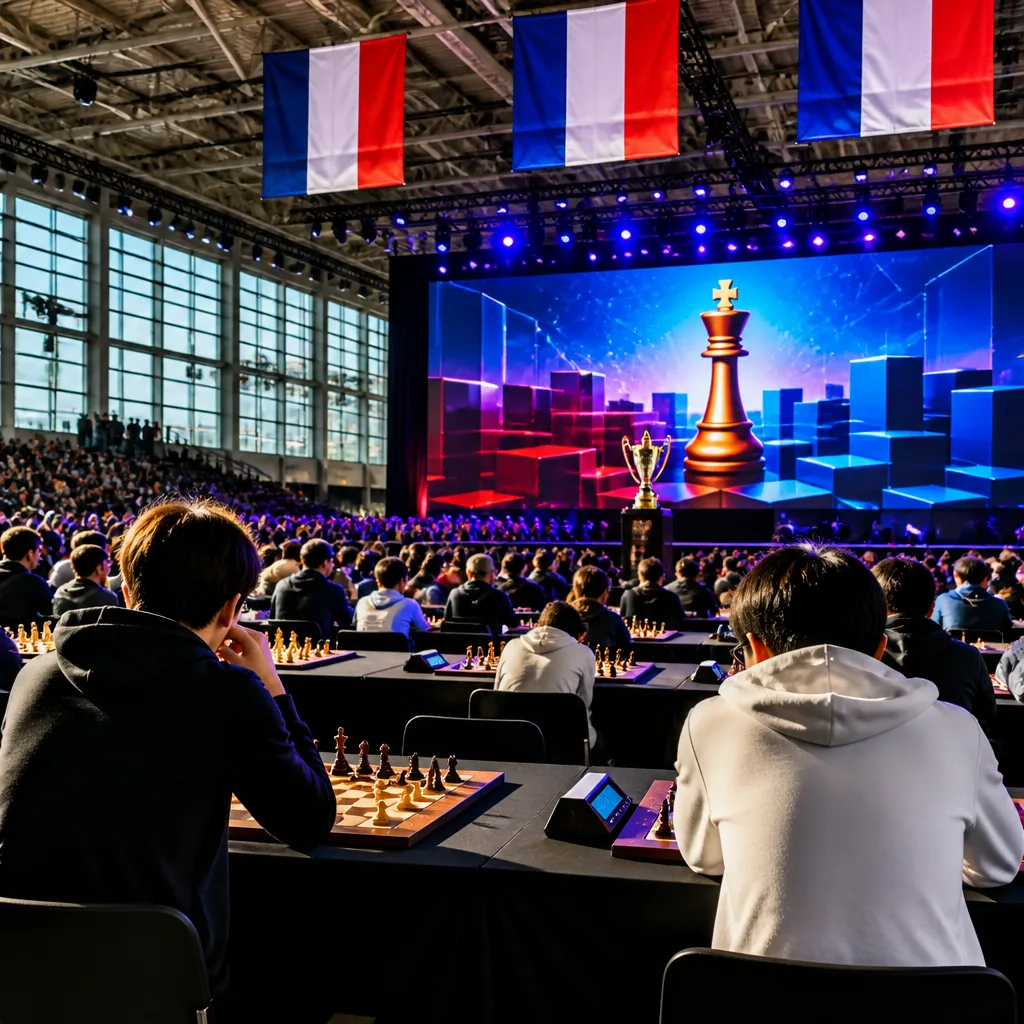
The Esports World Cup chess tournament resumes in Paris this week, and the spotlight again falls on Magnus Carlsen as he attempts to defend the title he won at the inaugural event. The competition runs from Aug. 11 to 15 at the Paris Expo Porte de Versailles and features 22 of the world’s leading players across a Play-In, Group Stage and Playoffs.
Fast time controls, big stakes
Organisers have installed a compact format that favours rapid and blitz specialists. Matches are played in a 10-minute format that rewards quick decision-making and practical play — conditions that suited Carlsen during last year’s tournament in Riyadh.
The event also carries significant financial and competitive incentives: the total prize pool stands at US$1.5 million, and performances will contribute points toward the wider Esports World Cup Club Championship.
Who lines up against Carlsen?
While Carlsen arrives as the player to beat, the field contains several proven challengers whose skills are well suited to the faster time control. Among them:
- Hikaru Nakamura — a leading rapid and blitz exponent from the United States, widely regarded as one of the strongest speed players in the world.
- Alireza Firouzja — runner-up at the 2025 Esports World Cup, returning with unfinished business.
- Ian Nepomniachtchi, Nodirbek Abdusattorov, Arjun Erigaisi and Hans Niemann — a group of elite grandmasters who add depth and unpredictability to the field.
Event structure and schedule
The five-day event is divided into three stages. Players contest a Play-In to qualify for the Group Stage, then the top entrants advance through quarterfinals, semifinals and a grand final.
| Date | Stage |
|---|---|
| Aug. 11 | Play-In |
| Aug. 12–13 | Group Stage |
| Aug. 14 | Quarterfinals |
| Aug. 15 | Semifinals and Grand Final |
Why Canadians should care
Beyond the spectacle, the tournament is significant for chess fans and the broader esports audience in Canada. Rapid formats have helped bring chess to streaming platforms and mainstream audiences, expanding the game's reach and connecting traditional chess communities with younger esports fans. Performances in Paris will affect club championship standings and the evolving international profile of competitive online and arena chess.
Carlsen’s presence lends star power and familiarity for many Canadian viewers who follow elite chess. Meanwhile, challengers such as Nakamura and Firouzja provide stylistic contrasts and narrative tension: Nakamura’s flair in speed chess versus Firouzja’s aggressive, modern approach. The compressed, high-pressure environment of the EWC format often produces dramatic swings, meaning the tournament could yield surprises despite Carlsen’s status as favourite.
With important ranking points and a sizeable prize pool on offer, national federations and clubs will watch closely to gauge shifting strengths among the world’s elite — information that can influence coaching, team selection and public interest back home. For Canadians attending chess clubs, streaming events, or following esports coverage, the Paris Esports World Cup offers a concentrated showcase of top-level rapid chess and a snapshot of where the game is heading in a hybrid online-arena era.
Coverage begins Aug. 11 from the Paris Expo Porte de Versailles, with matches progressing through the group stage and into the knockout rounds across the following days.