
The U.S. Department of Health and Human Services’ Office of Inspector General (HHS-OIG) operates a mostly unseen training hub that is central to federal efforts to combat health-care fraud, according to a recent account by a New York Post reporter. The centre, known internally as the National Training Operations Center or “Noc,” brings together data analysts, digital forensics specialists and front-line investigators—many of whom have clinical backgrounds—to rehearse complex takedowns and pursue recovery of millions in allegedly misspent public funds.
Who trains there and what they do
Staff at the centre include former or practising health-care professionals such as physician assistants and nurse practitioners who have moved into investigative roles. Their clinical experience is used alongside law-enforcement techniques to identify and dismantle schemes that, officials say, drain taxpayer money from Medicare, Medicaid and other federal programmes.
- $45,000 a day — the average amount HHS-OIG officials say is recovered per investigator, according to the report.
- $15 million a year — the figure offered as an annualised recovery per investigator.
- Immersive training — physical mock clinics and virtual reality scenarios — used to rehearse raids and investigative operations.
Scott Lampert, assistant inspector general for investigations at HHS-OIG, highlighted the returns the agency attributes to individual investigators and offered a projection on capacity.
“If we had 100 more agents, think about what we could do,”
Lampert’s comment, relayed by the reporter, framed the office’s appeal for greater resources as a matter of scale rather than a change in approach.
Simulated environments for high-pressure work
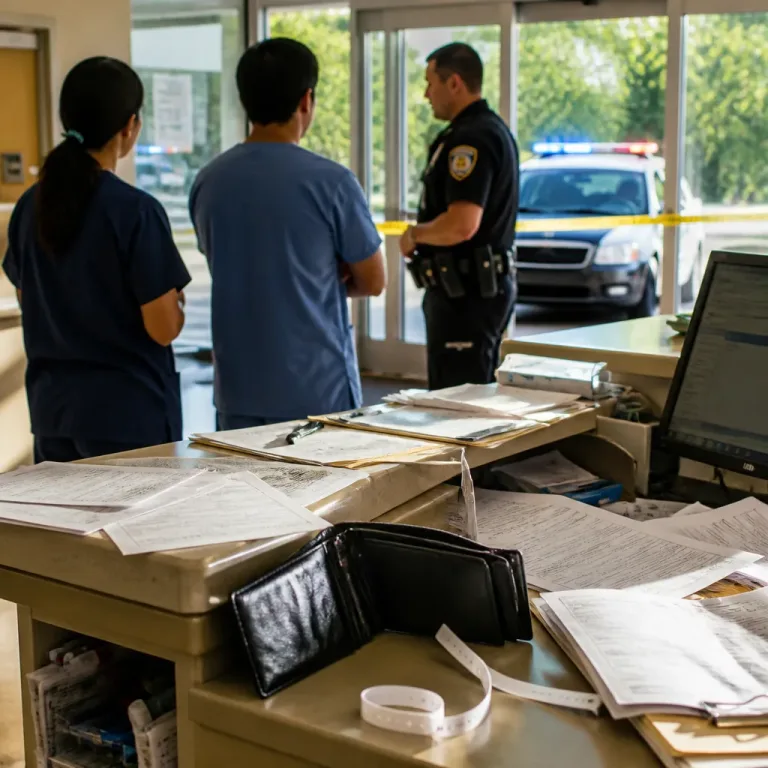
The training facility reportedly contains highly realistic mock-ups of medical offices and virtual reality (VR) settings designed to mimic the confusion and potential danger of field operations. Instructors use role players and lifelike dummies to represent suspects and patients; scenarios are deliberately noisy and disorienting, with bright lighting and loud soundtracks, to help trainees practise maintaining composure under stress.
Special Agent Thomas Floersch told the reporter the focus is on scenario-based training to ensure investigators can remain clear-headed in complex operations.
“We train our people to have a clear head,”
The combination of clinical insight and law-enforcement skills is presented as a deliberate effort to improve investigative outcomes when dealing with health-care schemes that often involve medically framed services or complex billing practices.
Context and consequences
Federal enforcement of health-care fraud has been a consistent priority for successive administrations given the scale of federal health-care spending. Agencies such as HHS-OIG typically pursue investigations that allege improper billing, upcoding, phantom services, kickbacks and other schemes that can siphon large sums from public programmes. Recoveries are often sought through civil and criminal actions, with results affecting providers, suppliers and sometimes beneficiary access where misconduct is alleged.
| Aspect | Detail |
|---|---|
| Training methods | Physical mock clinics, VR scenarios, role players, tactical rehearsals |
| Personnel | Data analysts, digital forensics, clinical professionals, special agents |
| Reported per-agent recovery | $45,000 per day (~$15 million per year) |
While the report provides a rare look inside a largely concealed federal unit, it also raises questions about resource allocation and oversight. Public-interest considerations include how the agency prioritises cases, the safeguards in place to protect patients and providers who may be affected by aggressive enforcement, and the transparency of operations conducted in the name of recovering public funds.
For Canadians, the account is a reminder that the policing of health-care funding is an international concern: wherever public programmes are large and complex, they are vulnerable to exploitation, and governments must decide how much to invest in detection and recovery versus prevention, compliance and education.
The HHS-OIG account in the New York Post underscores a hybrid model that pairs clinical knowledge with investigative tradecraft. Whether that approach will be expanded depends on budget priorities and political will—factors that shape how governments across North America manage both the integrity of health-care systems and the public money that sustains them.