
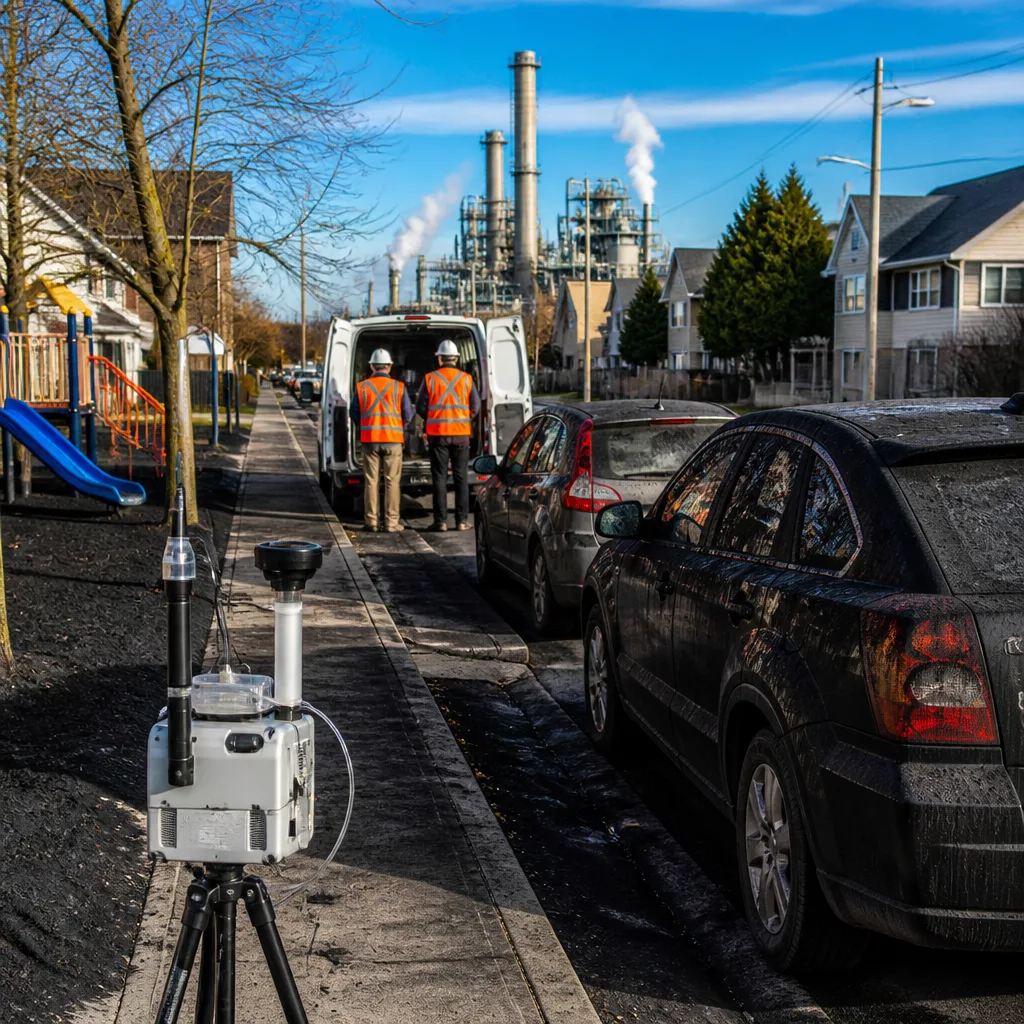
Hamilton Public Health has concluded that the dense black soot that settled across parts of the city in early July is not expected to produce long‑term health effects on its own, while warning the episode worsened an already strained local airshed.
Short‑term symptoms, no spike in emergency visits
The health unit said its review of air monitoring, weather records and environmental samples — and consultations with toxicology experts — did not show evidence of a surge in acute health impacts. Residents reported symptoms such as itchy eyes, coughing and sore throats, but the unit noted there was no increase in emergency department visits linked to the soot.
“The emissions in early July were a short‑term worsening of those Hamiltonians experience on a daily basis. This short‑term event isn’t expected to have long‑term health risks on its own,”
Those comments came from Dr. Elizabeth Richardson, Hamilton’s medical officer of health, in a news release accompanying the assessment.
Composition of the fallout and provincial response
Samples collected during the event and reviewed by the health unit — and by the Ontario Ministry of the Environment, Conservation and Parks — were mainly composed of carbon, with small amounts of sulphur and very small amounts of mineral particles, the health unit reported. The ministry said it received 475 complaints related to the incident and identified Birla Carbon, a facility in Hamilton’s Bayfront Industrial Area, as the primary source of the emissions. The ministry has referred the company for a formal investigation.
| Item | Detail |
|---|---|
| Complaints received by province | 475 |
| Main material in samples | Carbon |
| Other components | Small amounts of sulphur; very small amounts of mineral particles |
Context: airshed burden and equity
While the health unit judged the early‑July episode a short‑term worsening rather than a long‑term hazard by itself, it emphasised the event’s role in compounding existing air quality problems, particularly in the city’s north end. That area has previously borne disproportionate impacts from industrial emissions, a factor public health officials highlighted when discussing cumulative risk.
Residents described the fallout as pervasive. One person told local media the soot buildup was all‑encompassing and left outdoor surfaces feeling “dirty and grimy.” Such accounts underlined community concern even where population‑level health metrics, such as emergency visits, did not show an acute spike.
What the assessment covered
Hamilton Public Health said it looked at multiple lines of evidence in forming its conclusion:
- Air quality monitoring data for the period surrounding the event;
- Weather and dispersion information to understand how emissions travelled;
- Laboratory results from environmental sampling;
- Input from toxicology experts about potential health effects of the detected materials.
The unit cautioned that while the materials identified can be toxic at high concentrations and with long‑term exposure, the levels measured during the event did not indicate prolonged population harm arising solely from this episode.
Next steps and implications
The provincial referral of Birla Carbon for a formal investigation means regulators will pursue possible compliance and enforcement actions if violations are found. For communities, the episode underscores ongoing concerns about industrial emissions, environmental equity and the need for robust monitoring and rapid public communication when incidents occur.
Public health officials said they will continue to monitor air quality and work with provincial authorities as investigations proceed. Residents with persistent or concerning symptoms were advised to seek medical attention through their usual health‑care providers.















