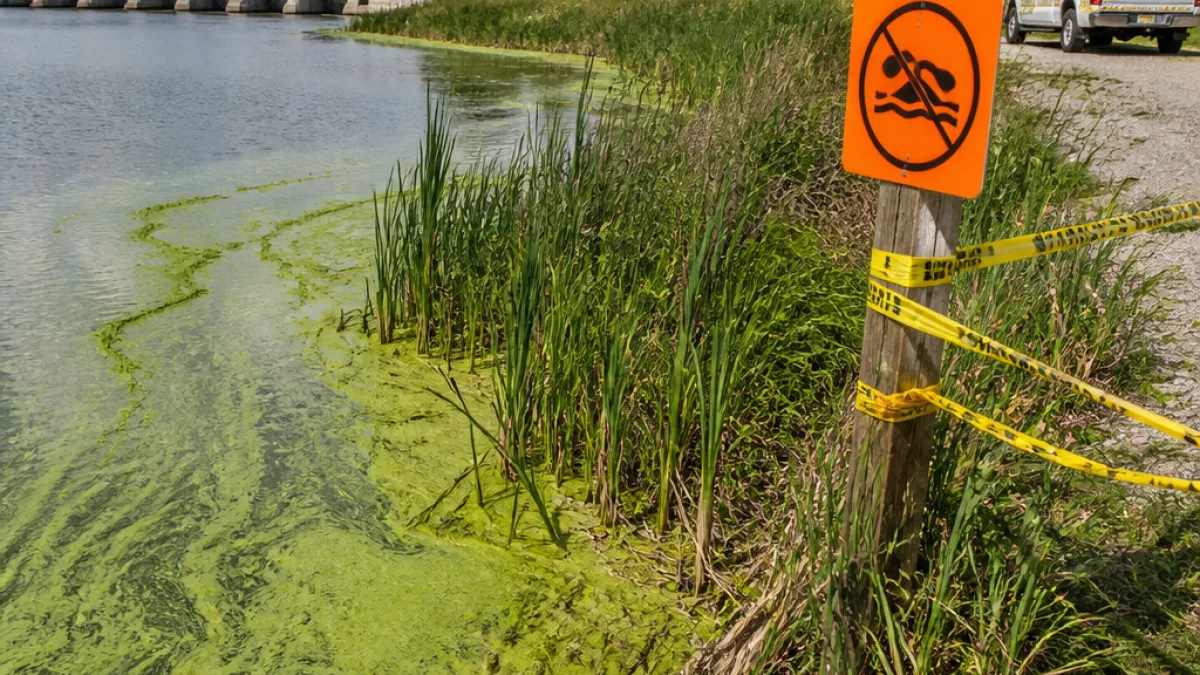
Guelph — The Grand River Conservation Authority has alerted lake users after staff recently identified what officials describe as a suspected blue-green algae bloom at Guelph Lake.
Where the bloom was seen
In a Sept. 17 release the GRCA said the area of concern is along the northeast shoreline and near the dam. The authority has also said an earlier algae notice issued on Sept. 1 for Belwood Lake remains active.
“The presence of a suspected small blue-green algae bloom has been observed at the northeast shoreline, and near the dam,” the GRCA said in its statement.
Blue-green algae, also known as cyanobacteria, are a recurring summer issue for several reservoirs and conservation areas in the region. The GRCA noted that blooms commonly appear at Belwood, Conestogo and Guelph lakes when warm weather creates conditions favourable to rapid algae growth.
Health and safety advice for lake users
The GRCA and local health officials are advising residents, cottagers and recreational users to take precautions when near areas with visible algal scum or discoloured water. The authority said it has informed the province's environment ministry and Wellington Dufferin Guelph Public Health of the suspected bloom.
- Keep children and pets away from visible algae;
- Avoid any contact with the algae or discoloured water;
- Do not eat fish caught in waters where algae are present;
- Do not use lake water for drinking or household purposes;
- Boating is allowed where permitted, but avoid contact with patches of algae;
- Never swim in areas where scum is visible or accumulating along the shoreline.
The GRCA said some kinds of blue-green algae can produce toxins harmful to both humans and animals. When blooms develop, observers may notice a green or brown scum on the surface, or the water may resemble a thick green or bluish-green soup. In more concentrated cases, the surface can look like spilled paint along the shoreline.
Where blooms come from and local context
According to the GRCA, nutrient run-off from agricultural fields, fertilised lawns and urban surfaces fuels algae growth. Heavy rainfall and spring snowmelt can wash those nutrients into waterways and reservoirs, triggering rapid increases in cyanobacteria populations.
Guelph Lake is part of a network of reservoirs and conservation areas managed by the GRCA that serve recreational, ecological and water-management roles for Wellington County and surrounding communities. The authority maintains permanent signage at these locations to alert visitors to the potential for algal blooms and to advise on precautions.
| Location | Current status (GRCA) |
|---|---|
| Guelph Lake (northeast shoreline, near dam) | Suspected blue-green algae bloom observed |
| Belwood Lake | Algae notice in effect since Sept. 1 |
| Conestogo Lake | Recurring blooms reported in summer months |
Local residents and visitors with health concerns were directed to contact Wellington Dufferin Guelph Public Health for guidance. The GRCA reiterated that the visible signs of a bloom — scum, discolouration or an oily, paint-like appearance on the surface — are the best indicators for avoiding contact.
For people who rely on nearby waterways for recreation or property use, the notice serves as a seasonal reminder of the divide between urban living and rural watershed stewardship. Municipal and conservation officials say long-term solutions depend on reducing nutrient inputs from lawns, farms and runoff — measures that require co-ordination across municipalities, private landowners and conservation authorities.
In the short term, the GRCA asks residents to heed posted signage and to report any new sightings of algae to conservation staff so the authority can assess conditions and update public notices as needed.