
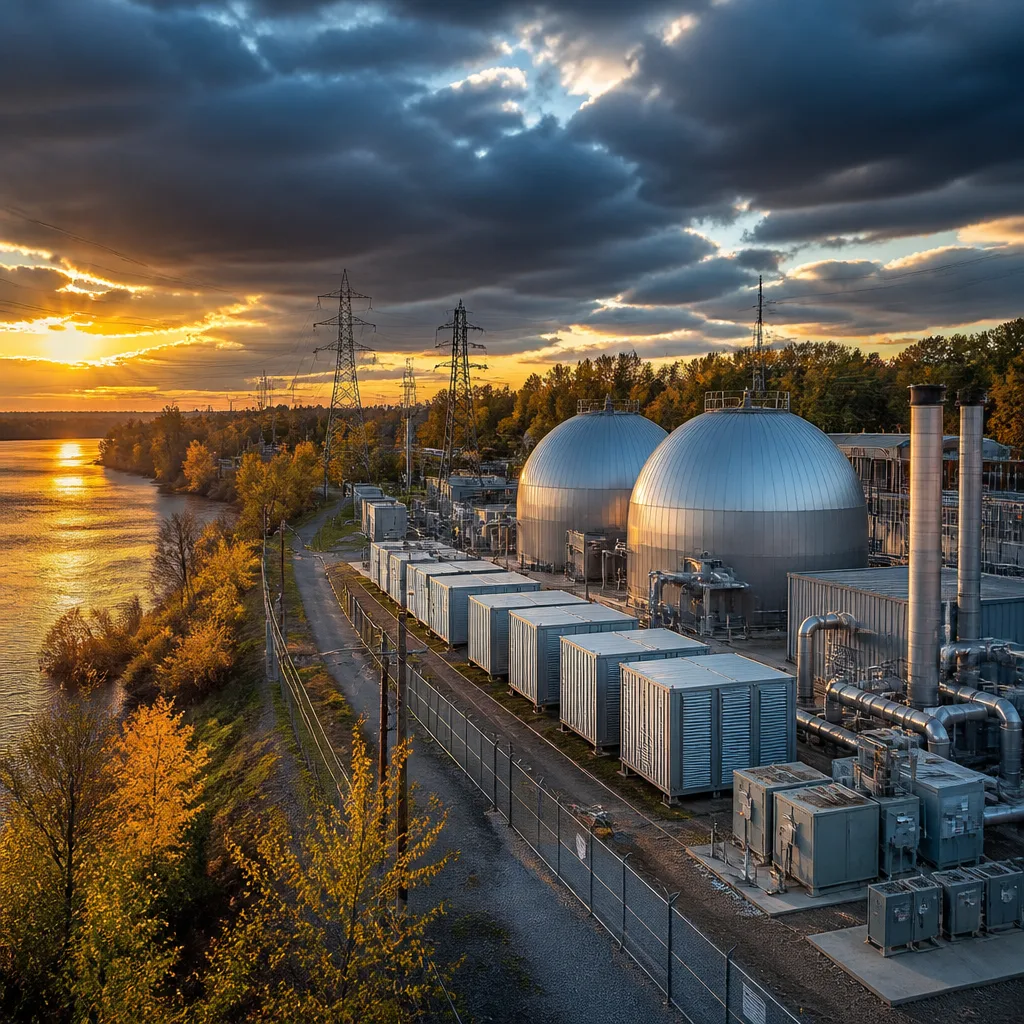
Ottawa — The federal government is investing $30,560,000 to strengthen electrical systems at the Robert O. Pickard Environmental Centre, Ottawa’s primary wastewater treatment plant, officials announced Monday. The funding is aimed at improving the facility’s resilience during extended power outages and to support future upgrades as the city grows.
What the upgrades will do
The planned work includes doubling the plant’s co-generation capacity — using gas captured from wastewater to produce electricity and heat — and installing a backup diesel generation station. Municipal officials say the changes will allow the plant to keep operating without interruption during prolonged power failures.
“So when we have these extended power outages that you see hitting the neighborhoods, we won't be affected,”
The comment was made by Steven Courtland, manager of design and construction of water facilities for the City of Ottawa, describing the intended benefit of the enhancements.
Why the work is needed
ROPEC treats the city’s wastewater before it is discharged back into the Ottawa River. City staff say the facility currently depends on base electrical supply during outages, and that after about 24 hours the quality of effluent degrades. That deterioration creates operational and environmental risks if a power failure is prolonged.
The improvements are designed to ensure continuous treatment capacity during outages and to provide adequate power for potential plant expansions or future upgrades necessary to serve the growing community, according to the federal news release.
Key elements and expected benefits
- Increased co-generation: Use of captured biogas to produce more on-site power and heat, reducing dependence on the grid.
- Diesel backup generation: Additional standby capacity to maintain full plant operations during extended electrical outages.
- Operational resilience: Continuous treatment to avoid degradation of effluent quality after prolonged outages.
| Item | Planned change | Primary benefit |
|---|---|---|
| Co-generation capacity | Double | Greater self-supply of electricity and heat |
| Backup generation | New diesel station | Maintain operations during grid failures |
| System reliability | Upgrades to electrical systems | Support future plant expansion; protect effluent quality |
Context and consequences
Wastewater treatment plants are critical pieces of urban infrastructure. When they lose power, operators can continue to move sewage through the system in the short term, but treatment performance can fall off over time, risking environmental harm and regulatory non-compliance. Strengthening power systems at major facilities reduces the chance of service interruptions and helps protect receiving waters such as the Ottawa River.
The federal contribution is intended to shore up resilience to events that can cause extended outages, including extreme weather — a concern for many Canadian municipalities as climate-driven storms and heat events affect grid reliability. The enhancements will also position the city to proceed with future plant capacity increases without being constrained by limited on-site power.
For residents, strengthened electrical systems at ROPEC mean municipal leaders can better assure continuous wastewater treatment during outages. The project also illustrates how federal infrastructure funding can be targeted at operational resilience — not only new construction — to reduce downstream environmental and public-health risks.
Details on the project timeline and construction schedule were not included in the announcement. City and federal officials will likely provide further information as procurement and work progress.