
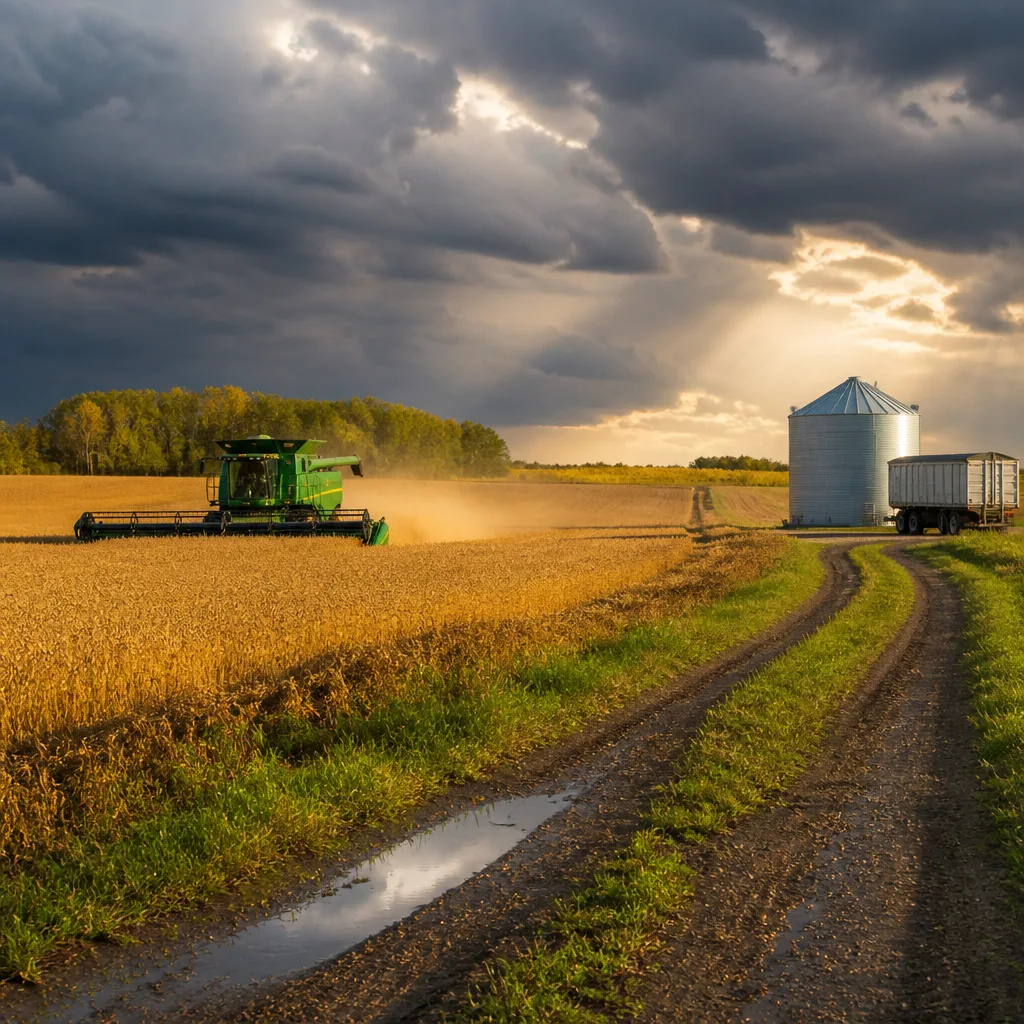
Harvest activity has begun in parts of northeastern Saskatchewan and across the province, with producers combining some of the earliest-seeded crops as fields move from maturity to the bin. As of Aug. 24, only 1 per cent of crops in the northeastern region had been harvested, matching the provincial figure also reported at 1 per cent.
Rainfall helped replenish topsoil but left uneven conditions
Recent showers delivered uneven totals across the region, bolstering moisture where it was needed most. The highest reported accumulation was 44 millimetres near the Touch River area, followed by 38 mm at Connaught and 29 mm at Kinistino. Those totals have supported generally improved surface moisture for many producers.
Provincial moisture assessments show substantial areas with adequate water in the root zone, though pockets of dryness remain. Key ratings for the northeast include:
- Cropland topsoil: 68% adequate, 21% short, 6% very short, 5% surplus
- Hayland topsoil: 69% adequate, 25% short, 6% very short
- Pasture moisture: 70% adequate, 25% short, 5% very short
Which crops are in the bin so far
The earliest harvest activity has focused on winter cereals, pulses and triticale. Progress across principal crops in the report area is varied:
| Crop | Per cent harvested |
|---|---|
| Winter wheat | 52% |
| Fall rye | 44% |
| Triticale | 75% |
| Barley | 3% |
| Oats | 1% |
| Field peas | 2% |
| Lentils | 1% |
While some operators are already combining, the bulk of spring cereals and pulses remain in the field, awaiting drier weather and suitable straight-combining conditions.
Pest pressure and storm impacts
Storms moving through parts of the northeast have brought strong winds and rain that caused only minor crop damage in places, according to the report. However, biotic pressures persist: Bertha armyworms and aphids continue to be concerns in sections of the region, prompting continued insecticide applications on canola and other affected crops.
Pasture ratings remain among the better measures in the province. In the northeast area, 60 per cent of pastureland is rated good, 31 per cent fair, 8 per cent poor and 1 per cent excellent. Those conditions will influence livestock producers' decisions on grazing and haying over the next weeks.
Outlook and implications
The mixed picture — improved topsoil moisture in many places but lingering shortness and active insect pressure in others — points to a cautious start to harvest in Saskatchewan. Early combining of winter cereals and triticale helps reduce harvest scheduling pressure later, but progress for spring cereals and pulses will depend on a stretch of drier weather and continued pest management.
For farmers and agri-businesses planning logistics, the current situation suggests:
- Expect incremental harvest progress: early crops will be completed first, with most of the spring-seeded cereals and pulses to follow when fields dry.
- Monitor local rainfall forecasts and field moisture before combining to avoid soil compaction and grain quality losses.
- Maintain vigilance for insect outbreaks that can rapidly change crop-grade outcomes, particularly in canola and cereals.
As harvest unfolds, frequent, local field checks remain the best guide for timing combines and protecting yield and quality. Weather-driven variability will continue to shape both the pace of harvest and the choices producers make in-field.