Prime Minister Mark Carney said Sunday that Canada will begin discussions to establish a “unique alliance” with the European Union, but he was emphatic the country is not seeking full membership of the bloc.
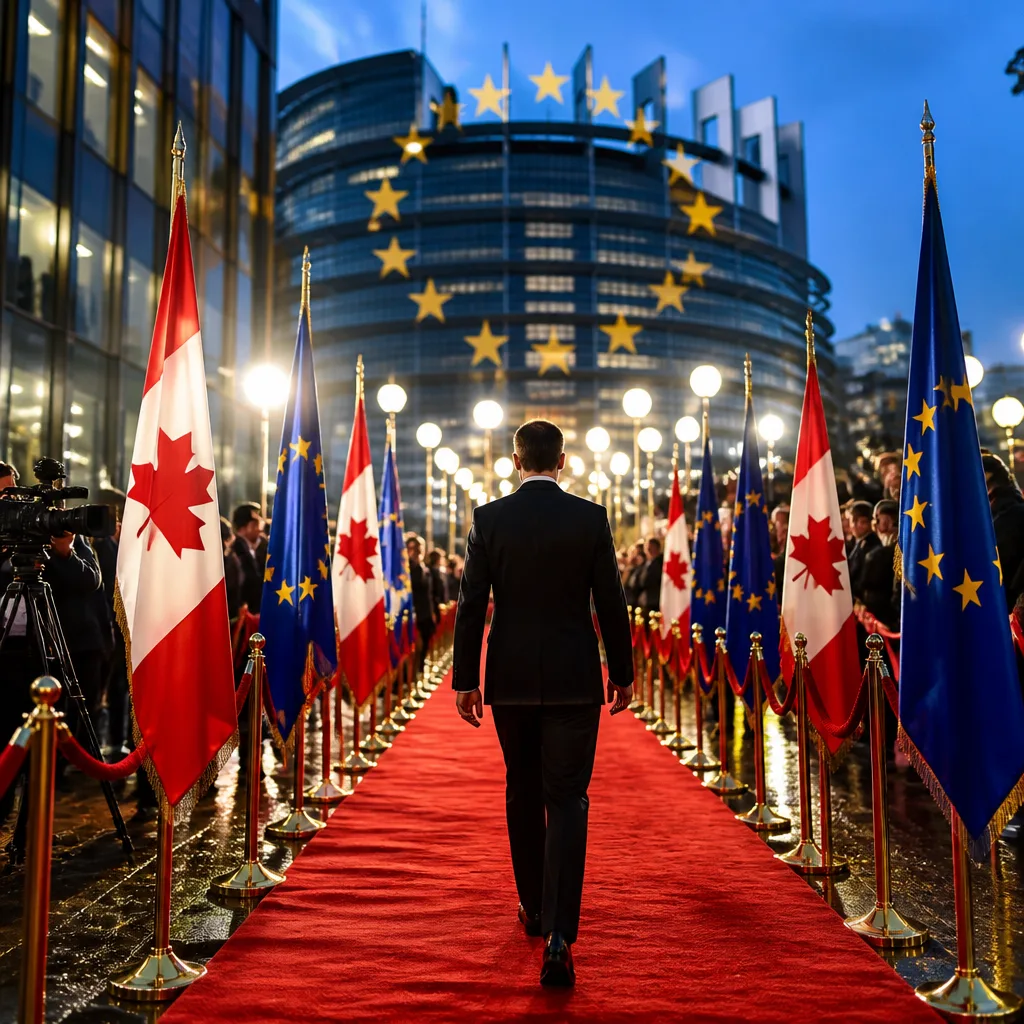
Speaking on the red carpet at the Toronto International Film Festival after delivering an address to launch the Canada Investment Summit, Carney said the government will open talks to explore closer ties with the EU as he prepares to address the European Parliament later this week.
What the prime minister said
On the red carpet, Carney told reporters, in part, that
“We're not looking to become a member of the European Union. What we are looking — and will begin discussions for — [is] a unique alliance with the European Union. We share the same values, we have the same priorities and we have very complementary strengths.”
The comments followed a Wall Street Journal report that the prime minister has pushed officials to map out the most ambitious possibilities short of full membership and had floated the idea of an “associate member” status for Canada.
Immediate context and next steps
Carney’s public remarks come days before his planned address to the European Parliament, signalling Ottawa intends to press for closer institutional links with the EU while stopping short of seeking accession. The prime minister also spoke to business and investment audiences in Toronto as the two-day Canada Investment Summit opened.
- Canada’s position: pursue a closer partnership or alliance, not EU membership.
- Timing: discussions to begin now; Carney to address the European Parliament this week.
- Report prompting attention: Wall Street Journal story suggesting consideration of enhanced status short of full entry.
Why Ottawa may be pursuing this
The prime minister framed the initiative in terms of shared values and complementary strengths between Canada and the EU. While the government has not published formal proposals, Carney portrayed the move as aiming to deepen cooperation where both sides see common priorities.
Details about the scope of the proposed talks — whether they would focus on trade, regulatory alignment, defence and security, environmental policy, or other sectors — have not been released. Nor has Ottawa defined what an arrangement short of membership would permit Canada to participate in, or how it would be negotiated with a 27-member bloc.
| Item | Detail |
|---|---|
| EU membership count | 27 member states |
Potential implications and questions
Any move toward a closer political or economic alliance with the EU would raise practical questions for Ottawa and Brussels alike. Key issues include:
- What formal mechanisms would allow Canada to deepen ties without full accession?
- Which policy areas would be prioritised for alignment or cooperation?
- How would enhanced relations be negotiated with all 27 EU governments and relevant EU institutions?
Carney’s emphasis that Canada is not pursuing membership is likely intended to forestall questions about sovereignty and the considerable legal, economic and political adjustments accession would entail. At the same time, the reference to a “unique alliance” sets a broad agenda that could encompass a range of cooperative arrangements.
The Wall Street Journal report that preceded Carney’s remarks said his team had been tasked with identifying ambitious options short of membership. Ottawa has not released an official framework or timeline for the talks, and it remains to be seen whether the EU will engage on the scale Carney appears to be proposing.
Carney’s address to the European Parliament will be watched closely in Ottawa, Brussels and capitals across Europe for further signals about how Canada envisages the partnership and what it hopes to gain from deeper institutional ties with the bloc.