Fredericton has opened Canada’s first large-scale centre dedicated to rescuing perishable food, a facility designed to turn surplus fresh produce at risk of spoiling into frozen products for distribution to food banks across New Brunswick.
Capacity aimed at cutting waste and feeding communities
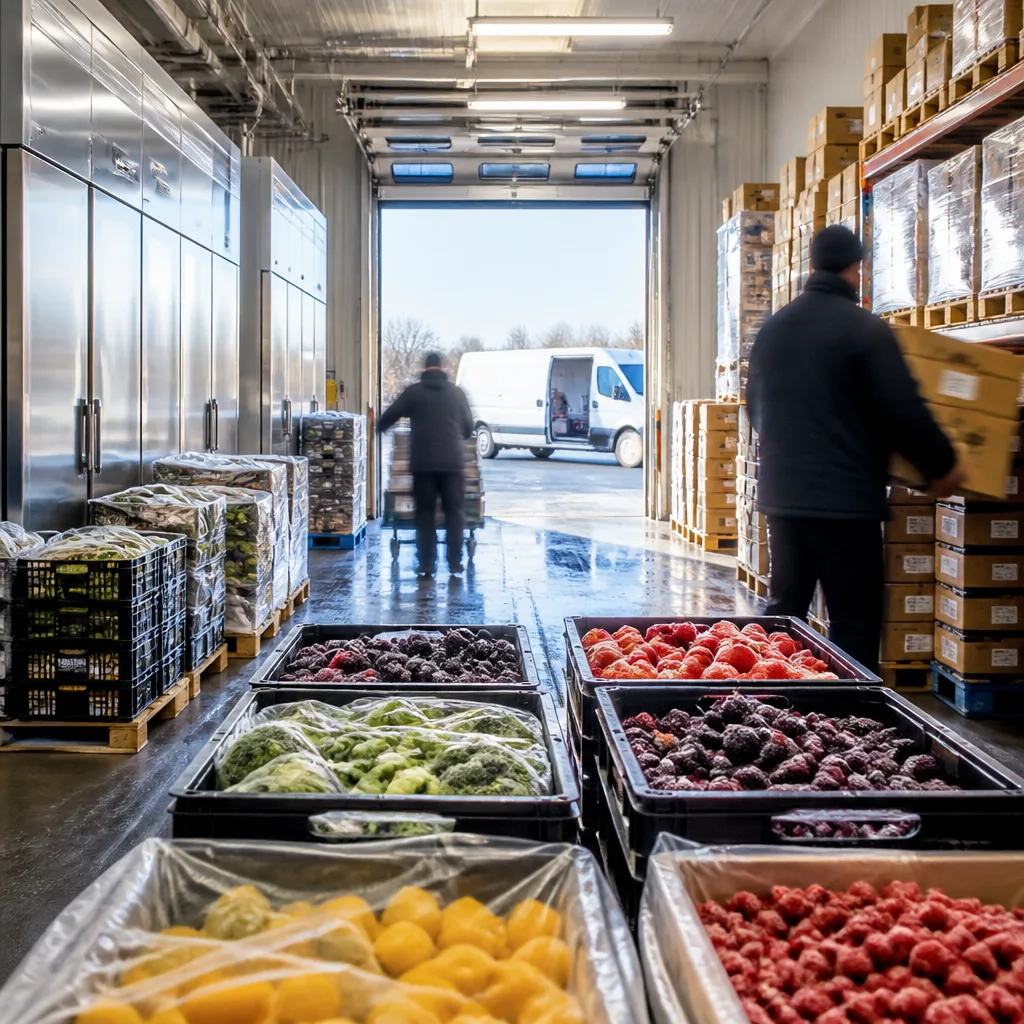
The Thrive Food Rescue Centre, unveiled on Saturday, is expected to handle up to $4 million worth of food each year, according to organisers. The facility will accept bulk donations of fresh fruit and vegetables and place them into freezers so that food banks across the province can access longer-lasting supplies.
Alex Boyd, chief executive officer of Greener Village — the organiser behind the centre — has described the initiative as a direct response to the region’s logistical limits. Boyd said the idea took shape after a food bank received a tractor-trailer load of carrots with no ready option to store or preserve them, revealing a network-wide inability to manage large volumes of fresh donations.
Funding, scale and regional context
The provincial government of New Brunswick contributed $985,000 toward establishing the centre. Additional support came from other levels of government, private donors and charitable partners, though the exact totals were not disclosed at the opening.
| Metric | Value |
|---|---|
| Estimated annual food processed | $4 million |
| Provincial contribution | $985,000 |
| New Brunswick food insecurity rate | 28.2% |
| Canada average (comparison) | 24.0% |
Data from Food Banks Canada cited at the launch shows that 28.2 per cent of New Brunswick residents face food insecurity — a rate about 4.2 percentage points higher than the national average. Those figures were used by organisers and visiting officials to underline the urgency of scaling both food rescue operations and measures to improve household affordability.
National model with limits
Kirsten Beardsley, chief executive officer of Food Banks Canada, described the new centre as a potential model for redirecting surplus food at scale. At the same time, she emphasised that logistical improvements alone will not end food insecurity and that broader government investment is needed to address affordability.
- Process surplus fresh produce into frozen goods for longer storage.
- Distribute preserved food to food banks province-wide.
- Provide a logistical hub intended to accept large bulk donations that local banks cannot store.
The centre’s approach focuses on supply-chain and storage gaps that prevent large donations from reaching people in need. By converting immediately perishable items into frozen products, organisers say they can extend the useful life of donations and reduce waste that otherwise occurs when excess fresh food cannot be accepted in time.
Premier Susan Holt attended the grand opening, signalling provincial political support for the initiative. Organisers framed the centre as part of a broader effort to reconnect surplus food with communities facing persistent need, while acknowledging that such facilities are one element within a larger policy picture that includes income supports and affordability measures.
As the Thrive Food Rescue Centre begins operations, stakeholders will be watching whether the facility’s capacity matches demand from food banks across New Brunswick and whether similar models are adopted elsewhere. Its backers present it as an example of how targeted infrastructure can reduce waste and improve access to nutritious food, while critics and advocates for people experiencing food insecurity continue to press for comprehensive measures to address the root causes of hunger.