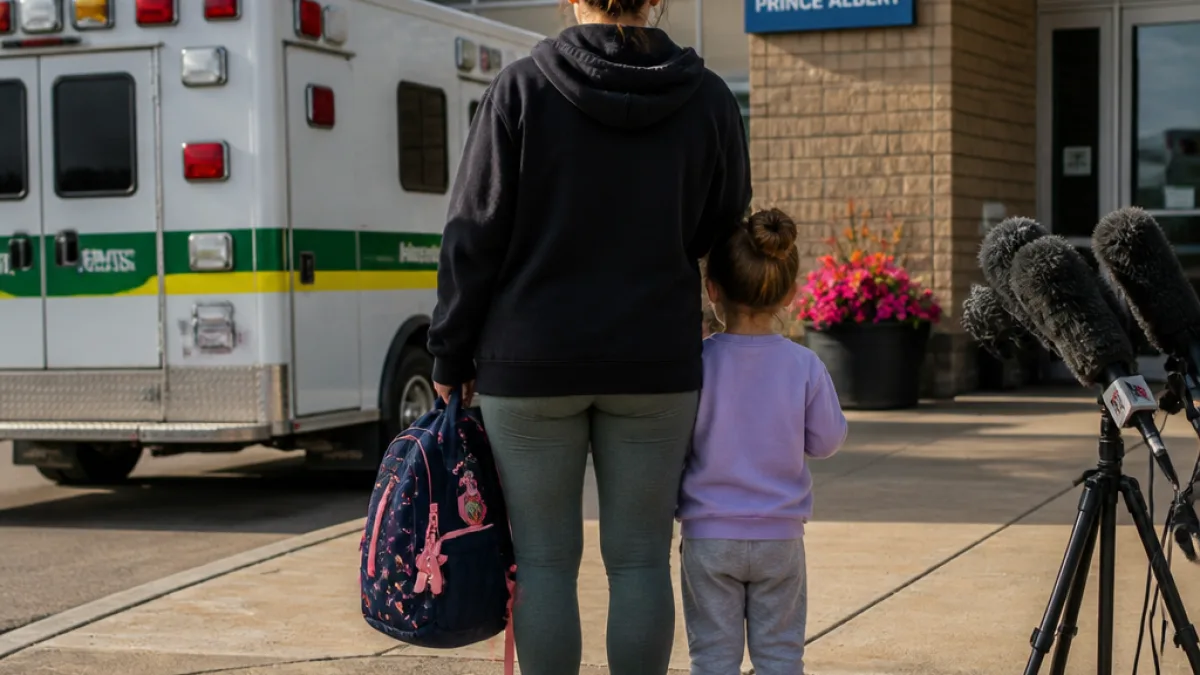
A Biggar mother is calling for change after receiving a $1,300 ambulance bill following an emergency transfer of her three-year-old son to a hospital farther from home when closer centres had no available beds.
Child needed urgent care; closer hospitals reported full
The mother, Amy Haynes, told reporters at an Opposition NDP news conference that her son, Nolan, developed a high fever in May and needed immediate medical attention. According to Haynes, the family’s doctor in Biggar contacted hospitals in Saskatoon and two other communities seeking a closer bed, but was told there was no space.
“It’s not her responsibility the province didn’t have closer beds available.”
The doctor eventually located a bed in Prince Albert, the next closest option, and Nolan was transported there for treatment. Haynes received the ambulance bill in July and says she should not bear the financial consequence of system capacity problems.
What happened, and why families are worried
The case highlights overlapping concerns many Saskatchewan families have raised: limited paediatric capacity in some centres, the cost of emergency transport and how responsibility for those costs is allocated when system shortages force longer transfers.
- Distance and availability: Haynes’ account shows how lack of local beds can extend travel time and force families to seek care further away.
- Financial impact: The $1,300 ambulance bill is a substantial out-of-pocket cost for many households, particularly when transport is required through no fault of the patient or their family.
- Accountability questions: The family argues the province should cover such costs when bed shortages in closer centres lead to longer transfers.
Timeline of the incident
| Date | Event |
|---|---|
| May (reported) | Three-year-old Nolan develops high fever; local doctor seeks closer hospital beds. |
| May (reported) | Hospitals in Saskatoon and two other communities reportedly report no space; bed found in Prince Albert. |
| July (reported) | Haynes receives a $1,300 ambulance bill. |
| August (reported) | Haynes speaks at an NDP news conference in Biggar about the bill and bed shortages. |
The Canadian Press first published the report of Haynes’ comments. At the NDP event, she urged the provincial government to address both the bed shortages and the downstream costs families face when transfers are necessary.
Policy questions remain unanswered
The report does not include a response from the provincial government, health region officials or emergency medical services about whether patients in similar situations are routinely billed, or whether there are provisions to waive charges when a transfer is driven by capacity constraints elsewhere.
Ambulance billing and the allocation of costs for inter-facility transfers vary across jurisdictions and can be influenced by provincial policy, regional agreements and the nature of the transport (ground versus air, urgent versus scheduled). In Saskatchewan, those rules have been the subject of public discussion previously as rural patients sometimes travel long distances for specialised care.
Local impact and next steps
Haynes’ case underscores how a single emergency can generate stress on multiple fronts: medical, logistical and financial. For residents in smaller communities, the perception of scarce paediatric capacity and the risk of unexpected bills add to existing concerns about access to health services.
The family’s decision to raise the issue publicly at an NDP news conference suggests they seek government action on two fronts: clearer protections from ambulance costs when transfers are necessitated by bed shortages, and improvements to paediatric capacity closer to rural communities.
Until there is an official response or policy clarification, families facing similar situations may want to ask health providers and EMS about billing policies for transfers and whether cost waivers or alternative payment arrangements are available.
—
Reporting from Biggar for WE NEWS.