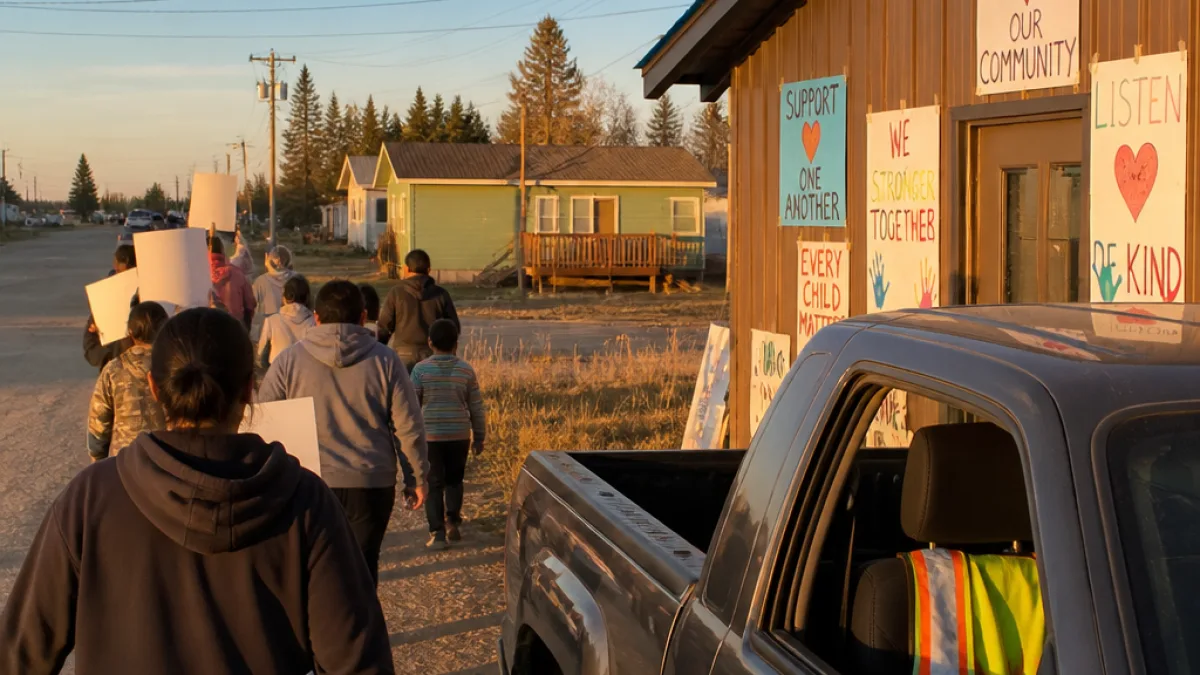
Behchokǫ̀, N.W.T. — After a year leading the Tłı̨chǫ community, Chief Bertha Rabesca Zoe says she is prepared to mobilize residents to confront a growing and visible drug trade in Behchokǫ̀, the Northwest Territories' largest Indigenous settlement.
Visible trafficking, limited capacity
Rabesca Zoe told reporters she has been watching houses where she believes drugs are being sold, noting constant foot traffic at different hours. The chief said the trade is so brazen it occurs "in broad daylight," and that nobody in the community has stepped up to challenge the dealers.
"These people are doing it in broad daylight. Nobody is taking on the drug dealers at all."
Behchokǫ̀ has an estimated population of about 2,000 residents. Its proximity to the highway into Yellowknife is a factor local leaders say exacerbates the problem, facilitating movement of people and substances.
What the evidence shows
Territorial public health officials confirm that crack cocaine is the most consumed illicit drug in the community. Wastewater testing — a surveillance tool increasingly used across Canada — has detected a range of other substances and suggests the local supply may be contaminated with potentially deadly opioids, including fentanyl.
| Indicator | Finding |
|---|---|
| Most consumed drug | Crack cocaine |
| Supply contamination | Detected substances including fentanyl |
| Community population | Approximately 2,000 |
Community response options on the table
Chief Rabesca Zoe said she has limited resources but is considering a range of measures and wants to hear from residents about the community’s next steps. Options under discussion include:
- Targeted banishment of individuals linked to trafficking;
- Community marches and public demonstrations to show opposition to dealers;
- Creation of a local security force or enhanced community patrols to deter open dealing.
At the same time, the chief emphasised healing and supports must form part of any response — an acknowledgement that enforcement alone will not address addiction, trauma and the social drivers behind substance use.
Balancing enforcement and health
Across northern communities, leaders and health officials warn that punitive measures without expanded supports risk pushing people into more dangerous situations and increasing overdose risk. Conversely, community-led safety initiatives can face legal and logistical limits when confronting organised trafficking.
Rabesca Zoe's approach — seeking community input while publicly naming the problem — reflects a broader tension in northern public safety: the need to protect residents and property while also providing treatment, prevention and cultural healing pathways.
Practical concerns for residents
Local stakeholders will need to consider practical issues if they move forward with deterrence measures. These include:
- Coordination with the RCMP for lawful enforcement and investigations;
- Funding and training for any local security or community patrols;
- Access to treatment services, naloxone supplies and harm-reduction measures;
- Community consultations to ensure responses reflect Indigenous law, values and trauma-informed practice.
Broader implications
Behchokǫ̀'s struggle is not unique in northern Canada, where remoteness, housing shortages and socio-economic pressures intersect with changing drug markets. The detection of fentanyl in wastewater is particularly concerning: even if not the predominant substance used, its presence can drive sudden increases in overdoses and fatalities.
For residents and families in Behchokǫ̀, the chief's call for action will likely demand a sustained mix of community leadership, territorial resources and health programming. How those pieces come together will determine whether the community curbs open dealing while supporting people who use drugs.
As discussions continue, Chief Rabesca Zoe has signalled a willingness to pursue decisive steps while urging public involvement and attention to healing — an approach that places community voices at the centre of any response.