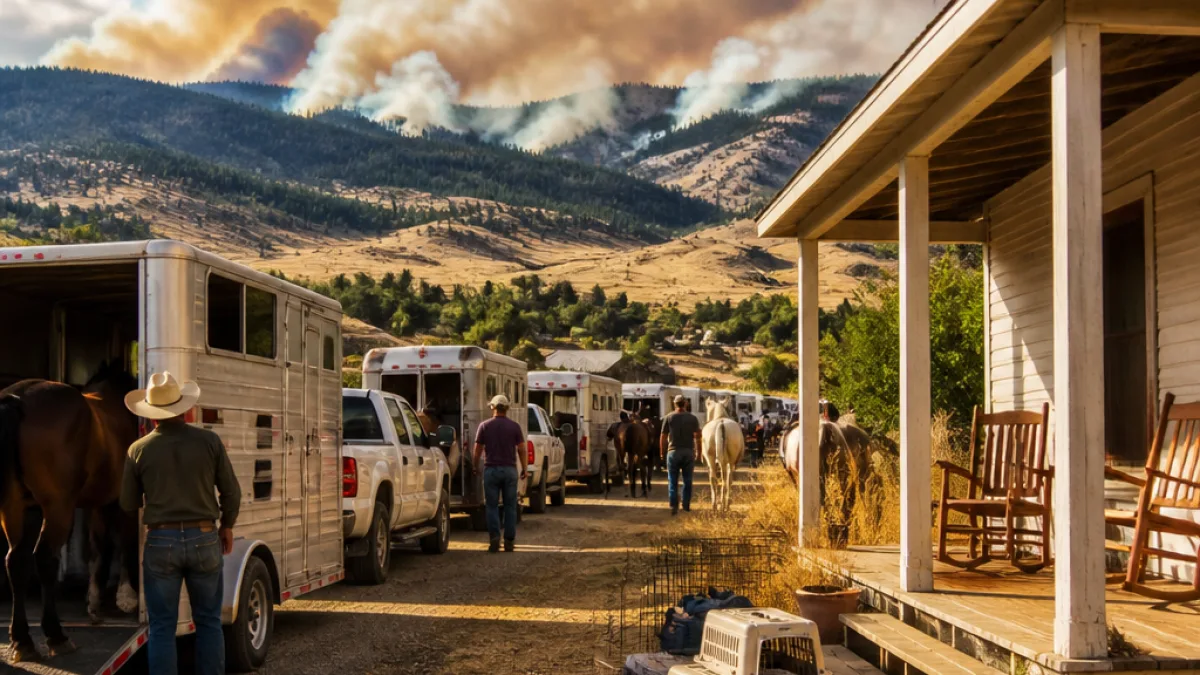
The Bald Range wildfire that swept through the south Okanagan has left a growing toll on people, farms and animal shelters as emergency crews and communities race to protect both residents and animals from the flames.
Human displacement and animal危机
Provincial officials confirm the fire has claimed one life and forced more than 20,000 people from their homes. The blaze’s reach extends beyond houses and infrastructure: tens of thousands of animals — from household pets to livestock and wildlife — have been affected.
B.C. Agriculture Minister Lana Popham told a briefing that an estimated 50,000 farm animals are facing impacts across agricultural properties that have been issued evacuation orders or alerts. Specifically, she cited 146 properties under evacuation orders and 123 properties under evacuation alerts.
| Indicator | Number |
|---|---|
| People displaced | 20,000+ |
| Estimated farm animals affected | 50,000 |
| Properties under evacuation orders | 146 |
| Properties under evacuation alerts | 123 |
Evacuations, rescues and losses
Some animal sanctuaries and rehabilitation centres managed rapid evacuations as the fire approached. Staff at the Interior Wildlife Rehabilitation Society said they had to remove about 30 animals from their facility within roughly an hour. The centre’s founder reported the facility was destroyed in the blaze.
Not every owner could get animals to safety. On a multi-family property in Faulder, near Summerland, Dayna Joynt said her boyfriend, Greg Gibbs, remained on the land sheltering at least 20 horses that were left with “nowhere to go.” Joynt said she and others fled on Friday evening with five dogs, four cats and two goats. She added that her daughter lost a number of reptiles and cats during the evacuation.
“If a ranch is under threat by fire these folk head out on horseback or on ATVs and they find the cattle,”
That description of how livestock are rescued came from Minister Popham as she detailed the province’s Range Rider program, one of the initiatives mobilized during the crisis. Launched in 2021, the program deploys teams who travel by horse or all-terrain vehicle to locate and move at-risk animals out of danger. Popham cited a recent success when the program helped the Coldwater Indian Band move 1,500 cattle within 24 hours after that community was issued an evacuation order for a different series of fires.
Community response and ongoing challenges
Social media feeds have been filled with photos and pleas as pet owners try to locate lost animals or connect with injured and singed pets recovered from fire zones. While some animals have been saved through local efforts and the Range Rider program, Popham acknowledged that livestock losses have occurred and the full extent of the animal toll remains unclear.
- Evacuation orders and alerts are changing rapidly across the south Okanagan; residents should monitor official provincial and local updates.
- Producers and animal owners should contact local emergency management offices for direction on moving or sheltering livestock when it is safe and feasible.
- Those who find injured or displaced animals are advised to reach out to animal control or rehabilitation groups coordinated by local authorities.
The Bald Range wildfire underscores how wildfires strain not only emergency services and housing but also agricultural livelihoods and animal welfare networks. As crews work to contain the fire and authorities refine evacuation maps, the province and communities will be pressed to track losses, provide care for displaced animals and plan recovery for both people and the many species affected.
Local officials continue to advise residents to follow evacuation orders, keep pets contained during movement and report any missing or found animals through established channels to aid reunification efforts.