PENTICTON — British Columbia’s wildfire season has been described by the premier as “brutal,” as a fast-moving blaze in the south Okanagan exposed vulnerabilities in evacuation planning, housing resilience and forest management.
Moving fast, leaving devastation
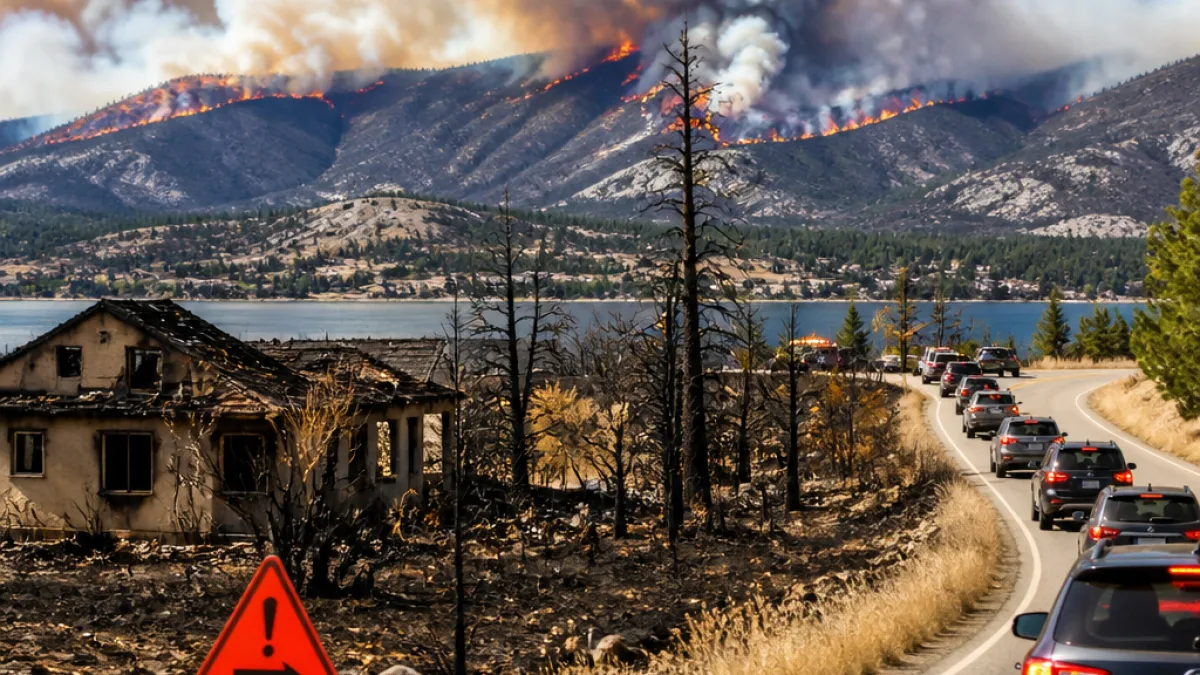
The Bald Range fire, first reported in early August, exploded within a few hours of detection on Aug. 7 and by Wednesday had grown to about 184 square kilometres, officials said. The fire increased in size by roughly 6.5 square kilometres overnight, and remained an active fire zone with ongoing hazards.
Premier David Eby said the province will undertake a review to draw lessons from the rapid spread, focusing on protecting communities and improving emergency response. He said discussions will examine how forests are managed and how homes are built in the wildland-urban interface.
“The themes include things like, should we be having discussions about requirements for new builds in interface areas to make sure that they’re more resilient to wildfire — sprinkler systems, exterior cladding, that kind of thing.”
Human toll and community response
The fire has already exacted a tragic human cost. An 80-year-old woman died suddenly while trying to escape her home west of Summerland, an outcome Eby called a “tragic loss.” The premier visited a reception centre for evacuees and described seeing people devastated by the loss of their homes but also a strong communal effort to help neighbours and strangers alike.
Emergency officials warned that hazards remain around the fire, including downed power lines and the potential for flare-ups, making damage assessments difficult while the zone stays active. That uncertainty has left many evacuees desperate for information on the status of their properties and the timeline for returning.
Policy implications: forests, fuel and construction
Eby signalled that the review will consider a range of policy changes. One area of concern is the practice of leaving trees around communities while conducting logging farther away, a strategy the premier said has unintentionally allowed a buildup of fuels near homes. Combined with persistent drought across much of the province, those fuels raise the risk of severe fires.
Possible measures under discussion, according to the premier, include:
- Stronger construction standards for new builds in the interface, such as exterior materials and sprinkler requirements.
- Re-evaluating forest management practices near communities to reduce fuel loads.
- Enhanced emergency planning and access for first responders during extreme, fast-moving fires.
Officials caution more summers like this are coming
Eby warned that such intense fires will likely become more common as drought conditions persist and climate influences exacerbate fire risks. “Certainly, we are going to see significant fires in summers to come,” he said, adding the province must continuously improve how it saves lives, preserves structures and reduces obstacles for emergency response.
Emergency Management Minister Kelly Greene acknowledged the anguish of evacuees seeking information but said protecting lives remains the immediate priority. Hugh Murdoch of the BC Wildfire Service described lingering hazards, underscoring the difficulty of moving from active suppression to recovery and assessment.
What the review could mean locally
If the government follows through on measures discussed publicly, homeowners and builders in interface communities could face new requirements intended to improve survivability during wildfires. That could include mandatory fire-resilient cladding, sprinkler systems or other structural standards for new construction, as well as incentives or regulations to modify surrounding vegetation and fuel loads.
| Item | Detail |
|---|---|
| Fire | Bald Range fire |
| Area (most recent) | 184 sq. km |
| Growth (overnight) | 6.5 sq. km |
| Notable impact | One civilian death, multiple evacuees and unknown structural losses |
As the province prepares a formal review, residents in interface areas across B.C. will be watching for concrete proposals and timelines. For evacuees and communities directly affected by the Bald Range fire, the immediate priorities remain safety, accurate information and a path to recovery.
This developing situation highlights tensions that British Columbians will have to confront: how to reconcile economic uses of forested land with the need to protect communities, and how to adapt building and planning practices to a landscape where extreme fires are becoming a recurring reality.